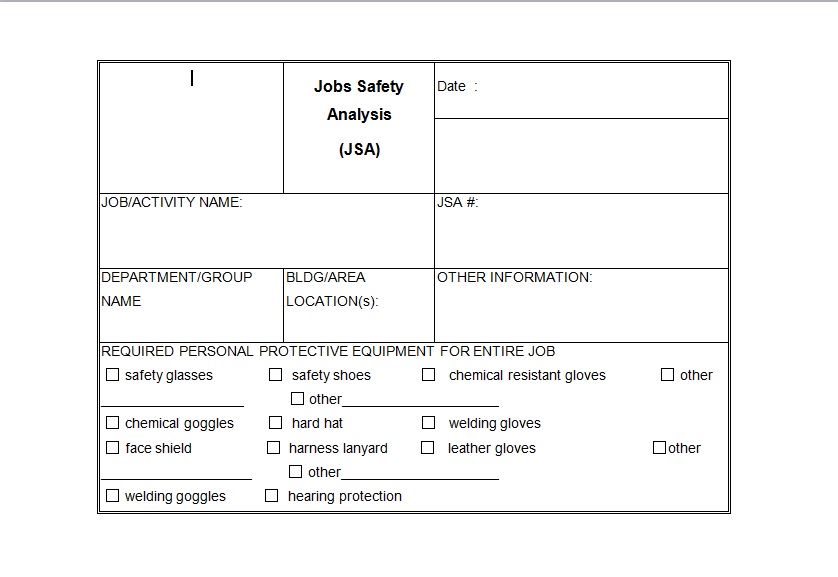
Employers need a job safety analysis template to specify all the critical aspects of job safety. With this document, you can develop a comprehensive safety policy that tailors your company or organization.
This document makes sure that all employees are well-informed about potential dangers and know what to do if any specific situation arises. By making people aware of possible dangers, it helps to reduce accidents and injuries in the workplace. Moreover, the job safety analysis template includes the following;
- Specifies the steps in a process or task
- Determines the potential hazards associated with each step
- Gives suggestions to reduce or eliminate those hazards
Table of Contents
What is job safety analysis?
Job safety analysis is a systematic approach used to determine potential hazards that are associated with a particular job or task. Also, it is used to implement appropriate control measures. Preventing accidents and injuries is the main purpose of conducting a job safety analysis.
What is a Job Safety Analysis Template?
A Job Safety Analysis Template is a structured document used to break a job into individual steps, identify hazards connected to each step, and list the safety controls needed to reduce or eliminate risk.
Instead of writing a safety plan from scratch every time, the template gives you a clear format to follow. This helps make sure important details are not missed.
A basic job safety analysis template usually includes:
- Job name or task description
- Work location
- Date and time
- Names of employees involved
- Required tools and equipment
- Required personal protective equipment
- Step-by-step task breakdown
- Potential hazards for each step
- Control measures or safe work procedures
- Emergency procedures
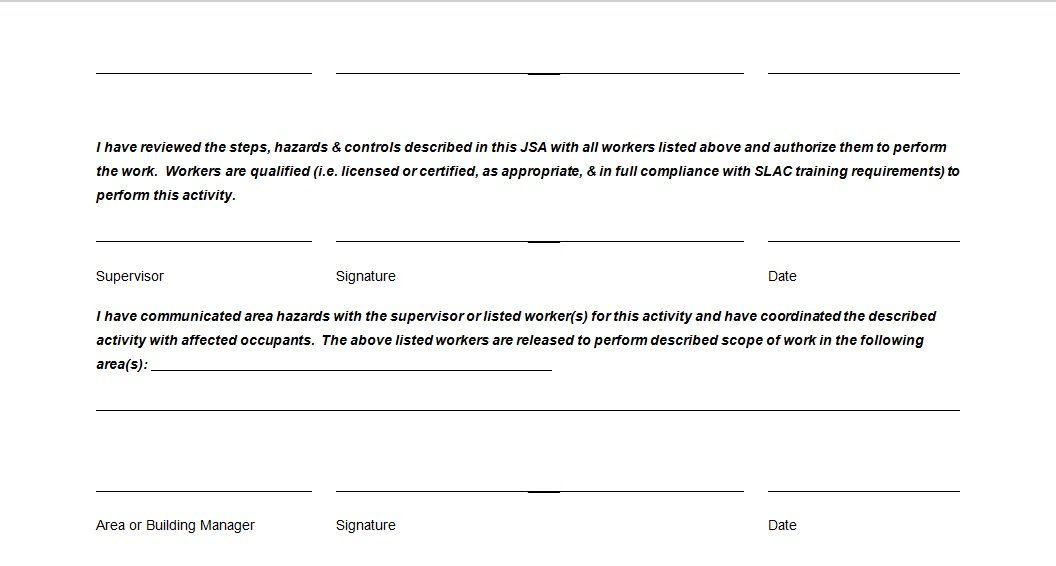
- Approval signatures
The main purpose is simple: understand the job before doing the job.
When used properly, a JSA template becomes more than paperwork. It becomes a conversation starter. It gets the crew thinking, talking, and noticing risks that may otherwise be ignored.
Why a Job Safety Analysis Template is Important
Many workplace incidents happen because someone did not see the danger clearly before starting the task. Sometimes the hazard was obvious afterward, but in the moment, the team was focused on getting the job done quickly.
A job safety analysis template helps stop that pattern.
It gives workers a chance to pause and think through the task. It also gives supervisors a way to confirm that everyone understands the hazards and the safest way to complete the work.
Helps Prevent Injuries
The biggest reason to use a JSA template is to protect people.
Every job has some level of risk. Even routine tasks can become dangerous when conditions change. A floor may be wet. A tool may be damaged. A ladder may be placed incorrectly. A worker may be tired, rushed, or unfamiliar with the task.
By identifying hazards early, teams can take action before someone gets hurt.
Improves Communication
A JSA is not just a form. It is a communication tool.
When workers review the job steps together, everyone gets on the same page. New employees can learn from experienced workers. Supervisors can explain expectations. Workers can point out real hazards that may not be visible from an office.
Good safety communication prevents confusion, especially when multiple people are working near each other.
Supports Compliance
Many industries are required to document hazard assessments, safe work practices, and employee safety planning. A completed job safety analysis can help show that the employer took reasonable steps to identify hazards and protect workers.
Of course, a JSA should never be treated as a shortcut for legal compliance. But it can be an important part of a larger safety management system.
Reduces Downtime
Accidents are costly. They can stop work, damage equipment, delay projects, increase insurance costs, and lower team morale.
A proper JSA helps prevent these interruptions by catching problems before they turn into incidents.
Builds a Safety Culture
The more often workers are involved in safety planning, the more natural safety thinking becomes.
A strong safety culture is not built by posters on the wall. It is built by daily habits. Using a job safety analysis template encourages those habits.
When Should You Use a Job Safety Analysis Template?
A job safety analysis template should be used whenever a task has potential hazards, especially if the work is new, complex, high-risk, or not performed regularly.
You should strongly consider using a JSA before:
New or Unfamiliar Tasks
Any time workers are performing a job they have not done before, a JSA can help them understand the steps and risks.
High-Risk Work
Tasks involving heights, electricity, confined spaces, chemicals, hot work, heavy machinery, lifting operations, excavation, or hazardous energy should always be carefully analyzed.
Non-Routine Maintenance
Maintenance work often involves unexpected hazards because equipment may need to be opened, locked out, cleaned, repaired, or tested.
Jobs With a History of Incidents
If a task has caused injuries, near misses, equipment damage, or repeated safety concerns, it needs a closer look.
Work In Changing Conditions
Weather, lighting, noise, traffic, nearby work crews, and site layout can all change the risk level of a job.
Contractor Work
When contractors come onto a site, a JSA helps confirm that everyone understands site-specific hazards and expectations.
Key Elements of a Good Job Safety Analysis Template
A strong job safety analysis template should be simple enough for daily use but detailed enough to be useful. If it is too complicated, workers may rush through it. If it is too vague, it will not help anyone.
Here are the most important sections to include.
Job Information
The first section should identify the basic details of the work.
- Job title or task name
- Department or project name
- Work location
- Date
- Supervisor name
- Employees involved
- Contractor company, if applicable
- Permit number, if required
This section helps organize the document and makes it easier to review later.
Example:
Job Task: Replace overhead light fixture
Location: Warehouse loading bay
Date: May 2, 2026
Supervisor: Maintenance Lead
Employees Involved: Electrician, helper, spotter
Job Description
The job description should briefly explain what work will be done.
Keep it clear and specific. Instead of writing “maintenance work,” write “remove damaged conveyor belt guard and install replacement guard.”
A job description helps the team focus on the exact task being analyzed.
Required Tools and Equipment
List all tools and equipment needed for the job.
- Hand tools
- Power tools
- Ladders
- Scaffolding
- Forklifts
- Cranes
- Welding equipment
- Electrical testing devices
- Lockout/tagout devices
- Cleaning tools
- Gas detectors
- Barricades and warning signs
This section matters because damaged, incorrect, or missing equipment can create hazards.
For example, using the wrong ladder for a job can increase fall risk. Using a damaged extension cord can create an electrical hazard. Using a tool without a guard can cause serious injury.
Required Personal Protective Equipment
Personal protective equipment, or PPE, should be listed clearly.
- Safety glasses
- Face shield
- Hard hat
- Gloves
- Hearing protection
- Respirator
- Safety boots
- High-visibility vest
- Fall protection harness
- Chemical-resistant clothing
- Welding helmet
- Arc flash protection
It is important to match PPE to the actual hazard. PPE should not be selected casually.
For example, “gloves” is not always enough detail. Are they cut-resistant gloves, chemical-resistant gloves, heat-resistant gloves, or electrical-rated gloves?
The more specific the template is, the better.
Job Steps
- Repair pump
- Test pump
- Clean up
Better example:
- Notify affected employees
- Shut down pump
- Apply lockout/tagout
- Verify zero energy
- Remove pump guard
- Disconnect damaged hose
- Install replacement hose
- Reinstall guard
- Remove tools from area
- Remove lockout/tagout after authorization
- Test pump operation
- Clean work area
The better example makes it much easier to identify hazards.
Potential Hazards
For each job step, identify what could cause harm.
Common workplace hazards include:
- Falls from heights
- Slips, trips, and falls
- Electrical shock
- Arc flash
- Pinch points
- Moving machinery
- Sharp edges
- Falling objects
- Struck-by hazards
- Caught-between hazards
- Chemical exposure
- Fire or explosion
- Hot surfaces
- Noise exposure
- Dust or fumes
- Poor ventilation
- Manual lifting injuries
- Vehicle traffic
- Confined space hazards
- Stored energy
- Pressure release
- Poor lighting
- Weather-related hazards
Control Measures
After identifying hazards, the template should list the control measures needed to reduce risk.
Safety controls should be practical, specific, and realistic.
- Use fall protection
- Install guardrails
- Lock out and tag out equipment
- Verify zero energy before work
- Use mechanical lifting equipment
- Inspect tools before use
- Set up barricades
- Use a spotter
- Improve ventilation
- Use correct PPE
- Follow manufacturer instructions
- Keep hands clear of pinch points
- Use proper lifting technique
- Remove combustible materials before hot work
- Test atmosphere before confined space entry
- Maintain three points of contact on ladders
The best controls are usually those that remove or reduce the hazard at the source.
For example, using a machine guard is stronger than simply telling workers to keep their hands away. Using a lift table is better than asking workers to manually lift heavy objects all day.
Emergency Procedures
A job safety analysis template should include emergency information, especially for higher-risk tasks.
- Emergency contact numbers
- First aid location
- Eyewash station location
- Fire extinguisher location
- Evacuation route
- Rescue plan
- Spill response steps
- Nearest hospital or clinic
- Who to notify in an emergency
For confined space entry, working at heights, chemical handling, or remote work, emergency planning is especially important.
A rescue plan should be practical. Saying “call emergency services” may not be enough if a worker is suspended in a harness or trapped inside a confined space.
Authorization and Sign-Off
The final section should include signatures or names of people who reviewed the JSA.
- Workers performing the task
- Supervisor
- Safety officer
- Permit issuer
- Contractor representative
Signing the JSA shows that the team reviewed the hazards and agreed on the controls.
However, signatures should not become the main focus. The real value comes from the discussion before the signatures.
How to conduct a job safety analysis?
Consider the following steps to conduct a job safety analysis;
- Choose a job or task: Select a particular job or task that needs analysis.
- Break down the job or task: To determine potential hazards more effectively, divide the selected job or task into further steps or components.
- Determine potential hazards: Determine potential hazards for each step of the job that may be dangerous for the workers, equipment, or the environment. The factors included in Hazards are physical, chemical, biological, or psychosocial.
- Assess the risks: For each identified hazard, assess the severity and likelihood and consider the potential consequences.
- Develop control measures: Develop control measures after identifying hazards and risks. These may include the;
1- Engineering controls (changing equipment or processes)
2- Administrative controls (modifying work procedures or policies)
3- Personal protective equipment (PPE) - Communicate and train: The workers involved in the job should know the JSA findings, control measures, and safe work procedures. In addition, give them training on how to perform a specific job or task safely.
- Monitor and review: The effectiveness of the implemented control measures should be monitored regularly. It is essential to update the job safety analysis template whenever there are changes to the job or task.
How to Create a Job Safety Analysis Template
Creating a useful JSA template does not need to be complicated. The goal is to make something clear, repeatable, and easy to use.
Step 1: Choose the Job to Analyze
Start with jobs that have the highest risk.
Good starting points include:
- Tasks with previous injuries
- Tasks with near misses
- Jobs involving hazardous energy
- Jobs performed by new workers
- Tasks with complicated steps
- Non-routine maintenance work
Do not try to analyze every task in one day. Start with the most important ones.
Step 2: Observe the Job
Whenever possible, watch the job being performed.
This gives you a real understanding of the task. Procedures written from memory often miss small but important details.
While observing, pay attention to:
- Worker movements
- Tools used
- Body position
- Nearby hazards
- Environmental conditions
- Communication between workers
- Equipment condition
- Work pace
Step 3: Break the Job Into Steps
Write down each major step in the order it occurs.
Do not make the steps too detailed or too broad. A good rule is to keep each step focused on one main action.
For example, “prepare work area” is acceptable if it includes a simple setup. But “complete repair” is too broad because it hides too many hazards.
Step 4: Identify Hazards for Each Step
For each step, ask what could go wrong.
Think about:
- People
- Equipment
- Materials
- Environment
- Energy sources
- Work methods
Do not only think about obvious hazards. Consider hidden hazards too, such as stored pressure, poor ventilation, chemical residue, fatigue, noise, or awkward posture.
Step 5: Select Control Measures
Choose practical controls that reduce risk.
Use the hierarchy of controls whenever possible:
- Elimination
- Substitution
- Engineering controls
- Administrative controls
- Personal protective equipment
For example, eliminating work at height is better than relying only on fall protection. Using a less hazardous chemical is better than simply wearing a respirator.
Step 6: Review With Workers
The people doing the work should be involved in reviewing the JSA.
They often know details that supervisors may miss. They may also know which controls are realistic and which ones are difficult to follow in the field.
A JSA created without worker input is usually weaker.
Step 7: Update the Template Regularly
A job safety analysis should not be a document that gets written once and forgotten.
Update it when:
- The job changes
- Equipment changes
- Materials change
- New hazards are found
- An incident or near miss occurs
- Regulations or company procedures change
- Workers suggest improvements
A stale JSA can create false confidence. A current JSA can prevent real harm.
The Benefits of a JSA template:
You can provide benefits to your business in several ways by using a JSA template. With this document, you can determine potential risks and take proactive steps to mitigate those risks before they result in an incident or injury. Furthermore, it makes sure that all employees are aware of potential issues associated with a specific task or job. In case an accident occurs on-site, you can protect your company from liability as this document serves as evidence of your risk assessment efforts.
Job Safety Analysis Template Word
Job Safety Analysis in Construction PDF
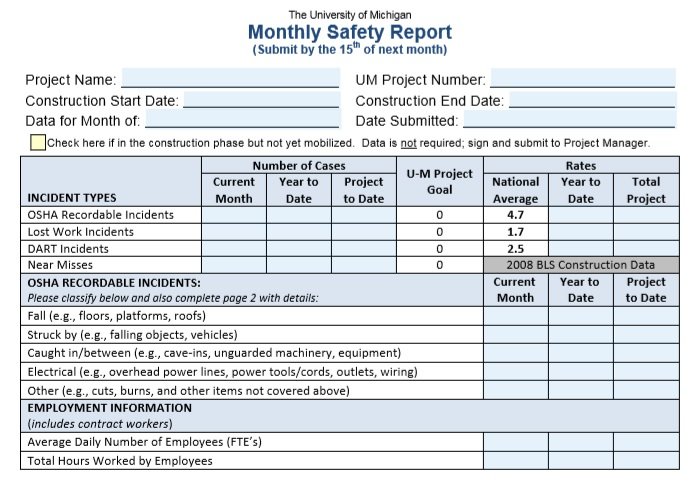
Job Safety Analysis Examples Electrical
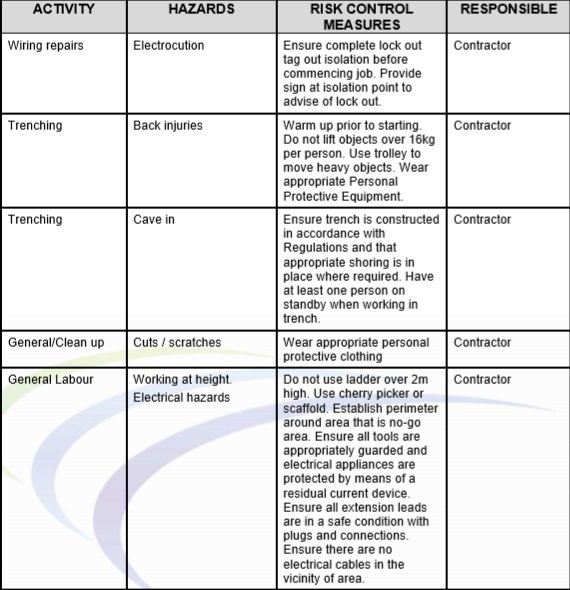
Job Safety Analysis Maintenance Workers
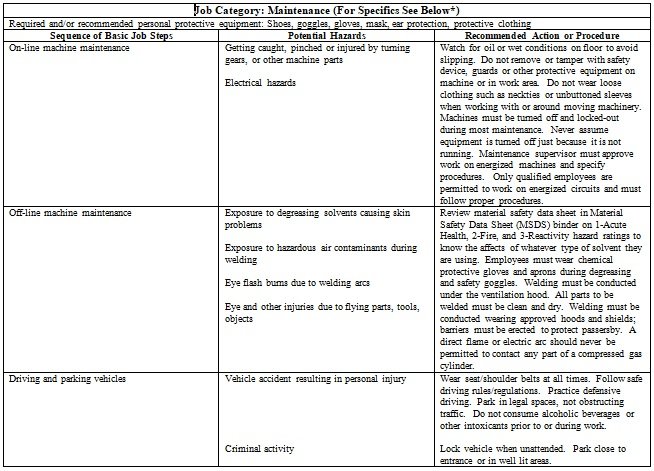
Job Safety Analysis Form
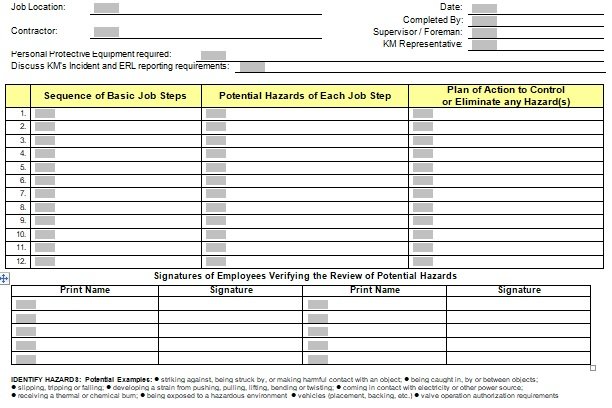
Job Hazard Analysis Checklist
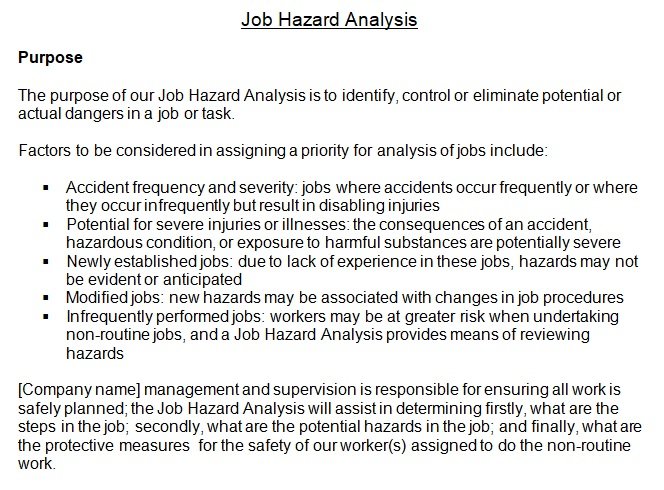
The essential components of a JSA template:
A job safety analysis template should contain the following essential components;
Job description
The job description is the first component of a job safety analysis template. The description should clearly state the tasks that need to be completed and any particular requirements or qualifications required for the job. Any physical or mental hazards associated with the task should also be mentioned here. This can reduce potential risks by making sure that only qualified personnel are assigned to complete the task.
Hazard identification
After determining the potential hazards associated with a specific job, determine exactly what those hazards are. Thus, you need to look at every aspect of the task at hand. Also, identify where there might be potential risks like sharp edges, falling objects, hazardous chemicals, etc. The nature of the risk doesn’t matter, you have to write down every single risk that may potentially occur while performing the task. This ensures that appropriate action can be performed if the need arises.
Safety protocols
After identifying all of the potential hazards associated with a specific job or task, create protocols to prevent those hazards from occurring in the workplace. This includes the following;
- Specifying procedures for proper use of protective gear like gloves or goggles
- Highlighting safe operating practices for tools and machinery that include regular maintenance checks
- Determining areas where extra caution is needed like wet floors or hazardous materials
- Giving training on proper handling techniques for hazardous materials
Final Thoughts
A Job Safety Analysis Template is not just a form to fill out before work begins. It is a practical safety tool that helps people think clearly, communicate better, and prevent injuries before they happen.
The best JSA templates are simple, specific, and easy to use. They break the job into steps, identify real hazards, and list controls that workers can actually follow.
In the real world, safety does not improve because someone wrote a perfect document in an office. Safety improves when the people doing the work are involved, alert, trained, and willing to speak up.
A job safety analysis gives them the structure to do exactly that.
When used honestly, it can turn a rushed task into a planned task. And in many workplaces, that small pause before starting the job can make all the difference.
FAQ’s:
What are the basic steps of a job safety analysis?
- Chooses the job or task to be analyzed
- Split the task or job into specific components or steps
- Determine potential hazards
- Identify control measures to prevent those hazards
- Address the results
Who should write a job safety analysis template?
According to the Occupational Health and Safety Act, a competent person who knows the hazards that are present on the job site should write a JSA template.
What are the main elements of JSA?
There are three main elements of a JSA;
- Job step (what you are going to perform)
- Potential Hazard (what are the risks associated with it)
- Control measure (what to do to ensure it doesn’t cause harm)
Why is a Job Safety Analysis Template important?
It is important because it helps prevent workplace injuries, improves communication, supports safety compliance, and ensures workers understand hazards before starting work.
Who should complete a job safety analysis?
A job safety analysis should be completed by supervisors, safety personnel, and the workers who perform the task. Worker involvement is very important because they often understand the job hazards best.
Is a Job Safety Analysis Template required by law?
Requirements depend on the industry, location, and type of work. Even when a specific JSA form is not legally required, employers are generally expected to identify hazards and protect workers. A JSA is a practical way to support that responsibility.
What is the difference between JSA and risk assessment?
A JSA focuses on the steps of a specific job task and identifies hazards for each step. A risk assessment may be broader and often evaluates the likelihood and severity of different risks across a workplace, process, or project.
What is the difference between JSA and JHA?
JSA means Job Safety Analysis, while JHA means Job Hazard Analysis. In many workplaces, the terms are used almost the same way. Both focus on identifying hazards and controls for job tasks.
What are control measures in a Job Safety Analysis?
Control measures are actions used to reduce or eliminate hazards. Examples include lockout/tagout, machine guarding, ventilation, fall protection, barricades, safe work procedures, training, and PPE.
Can a JSA reduce workplace accidents?
Yes. A properly completed and reviewed JSA can reduce accidents by helping workers recognize hazards before starting work and follow safer procedures during the task.



![Free School Fee Receipt Template [Word, PDF]](https://exceltmp.com/wp-content/uploads/2021/08/school-fee-receipt-template-word-150x150.jpg)