
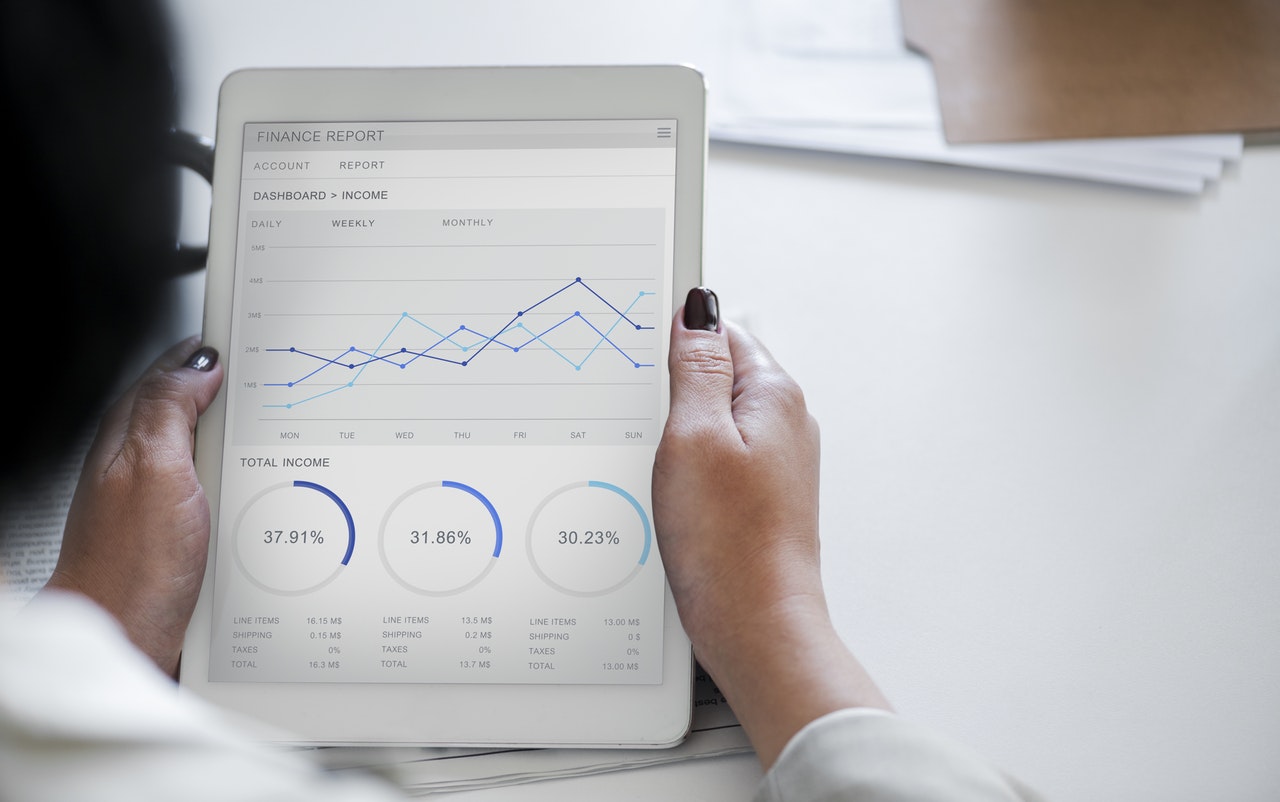
The project managers use a cost benefit analysis template to determine the balance between the strengths and weaknesses of the project. This tool provides a framework that helps them in increasing project viability and efficiency.
What is a cost benefit analysis?
A cost benefit analysis is a systematic approach to estimate possible profit from investments to achieve benefit. It is a process by which organizations analyze the strengths and weaknesses of the project and use the best procedure to achieve benefits. Furthermore, this analysis is performed for the following purposes;
- Creating a visual overview of an endeavor’s health
- Comparing two or more options
- Determining the feasibility of a project or effort
- Making the evaluation of new hires easier
- Deciding resource allocation
- Making purchase decisions
- Developing business strategies
Cost
Cost is the value of money that is used for investment. There are many types of costs used in cost benefit analysis.
- Direct Cost: It is directly associated with projects like the budget used for manufacturing, raw materials, and inventory.
- Indirect Cost: This cost is not directly associated with the system like the cost of electricity, utilities, and rent.
- Intangible cost: The cost that cannot be accurately assessed like human resources.
- Opportunity cost: It includes alternative investment.
Benefit
Benefits are desirable advantages gained from the total investment. Here are some types of benefits;
- Direct benefit: This type of benefit is specific and fixed.
- Indirect benefit: These benefits are not specific and fixed.
- Intangible benefits: These include benefits that are difficult to measure like improving employ’s safety and their satisfaction.
- Competitive benefits: These benefits are obtained through market shares as the result of decisions.
Why You Need a Cost Benefit Analysis Template
A blank page can make decision-making harder. You may know you need to compare costs and benefits, but where do you start?
That is where a cost benefit analysis template helps.
A template gives you a ready-made structure. Instead of guessing what to include, you can fill in each section step by step.
It helps you:
- List all direct and indirect costs.
- Estimate financial and non-financial benefits.
- Compare multiple options.
- Identify risks and hidden expenses.
- Calculate return on investment.
- Make decisions with more confidence.
- Explain your recommendation to managers, clients, or stakeholders.
The biggest advantage is clarity. A template takes a messy decision and turns it into something easier to discuss.
I have seen many projects fail not because the idea was bad, but because no one took the time to look at the full picture. A cost benefit analysis forces you to slow down just enough to make a smarter call.
The essential components of a cost benefit analysis template:
Include the following essential components in your cost benefit analysis template;
Executive summary
This part of your document is the most important. Highlight all of your project’s details just in one paragraph. You should keep this section both concise and to the point. Additionally, you can use your project proposal to write the executive summary of the analysis.
Purpose
Write the purpose of your project after the executive summary. First, you have to specify the name of the project and your reason for performing the analysis while briefing about the project’s analysis. The purpose of performing this analysis is to identify a project’s feasibility. This means it explains how the project will be helpful for your business.
List of alternatives
In this section, write down the alternative approaches for your project as well as provide their description. Describe their current services, products, and market.
Costs
This is another important part of the analysis where you mention all of the non-monetary and monetary costs. Here, highlight the developing and operating alternatives that you discussed in the above section.
Benefits
The expected non-monetary and monetary benefits that your business can obtain from the project, highlight them in this section.
Summary
In this final section of your document, write the summary of the results along with presenting the facts and elements to make a comparison.
When Should You Use a Cost Benefit Analysis Template?
You do not need a formal cost benefit analysis for every tiny decision. Nobody needs a spreadsheet to decide which office pen to buy.
But when a decision involves money, risk, time, or long-term impact, using a template is a smart move.
You should use one when you are:
Starting a New Project
Before approving a project, you need to know whether the expected results justify the investment.
Buying Software or Equipment
A tool may look affordable at first, but training, setup, maintenance, and subscription fees can change the real cost.
Hiring New Employees
Hiring is not just about salary. There are recruitment costs, onboarding time, benefits, workspace, software, and management effort.
Launching a Marketing Campaign
A cost benefit analysis can help estimate whether the campaign is likely to generate enough leads, sales, or brand value.
Outsourcing Work
Sometimes outsourcing saves time. Other times it creates quality issues, communication delays, or hidden costs.
Choosing Between Options
If you have two or three possible solutions, a cost benefit analysis helps compare them side by side.
Key Parts of a Cost Benefit Analysis Template
A useful cost benefit analysis template should include more than just two columns labeled “costs” and “benefits.” That may work for a quick personal decision, but business decisions usually need more detail.
Here are the main sections your template should include.
Project or Decision Summary
Start with a short overview of the decision you are analyzing.
This section should answer:
- What decision needs to be made?
- Why is this decision important?
- Who will be affected?
- What problem are you trying to solve?
- What options are being considered?
Example:
- Project: Implementing a customer support chatbot
- Purpose: Reduce response time and lower support workload
- Decision Needed: Decide whether to invest in chatbot software
- Stakeholders: Customer support team, customers, operations manager, finance team
This section sets the context. Anyone reading the analysis should understand the decision before they look at the numbers.
List of Costs
Costs are not always obvious. Many people only count the upfront price and forget the hidden expenses.
A complete cost section should include both direct and indirect costs.
Direct Costs
These are the clear, measurable costs directly connected to the decision.
Examples include:
- Purchase price
- Monthly subscription fees
- Staff wages
- Consultant fees
- Equipment costs
- Installation fees
- Training expenses
- Marketing spend
- Maintenance charges
Indirect Costs
These are costs that may not appear on the invoice but still affect the business.
Examples include:
- Staff time spent learning a new system
- Temporary productivity loss
- Management oversight
- Customer disruption
- Process changes
- Internal communication time
- Opportunity cost
Opportunity cost is especially important. It means the value of what you give up by choosing one option over another.
For example, if your team spends three months building an internal tool, they may not be able to work on a revenue-generating product during that time.
List of Benefits
Benefits are the positive outcomes you expect from the decision. These can be financial or non-financial.
Financial Benefits
These are benefits that can be measured in money.
Examples include:
- Increased revenue
- Lower operating costs
- Reduced labor expenses
- Higher productivity
- Fewer errors
- Improved customer retention
- Faster delivery
- Better conversion rates
Non-Financial Benefits
Some benefits are harder to measure but still important.
Examples include:
- Better customer experience
- Improved employee morale
- Stronger brand reputation
- Reduced stress
- Better decision-making
- Increased safety
- Improved compliance
- Faster communication
Do not ignore non-financial benefits just because they are harder to calculate. In many cases, they are the reason a project is worth doing.
For example, improving customer support may not show immediate revenue growth, but it can reduce complaints, improve loyalty, and protect your brand.
Timeframe
A cost benefit analysis should include a timeframe. Costs and benefits do not always happen at the same time.
Some costs happen immediately. Benefits may appear slowly over months or years.
For example, if you buy new manufacturing equipment, the upfront cost may be high. But if it reduces waste and increases production for five years, the long-term benefit could be much greater.
Common timeframes include:
- 3 months
- 6 months
- 1 year
- 3 years
- 5 years
The right timeframe depends on the decision. A small marketing test may only need a 90-day analysis. A building project may need a 10-year view.
Cost Benefit Comparison
This is where the template becomes powerful.
You compare total estimated costs with total estimated benefits.
A simple formula is:
Net Benefit = Total Benefits – Total Costs
Example:
Total Benefits: $80,000
Total Costs: $50,000
Net Benefit: $30,000
If the net benefit is positive, the project may be worth pursuing. If it is negative, you may need to rethink it, adjust the plan, or choose another option.
Another useful formula is:
Benefit-Cost Ratio = Total Benefits / Total Costs
Example:
$80,000 / $50,000 = 1.6
A ratio above 1 means the benefits are greater than the costs. A ratio below 1 means costs are higher than benefits.
Risks and Assumptions
Every analysis is based on assumptions. That is not a bad thing, but you need to be honest about them.
For example, you may assume:
- Sales will increase by 15%.
- Training will take two weeks.
- Customer demand will remain stable.
- Software costs will not increase.
- The project will launch on time.
You should also list risks that could affect the outcome.
Examples:
- Costs may increase.
- Staff may resist the change.
- Benefits may take longer to appear.
- The vendor may not deliver as promised.
- Customer behavior may not match expectations.
- Competitors may respond quickly.
This section makes your analysis more realistic. It also helps stakeholders understand what could go wrong.
Recommendation
At the end of the cost benefit analysis template, include a clear recommendation.
Do not leave readers guessing.
Your recommendation may be:
- Approve the project.
- Reject the project.
- Delay the decision.
- Run a smaller pilot first.
- Choose Option B instead of Option A.
- Recalculate after getting better data.
A strong recommendation should briefly explain why.
Example:
“Based on the estimated net benefit of $30,000 over 12 months and the expected improvement in customer response time, this project is recommended. However, a three-month pilot should be completed before full implementation to reduce risk.”
How to perform a cost benefit analysis?
There are three main steps to performing a cost benefit analysis;
Determining the costs
Brainstorm on all of the potential costs including payroll, equipment, training, licenses, travel costs, and more. Take into account non-monetary costs that may be relevant to risks, productivity, or uncertainties that can affect your project results.
Determining the benefits
Since specific intangibles may not have precise monetary values, it isn’t easy to come up with accurate projections of revenue. Hence, this step has more difficulties as compared to monetizing or identifying costs. Likewise the costs, you have to assign values to the benefits to indicate in present-value terms.
Comparing the costs and benefits
Start comparing the total amounts after writing down all of the benefits and costs. You may need to review your calculations if the two total values are very close or equal. Also, you may want to ensure that you haven’t missed or overlooked any benefits or costs.
Some examples of cost benefit analysis:
Let us discuss some examples of cost benefit analysis;
Cost benefit analysis for projects
A cost benefit analysis can be used to identify the viability of a new project or make a comparison between two project ideas. With this tool, the team can determine what a project may cost and what the positive outcomes are. To get a comprehensive picture, brainstorm before starting a project and pull multiple team members into the process. In addition, you can make the best decision for your business’s overall health by weighing the advantages, disadvantages, financial implications, and contributions to goal progression.
Financial cost benefit analysis
This type of cost benefit analysis provides a look at the overall financial health of your business. This may include net present value and cash flow. To understand better where financial setbacks are happening, break down the analysis by department. After identifying where setbacks are coming from, use the details to make adjustments to enhance financial health.
Cost benefit analysis for products
A cost benefit analysis for products is performed to;
- Identify the viability of new project ideas
- Measure the profitability of ongoing projects
- Determine bottlenecks and other issues relevant to a particular product
Cost Benefit Analysis Template Example
Here is a simple template you can use and customize.
Project Information
| Cost Item | Description | One-Time Cost | Recurring Cost | Total Estimated Cost |
|---|---|---|---|---|
| Software/Equipment | ||||
| Training | ||||
| Labor | ||||
| Implementation | ||||
| Maintenance | ||||
| Other Costs | ||||
| Total Costs |
Benefit Table:
| Benefit Item | Description | Financial Value | Non-Financial Impact | Total Estimated Benefit |
|---|---|---|---|---|
| Increased Revenue | ||||
| Cost Savings | ||||
| Time Savings | ||||
| Productivity Improvement | ||||
| Customer Satisfaction | ||||
| Risk Reduction | ||||
| Total Benefits |
Final Calculation
Risks and Assumptions
Final Recommendation
Cost Benefit Analysis Example for a Small Business
Let us say a small online store is considering investing in email marketing software.
Decision
The business wants to decide whether to buy an email automation tool for abandoned cart emails, customer follow-ups, and promotional campaigns.
Estimated Costs
| Cost Item | Estimated Cost |
|---|---|
| Software subscription | $2,400 per year |
| Setup support | $800 |
| Staff training | $500 |
| Email template design | $700 |
| Monthly management time | $3,600 per year |
| Total Cost | $8,000 |
Estimated Benefits
| Benefit Item | Estimated Value |
|---|---|
| Recovered abandoned cart sales | $12,000 |
| Repeat customer purchases | $8,000 |
| Reduced manual email work | $3,000 |
| Improved customer engagement | $2,000 |
| Total Benefit | $25,000 |
Calculation
Download Free Cost Benefit Analysis Template
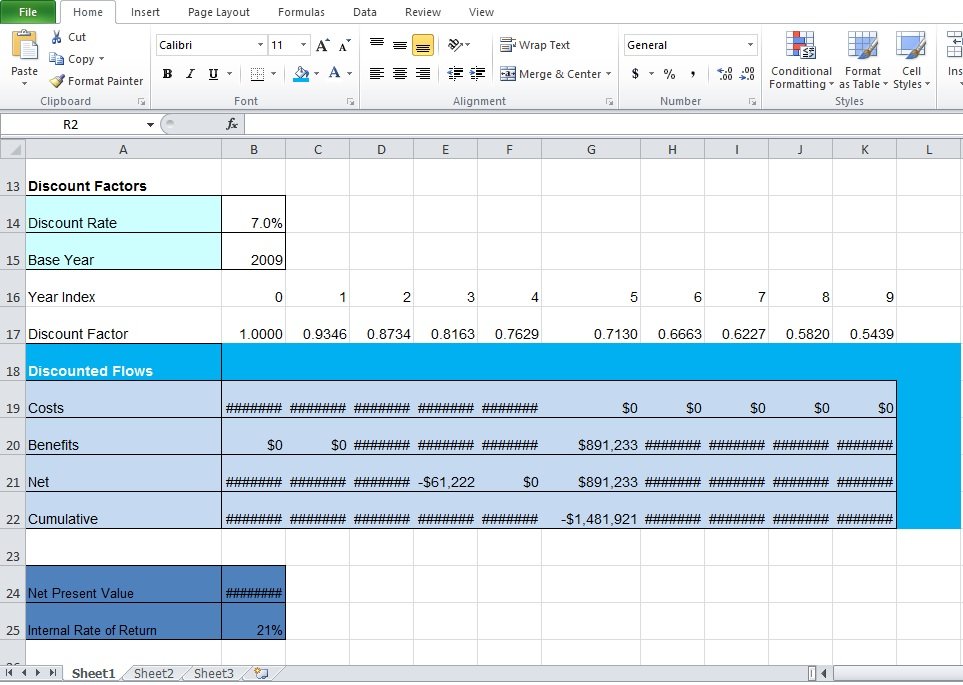
Simple Cost Benefit Analysis Worksheet
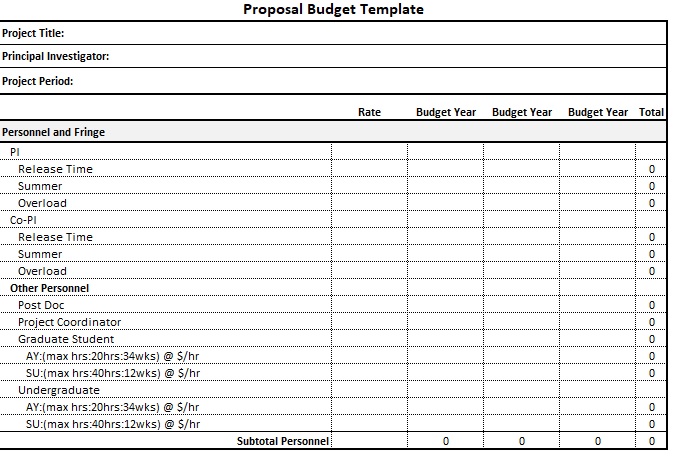
Project Cost Analysis Template
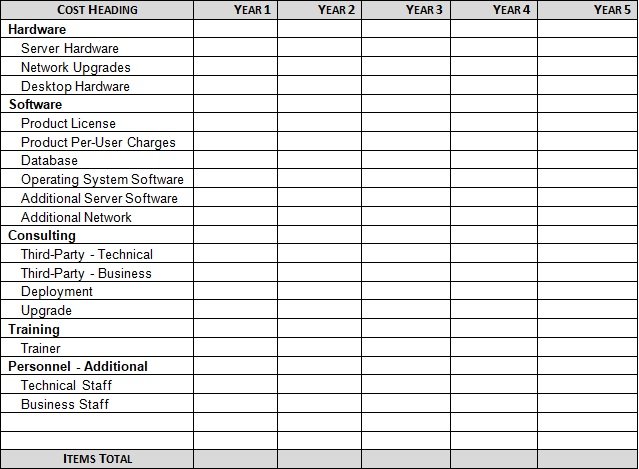
Product Cost Analysis Template Excel
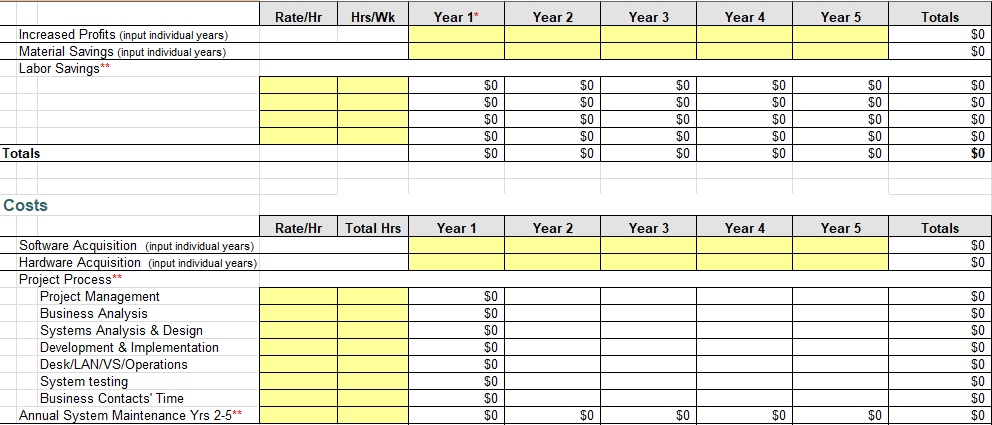
Cost Benefit Analysis Template xls
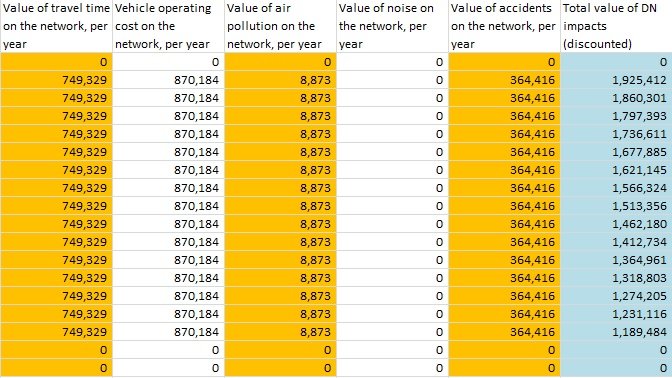
Cost Benefit Analysis Example for Students
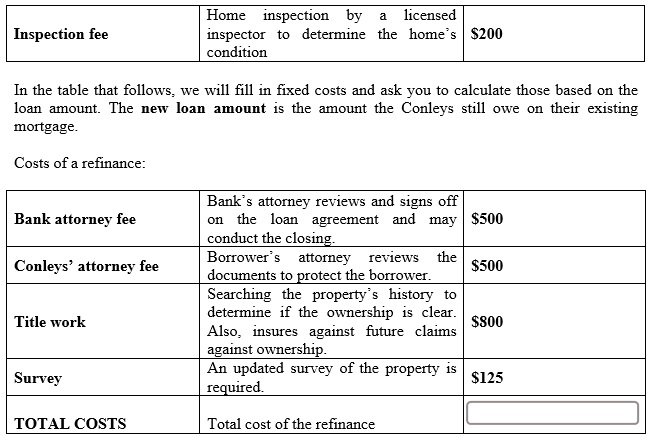
Cost Benefit Analysis Report
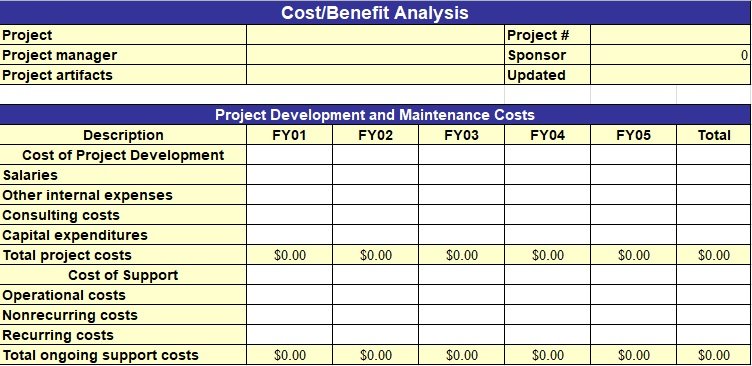
Simple Cost Benefit Analysis Example
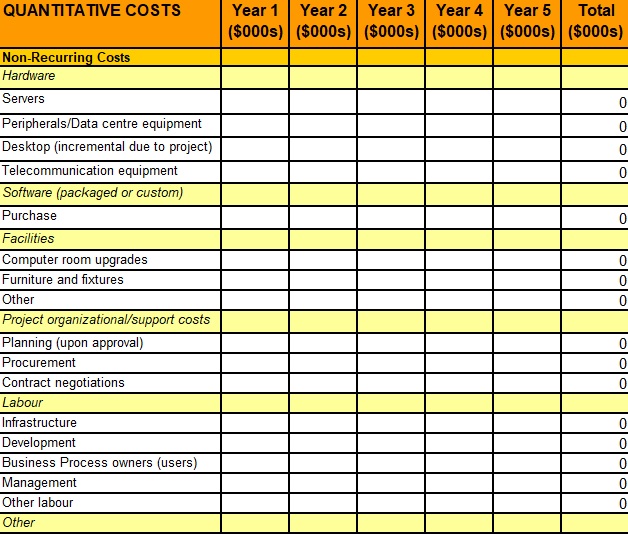
Cost Benefit Analysis Template Excel
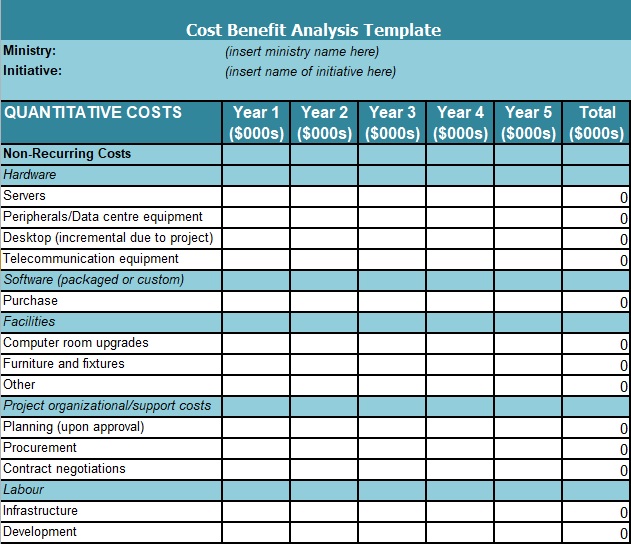
Cost Benefit Analysis Excel
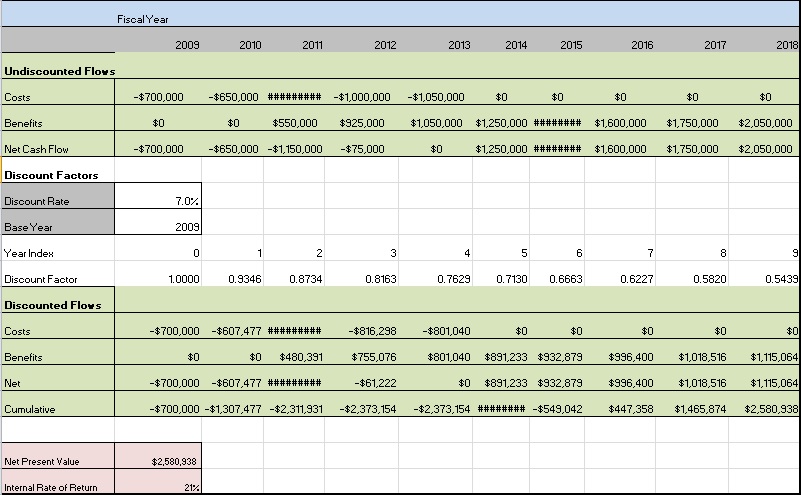
Cost Analysis Report Template
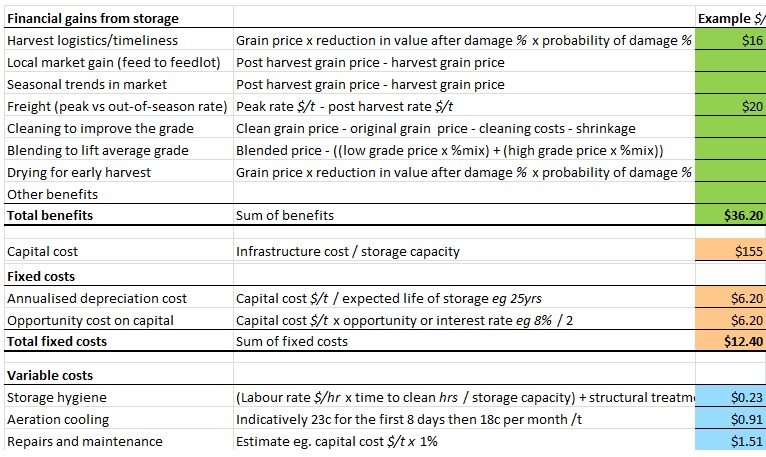
How to Create a Cost Benefit Analysis Template
Now let us go through the process in a more practical way.
Step 1: Define the Decision Clearly
A vague question creates a vague analysis.
Instead of writing:
Write:
Step 2: Identify All Costs
Write down every cost you can think of. Do not filter too early.
Ask yourself:
- What will we pay upfront?
- What will we pay monthly or yearly?
- How much staff time is needed?
- Will we need training?
- Will there be maintenance?
- What other work will be delayed?
- What happens if the project takes longer than expected?
Many cost benefit analyses become weak because they underestimate costs. Be realistic, not overly optimistic.
Step 3: Identify All Benefits
Next, list all expected benefits.
Ask:
- Will this increase revenue?
- Will this reduce expenses?
- Will it save time?
- Will it reduce errors?
- Will customers be happier?
- Will employees work more efficiently?
- Will risk decrease?
- Will quality improve?
Try to estimate financial value where possible. For non-financial benefits, describe the impact clearly.
Step 4: Assign Monetary Values
This is the part many people find difficult. But you do not need perfect numbers. You need reasonable estimates.
For example, if a tool saves 10 hours per week and the average hourly cost of staff time is $30, then the weekly value is:
10 x $30 = $300
Over one year, that is around:
$300 x 52 = $15,600
Even if the estimate is not perfect, it gives you a better basis for decision-making than guessing.
Step 5: Compare Costs and Benefits
Once you have totals, compare them.
Look at:
- Total cost
- Total benefit
- Net benefit
- Benefit-cost ratio
- Payback period
The payback period tells you how long it takes to recover your investment.
Example:
If a project costs $10,000 and saves $2,000 per month, the payback period is five months.
Step 6: Review Risks
A project may look profitable on paper but still be risky.
For example, a new product may have a strong potential return, but if demand is uncertain or production is complicated, you need to account for that.
You can also create best-case, expected-case, and worst-case scenarios.
This gives decision-makers a more balanced view.
Step 7: Make a Recommendation
End with a clear conclusion.
A good recommendation is direct, but not careless.
For example:
“Based on the analysis, the project should move forward as a limited pilot. The estimated benefit is strong, but customer adoption is uncertain, so a smaller test is recommended before full investment.”
That sounds much stronger than simply saying, “Yes, we should do it.”
Cost Benefit Analysis Template for Project Management
Project managers use cost benefit analysis to decide whether a project should begin, continue, change direction, or stop.
A project management version should include:
- Project name
- Business problem
- Project goals
- Estimated budget
- Required resources
- Expected savings or revenue
- Timeline
- Risks
- Dependencies
- Stakeholder impact
- Final recommendation
For project managers, the template is especially useful during project approval. It helps leadership understand not only what the project costs, but what value it is expected to create.
Cost Benefit Analysis Template for Business Decisions
For general business decisions, your template should focus on financial return, operational impact, and strategic value.
Useful sections include:
- Decision summary
- Available options
- Cost breakdown
- Revenue impact
- Productivity impact
- Customer impact
- Risk level
- Strategic fit
- Recommendation
This works well for decisions like expanding into a new market, changing suppliers, launching a service, or investing in automation.
Cost Benefit Analysis Template for Personal Finance
A cost benefit analysis is not only for companies. You can use the same idea in personal life.
For example:
- Should I buy a car or keep using public transport?
- Should I go back to school?
- Should I move to a new city?
- Should I buy a house?
- Should I start a side business?
A personal version may include:
- Upfront cost
- Monthly cost
- Time commitment
- Lifestyle benefit
- Long-term financial impact
- Emotional value
- Risk
- Alternative options
Sometimes seeing the numbers on paper makes the decision surprisingly clear.
Final Thoughts
A cost benefit analysis template does not make decisions for you, but it makes decisions easier to understand.
It gives you a structured way to compare what you will spend with what you expect to gain. More importantly, it helps you notice the details that often get missed when decisions are made too quickly.
I personally believe every meaningful business decision should go through some version of this process. It does not always need to be a complicated spreadsheet. Sometimes a simple table is enough. What matters is that you take the time to think clearly.
Before you approve the next project, buy the next tool, hire the next person, or launch the next campaign, pause for a moment and run the numbers.
The best decisions are not always the biggest or boldest. Sometimes they are simply the ones that have been thought through properly.
FAQ’s:
What are the basic concepts of cost analysis?
These are as follows;
- Fixed costs
- Explicit costs
- Social costs
- Implicit costs
- Replacement costs
What are the main steps of conducting a cost benefit analysis?
The three main steps of performing a cost benefit analysis are;
- Analyze all cost types
- Analyze potential risks and impacts
- Assess the cost benefit analysis
What is a cost benefit analysis template?
A cost benefit analysis template is a structured document or spreadsheet used to compare the expected costs and benefits of a decision, project, or investment. It helps you calculate whether the benefits outweigh the costs.
How do you write a cost benefit analysis?
To write a cost benefit analysis, define the decision, list all costs, list all benefits, assign values where possible, compare totals, review risks, and make a final recommendation.
What is the main purpose of cost benefit analysis?
The main purpose is to help individuals or organizations decide whether a project or decision is worth pursuing based on its expected value.
Can cost benefit analysis include non-financial benefits?
Yes. Non-financial benefits such as customer satisfaction, employee morale, safety, brand reputation, and reduced stress can be included, even if they are harder to measure.
Is cost benefit analysis the same as ROI?
No. ROI measures return on investment as a percentage. Cost benefit analysis is broader because it compares all costs and benefits, including non-financial factors.
What is the difference between cost benefit analysis and cost effectiveness analysis?
Cost benefit analysis compares costs and benefits in monetary terms. Cost effectiveness analysis compares costs with outcomes, especially when benefits are difficult to express in money.
What are common mistakes in cost benefit analysis?
Common mistakes include ignoring hidden costs, overestimating benefits, using weak data, forgetting opportunity cost, and failing to consider risks.
Is a cost benefit analysis useful for small businesses?
Yes. Small businesses can use cost benefit analysis to make better choices about hiring, marketing, equipment, software, expansion, and daily operations.
