A panel schedule template is an important safety tool that helps teammates in identifying what equipment is powered by each breaker and provides detailed information about the electrical panelboard. You can find this tool in the main electrical room or near the panelboard. Moreover, it should be updated regularly for safety.
Table of Contents
What is a panelboard schedule?
A panelboard schedule is used by electrical experts to get detailed information about the electrical panelboard components. They use it while designing electrical engineering and construction projects and to identify how much power is required for their installation and operation.
In addition, electrical engineers, electricians, or project managers use a panel schedule for the following purposes;
- To determine the electrical power source for specific equipment
- To properly maintain the system
- To troubleshoot issues
- To plan for future upgrades and maintenance
You can use a panel schedule template in residential, commercial, or industrial settings to organize and manage electrical systems. Electrical professionals use it to maintain accurate records of panel configurations.
Why Is a Panel Schedule Important?
One thing I appreciate about a properly prepared panel schedule is how much time it can save later.
Imagine arriving at a commercial building because one office has suddenly lost power. Without a labeled electrical panel, you might have to test several breakers just to determine which one serves the affected area.
With a detailed panel schedule, the correct circuit may be identified immediately.
Faster Electrical Troubleshooting
Electricians can identify the appropriate breaker much faster when circuits are clearly documented.
Instead of switching multiple breakers on and off, they can locate the required circuit directly from the panel schedule.
Improved Electrical Safety
Clearly identifying circuits reduces the risk of accidentally disconnecting the wrong equipment.
This becomes especially important in buildings containing:
- Medical equipment
- Security systems
- Fire alarms
- Computer servers
- Emergency lighting
- Industrial machinery
Correct documentation helps technicians know exactly which electrical loads are connected to each breaker.
Better Project Coordination
Electrical contractors, engineers, architects, estimators, inspectors, and facility managers often rely on the same electrical drawings.
A clear panel schedule makes communication easier because everyone can refer to the same circuit information.
Easier Future Renovations
Buildings rarely stay exactly the same forever.
Offices are remodeled, rooms are renovated, new machinery is installed, and electrical equipment is upgraded.
A properly maintained panel schedule provides a reference point when engineers or electricians need to understand the existing electrical system.
Better Load Management
Panel schedules can also help engineers understand how electrical loads are distributed across phases.
In three-phase systems, balancing loads between phases is an important part of good electrical design.
What information does a panel board schedule show?
A panel board schedule shows the following details;
Equipment name
Here, equipment refers to apparatus, appliances, conductors, insulators, fans, etc.
Circuit number
Assign any unique numerical digit to the circuits in order to avoid confusion. According to the section the circuit serves, you can assign the number. A circuit is a path through which electricity can flow and it is made of wires of different sizes.
Circuit breaker size
Some breakers are big while others are small in terms of amperes. However, it depends on which equipment they have served. The largest breaker can be 32 amps, 1000 amps, or more while the smallest breaker can be 2 amps. For lighting circuits, circuit breakers are small. Since appliances like cookers, freezers, or water heaters need more amperes/voltage so they have large circuit breakers.
Number of poles/phases
A pole or phase refers to a switch that controls the total separate circuits. Most poles are single or double. A single-pole switch has one circuit while a double-pole switch has two circuits within the same button.
What are the different types of electrical panel schedule templates?
The main types of electrical panel schedule templates are;
Branch panel schedule
This type of panel schedule is used with a panel board device. It has three types of templates;
- One-column panel schedule
- Two columns’ circuits across the schedule
- Two columns circuit down schedule
Data panel schedule
You can use this type of panel schedule template with a data panel device. You can use it to identify circuits and data outlets. Devices such as security alarms, fire alarms, phones, and more can be connected to a power panel.
Switchboard panel schedule
Large commercial or industrial facilities that have various switchboards use switchboard panel schedules. It shows the details of the circuits that are connected to each switchboard.
Residential Panel Schedule
A residential panel schedule is usually relatively simple.
Typical circuits may include:
- Bedroom outlets
- Living room outlets
- Kitchen receptacles
- Dishwasher
- Refrigerator
- Washing machine
- Electric dryer
- Water heater
- Air conditioner
- Lighting circuits
- Garage outlets
- Outdoor lighting
For homeowners, keeping an updated residential electrical panel schedule can be extremely helpful.
For example, if I needed to replace a light fixture in the kitchen, I would want to know exactly which breaker controls that circuit before starting any work.
A clear panel schedule eliminates unnecessary guessing.
Commercial Panel Schedule
Commercial buildings often require more detailed panel schedules.
A commercial panel might serve:
- Office lighting
- General receptacles
- HVAC equipment
- Computer systems
- Conference rooms
- Copy rooms
- Break rooms
- Security systems
- Signage
- Exterior lighting
Commercial electrical designs often contain multiple panels, so consistent naming becomes especially important.
An office building, for example, might contain:
- LP-1 for lighting
- LP-2 for another floor
- PP-1 for general power
- MDP for main distribution
Using standardized templates makes the electrical documentation easier to understand.
Industrial Panel Schedule
Industrial electrical systems can be considerably more complicated.
Industrial panels may serve:
- Motors
- Pumps
- Compressors
- Conveyor systems
- Industrial heaters
- Production machinery
- Control systems
- Ventilation equipment
Industrial panel schedules often require additional technical information.
This could include:
- Motor horsepower
- Full-load current
- Three-phase load calculations
- Equipment identification numbers
- Breaker trip ratings
- Feeder information
In these environments, accurate documentation is especially important because electrical downtime can interrupt production.
Lighting Panel Schedule
Lighting panels primarily supply lighting circuits.
The circuit descriptions might include:
- Lobby Lighting
- Office Lighting
- Corridor Lighting
- Parking Lighting
- Exterior Lighting
- Stairwell Lighting
- Emergency Lighting
Modern lighting panel schedules may also identify lighting control systems or contactors.
Power Panel Schedule
A power panel commonly supplies receptacles, equipment, and mechanical loads.
Typical circuit descriptions could include:
- Office Receptacles
- Kitchen Equipment
- Water Heater
- HVAC Equipment
- Pump Motor
- Equipment Outlet
- Server Room Receptacles
Power panels typically require careful load calculations because some connected equipment can consume significant electrical power.
How to create a panel schedule?
Consider the following steps to create a panel schedule;
Specify all loads in the whole installation
Electrical components that consume power within the facility are known as electrical loads. A load refers to a point where an electric current after reaching changes into a different energy. For examples;
- Change into light through an electric bulb
- Change into heat through a heater
- Turn a motor
- Charge a battery
Mention the loads
Since there are different types of loads so specify each of its type.
Resistive loads
Resistive loads such as light bulbs and heaters turn electricity into heat due to their resisting flow.
Inductive
Inductive like transformers, coils, and electric motors change electrical current into magnetic energy.
Capacitive
Capacitive like motors, TVs, phone circuits, etc. store small amounts of energy to power other appliances.
Combinative
Combinative such as radio tuners, cathode ray tubes for TV or monitors, and single-phase motors combine two or more types of energy to work. In order to count the number of loads, you have to count the number of sockets and switches within the facility.
Write the electrical properties of the loads
A unique number of amperes is required by each load to work. When assigning numbers, consider voltage and efficiency and then categorize and name each load.
Categorize all equipment
It would be better to categorize all equipment as switchboard, load duty, and criticality. You can use a switchboard to divide and distribute electricity into various circuits. For each circuit, it contains a fuse that provides protection to them.
The importance of equipment is considered to measure load criticality. In order to avoid challenges with distribution, some equipment must be supplied with electricity. On the other hand, the length of the period when a specific load stays on and the time it stays off refers to load duty.
Identify the approximate amount of power that every load will consume
Some loads will consume a small amount of power and some will consume a lot of power. It doesn’t matter whether they stay on for many hours or for a short time.
The benefits of the panel schedule:
Let us discuss some key benefits of the panel schedule;
Safety
For safely de-energizing and locking out a panelboard, the panel schedules provide experts with critical information. This way, you can avoid accidents and injuries while working on the electrical system.
Determine the right electrical load
In the evenings, weekends, and holidays, the electricity is used at its peak. During this time and the normal hours of the day, the electrician has to correctly estimate the amount of electrical load. With the help of a panel schedule template, they can calculate their estimates correctly.
Adding extra loads
A site or facility may expand in the future and due to the need for more gadgets, they need to add extra loads. Thus, if the owner doesn’t use the panel schedule template, they may overload some circuits that affect the breakers, sockets, main supply, or wiring.
Better power management plans
To keep the power load balanced in the periods between peak and off-peak hours, you need a panel schedule to know a power management strategy. By keeping electricity costs regulated, the home of the facility owner saves money every month.
Install the right control system
An Excel panel schedule template is used by electrical engineers to determine the size of control systems, conduits, and conductors that they require for installation.
Prevention of accidents
At the start of the electricity installation process, businesses have to fill out their electrical panel schedule template as per the safety standards set by OHSA (Occupational Safety and Health Administration). Also, they have to label the spare breakers that are not in use and keep them turned off. Keeping a spare breaker on or turning off a breaker when it is on is dangerous. Hence, having a correct panel schedule is important to prevent electrical accidents at workplaces and homes.
Labeling equipment
With the help of this document, electricians label equipment such as breakers, circuits, poles, or more correctly. Business time spent to determine how the circuits are running gets saved if the equipment is labeled correctly.
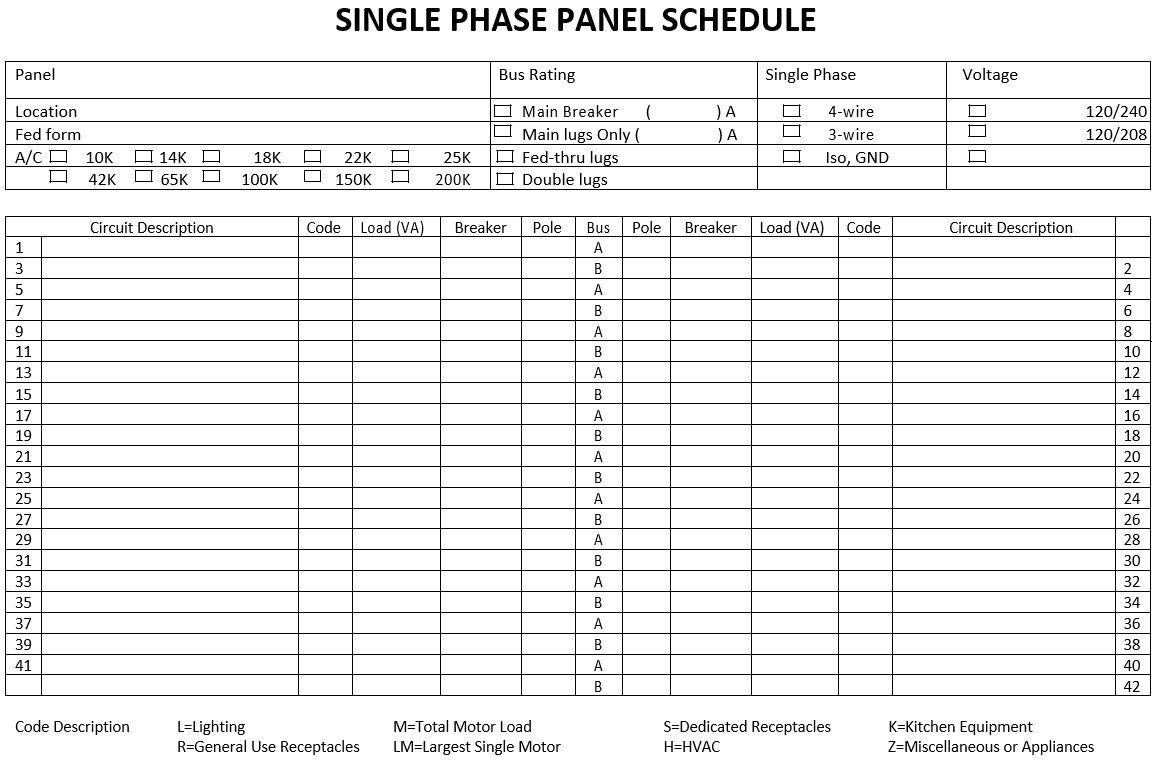
single phase panel schedule template
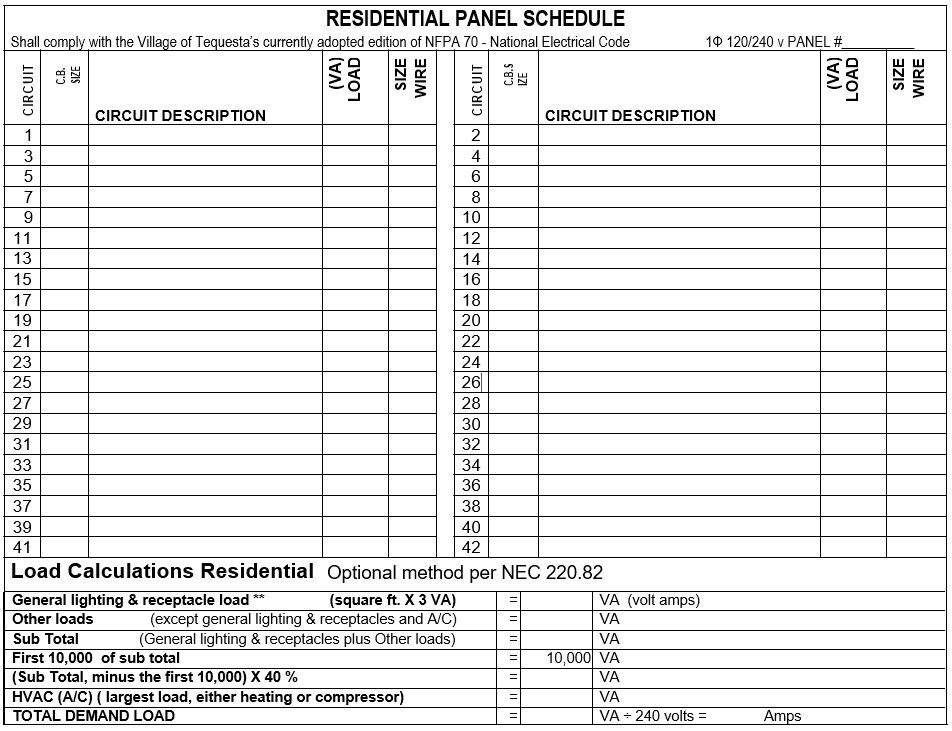
residential panel schedule template
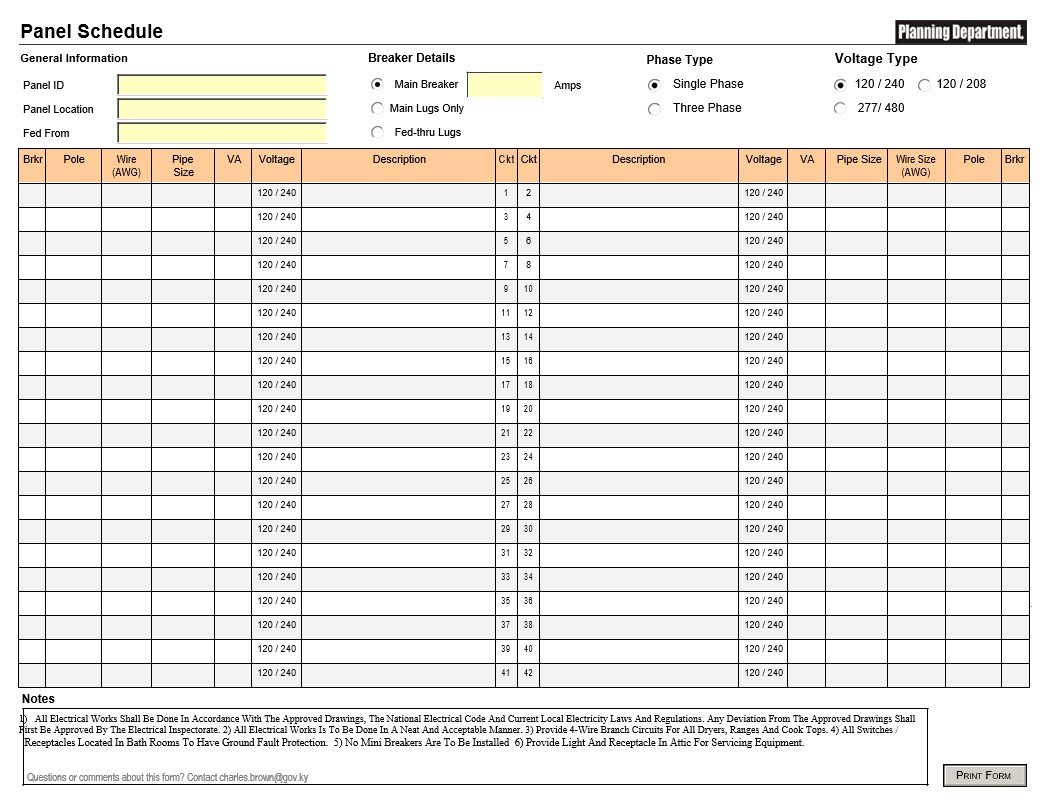
panel schedule template
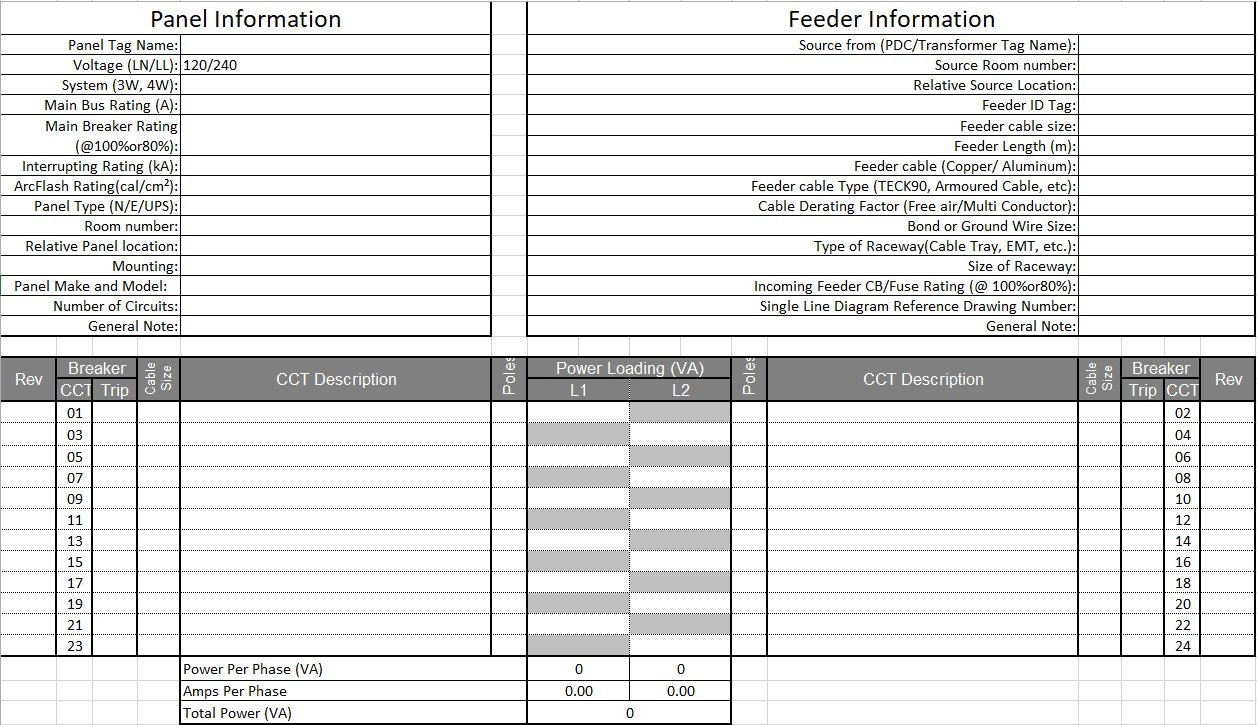
panel schedule template excel
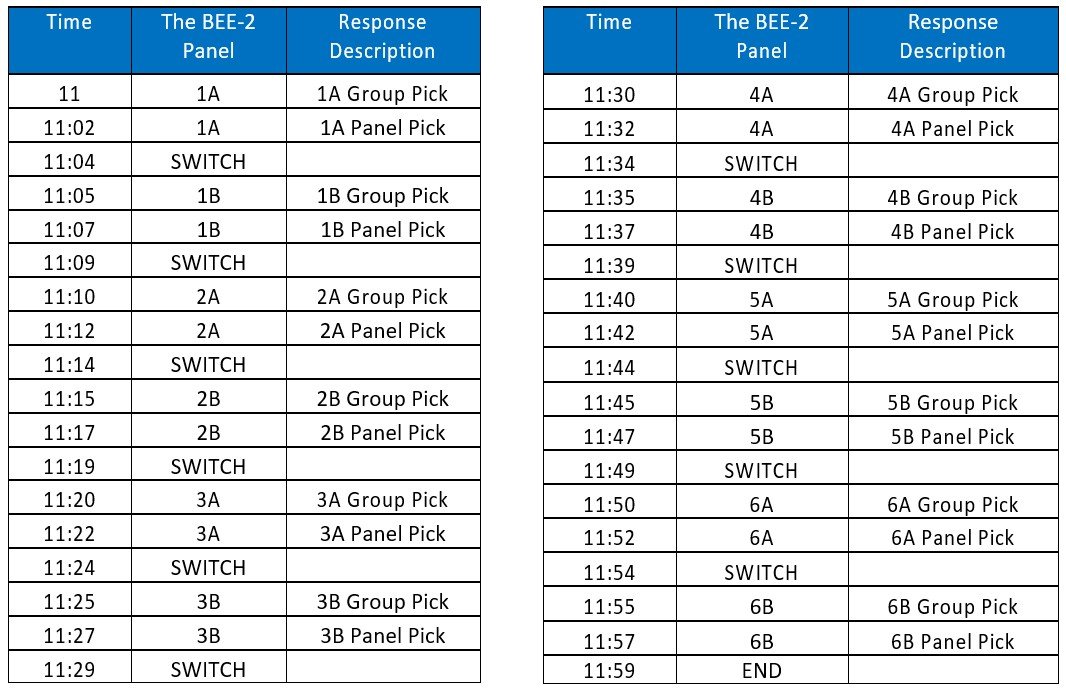
panel response rotation schedule example
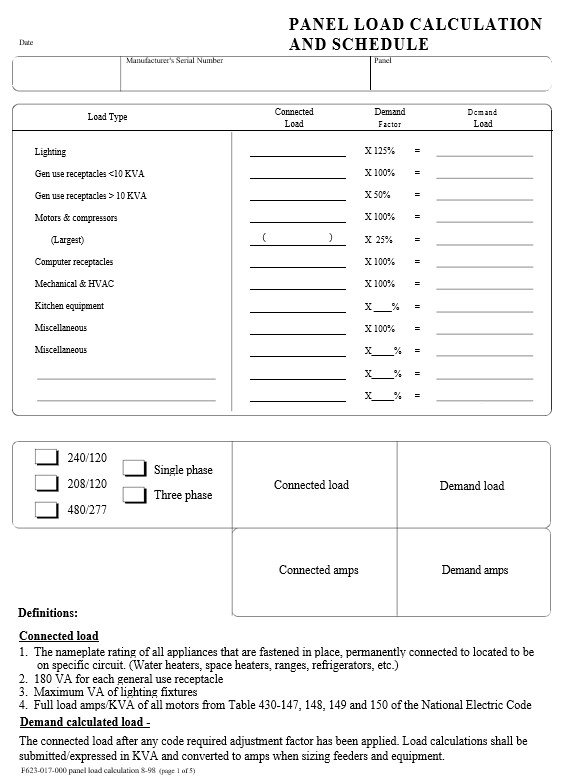
panel load calculation and schedule template
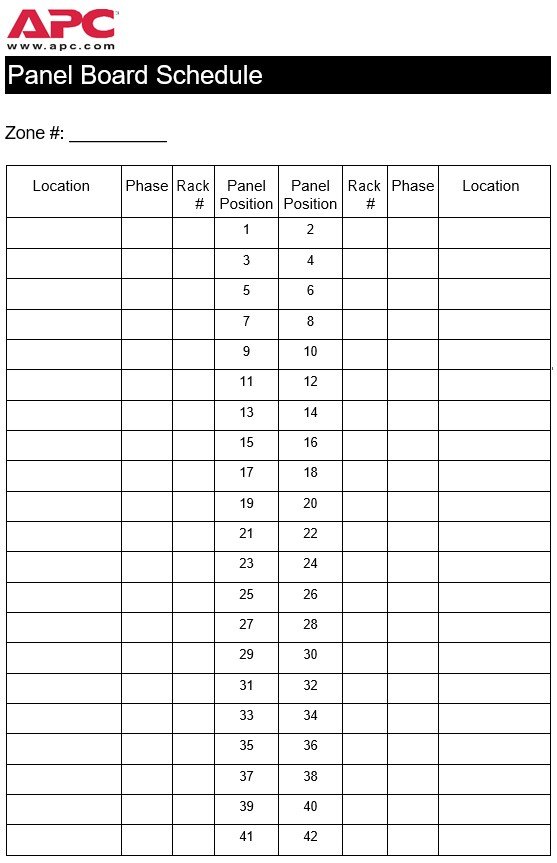
panel board schedule template
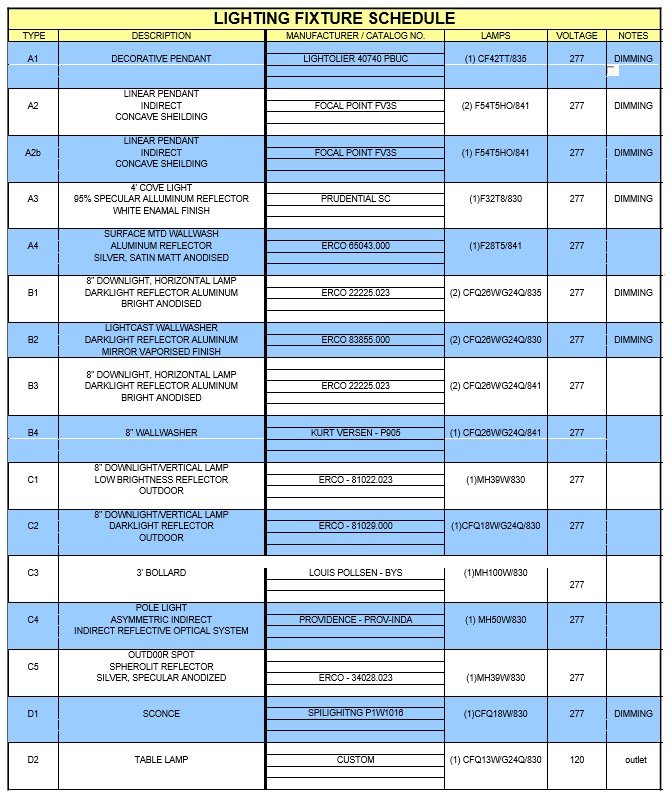
lighting fixture schedule template
free panel schedule template word
fillable panel schedule template
electrical panel schedule
electric panel schedule template
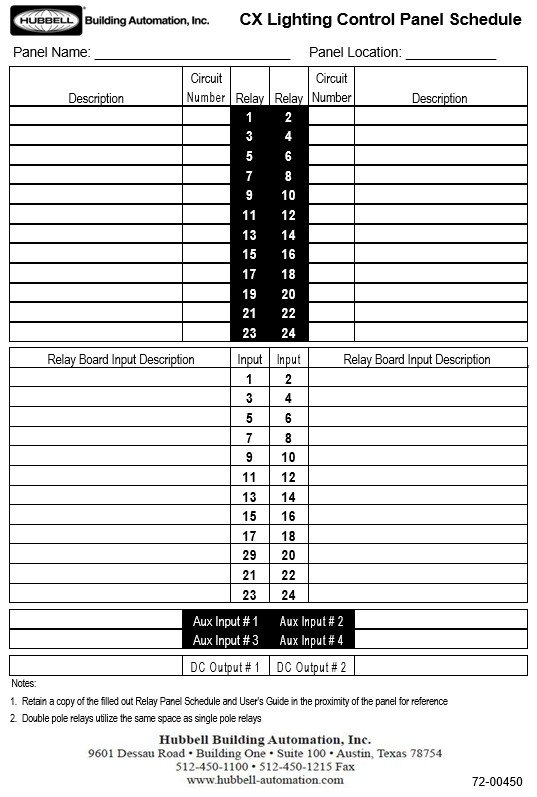
cx lighting control panel schedule template
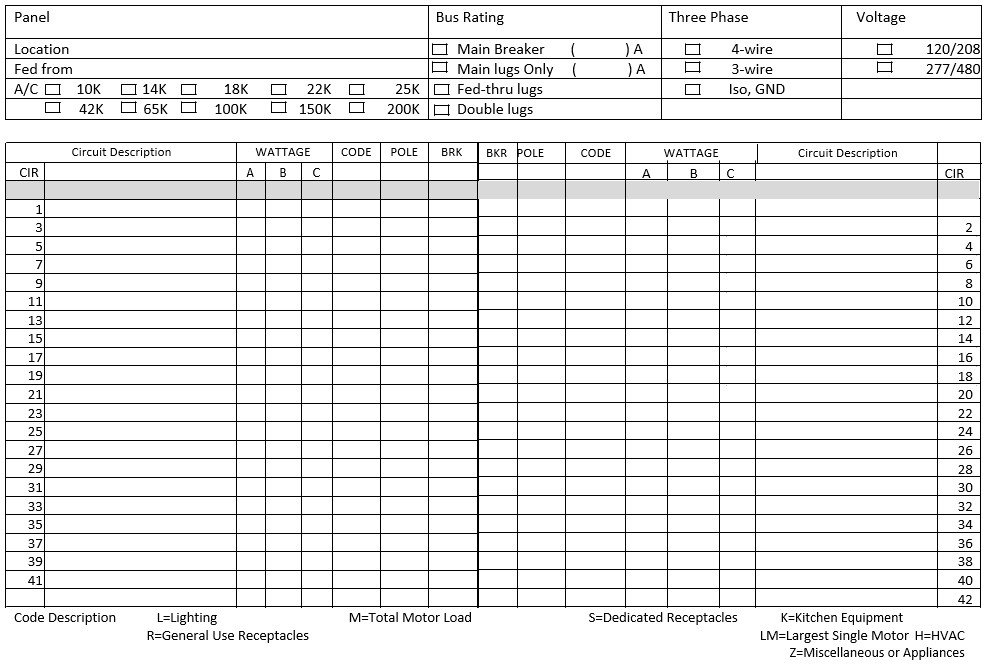
3 phase electrical panel schedule template
Final Thoughts
A panel schedule template might appear to be a small part of an electrical project, but it plays an important role in keeping electrical systems organized, understandable, and easier to maintain.
For me, the best way to think about a panel schedule is as a permanent reference map for an electrical panel. A good schedule should allow someone who has never seen the building before to look at the documentation and quickly understand which breaker controls each electrical load.
Whether you are preparing a small residential circuit directory or a detailed commercial electrical panel schedule, clarity should always be the priority.
Use specific circuit descriptions, record accurate breaker information, keep panel names consistent, clearly identify spare spaces, and update the schedule whenever the electrical system changes.
If you create your panel schedule template carefully from the beginning, it can save electricians, engineers, estimators, building owners, and maintenance professionals a significant amount of time throughout the life of the building.
Most importantly, treat the panel schedule as a living document rather than something that is completed once and forgotten. Electrical systems evolve, buildings change, and circuits are modified. Keeping that documentation accurate is one of the simplest ways to make future electrical work safer, faster, and far more organized.
Frequently Asked Questions:
What is the purpose of a panel schedule?
The main purpose of a panel schedule is to give detailed information about the electrical panel. It includes the location and type of circuits, load calculations, and more.
Who can use panel schedules?
A panel schedule can be used by;
- Electricians (to determine the location and type of circuits)
- Engineers (to design and evaluate the electrical system)
- Building owners (to maintain the electrical system)
- Building departments (to make sure compliance with local and national codes)
How often should you update panel schedules?
You should update panel schedules whenever changes are made to the electrical system.
Why should you label the panels and circuits correctly?
If the panels and circuits are labeled correctly then the electricians can quickly and easily determine the location and type of circuits.
What should be included in a panel schedule template?
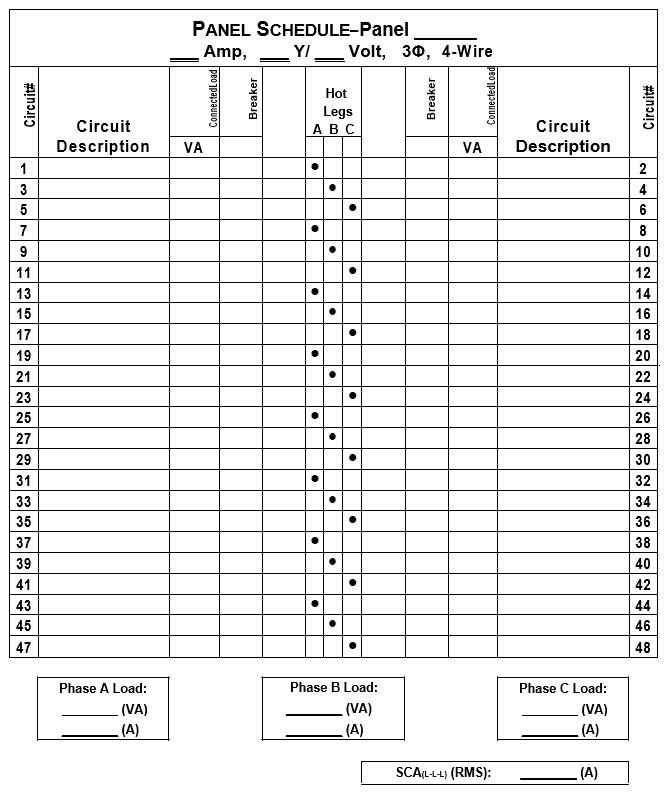
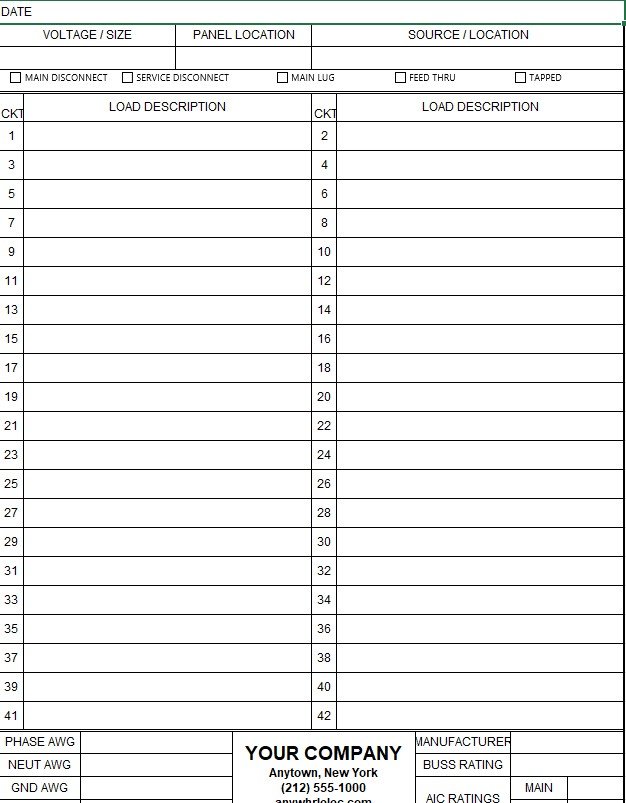
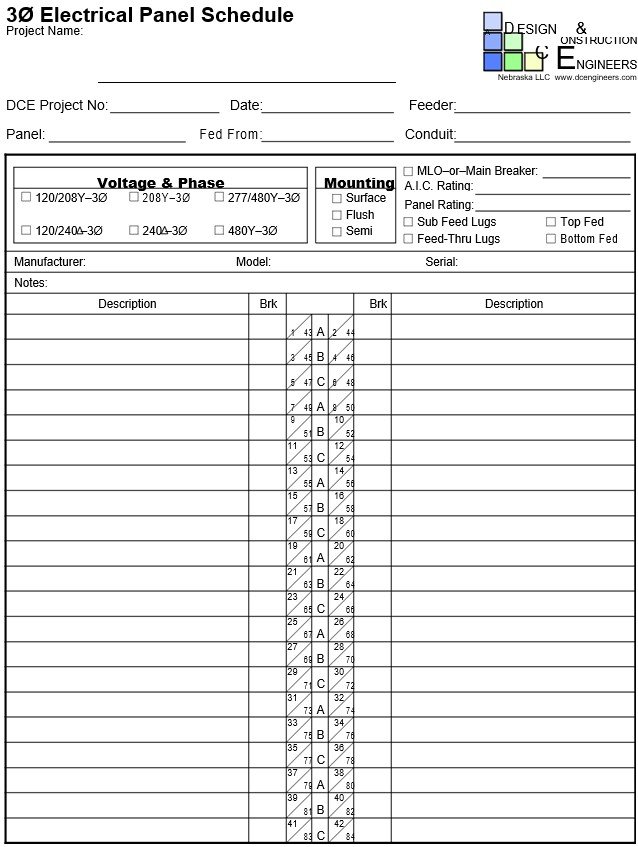
A template may include panel name, location, voltage, phase, circuit numbers, circuit descriptions, breaker sizes, poles, connected loads, phase loads, demand loads, and spare circuits.
What is the difference between spare and space in a panel schedule?
A spare usually represents an installed breaker that currently has no connected load.
A space typically represents an unused breaker position where no breaker is currently installed.
Are panel schedules necessary for residential buildings?
Even when a detailed engineering schedule is not required, keeping an accurate circuit directory for a residential electrical panel is highly recommended because it makes maintenance and troubleshooting easier.
You May also Like
 Free Pre-Employment Background Check Authorization Form (PDF)
- Free Livestock Bill of Sale Form (Word / PDF)
 Church Directory Template Word And Excel
- Printable New York Vehicle Bill of Sale Form MV-912 (PDF)
- Understanding the Importance of Your ACH Authorization Form (Word / PDF)
- Free Garage Rental Agreement Templates (Word / PDF)