You should use blood pressure log template to track your blood pressure if you are serious about your health and want to remain healthy for a long time. Blood pressure is an important indicator of everyone’s health. Different diseases and ailments are generated due to spike or drop in blood pressure.
There are many different things on which blood pressure depends. There is also variations in a blood pressure of a perfectly healthy person. When you keep a track of it, you will correct your course before you continue with habits and actions that may give permanent damage to you somehow. The main reason of an elevated blood pressure is stress. Furthermore, the person starts having blood pressure issues if he/she does not have any diseases but they are in a stressful situation. In temporarily stressful situations, blood pressure goes up and for coming back, it takes some time.
The heart patients should keep closer look at their blood pressure. A slight spike in their blood pressure can be very dangerous. If the blood pressure is rising constantly or going down constantly, it is also very alarming. Blood pressure chart becomes useful in these situations.
Table of Contents
What is blood pressure?
Blood pressure is a pressure that your heart exerts while pumping blood around your body. This pressure is generally measured in millimeters of mercury (mmHg). Blood pressure is categorized into two, systolic pressure and diastolic pressure.
What Is a Blood Pressure Log Template?
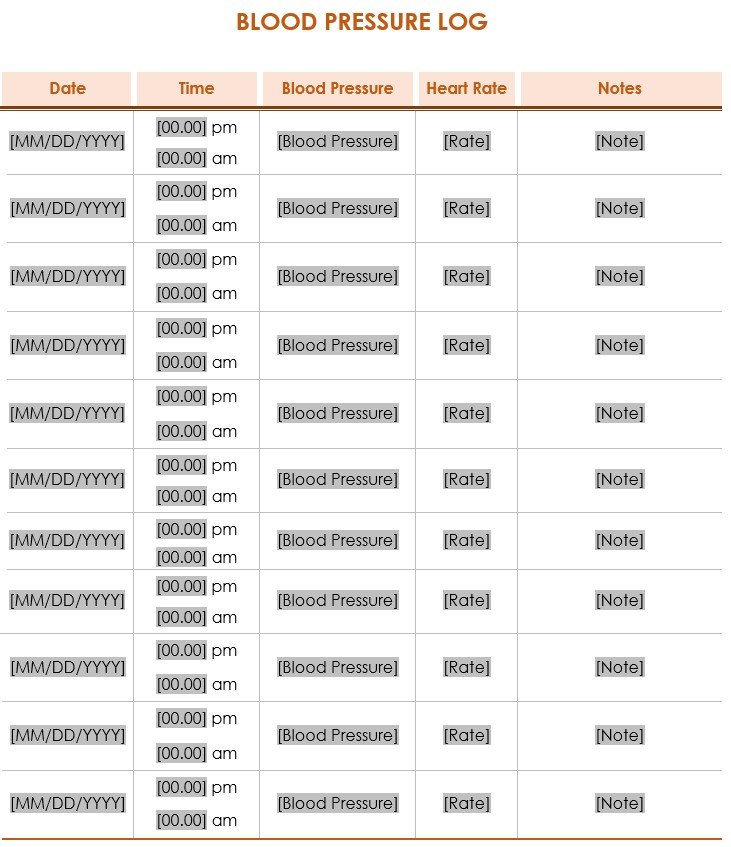
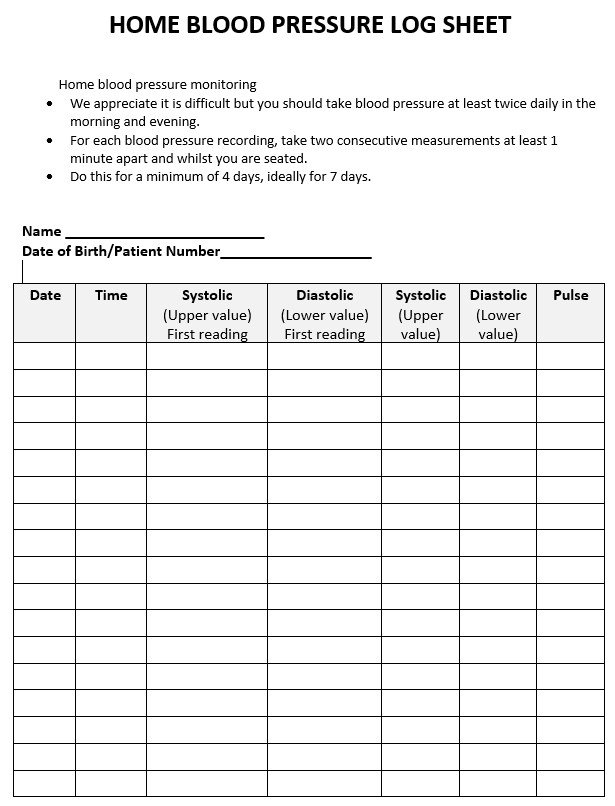
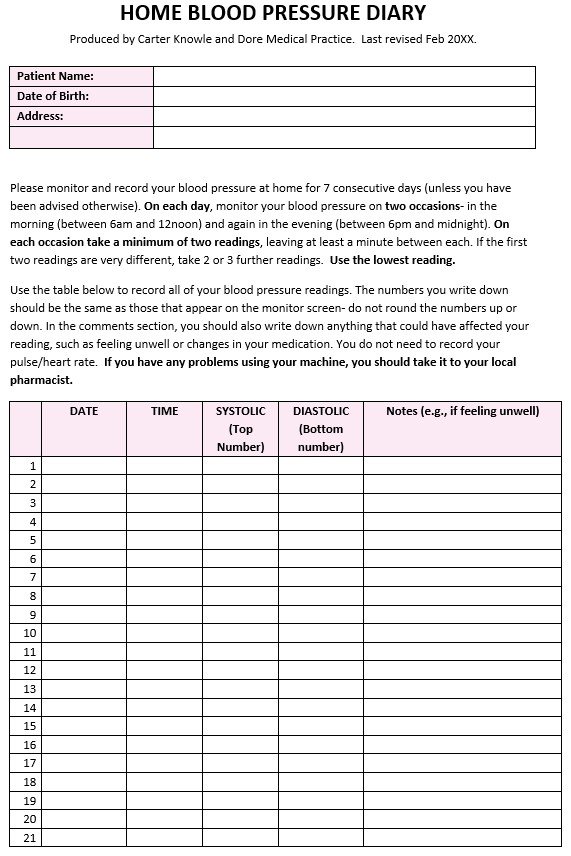
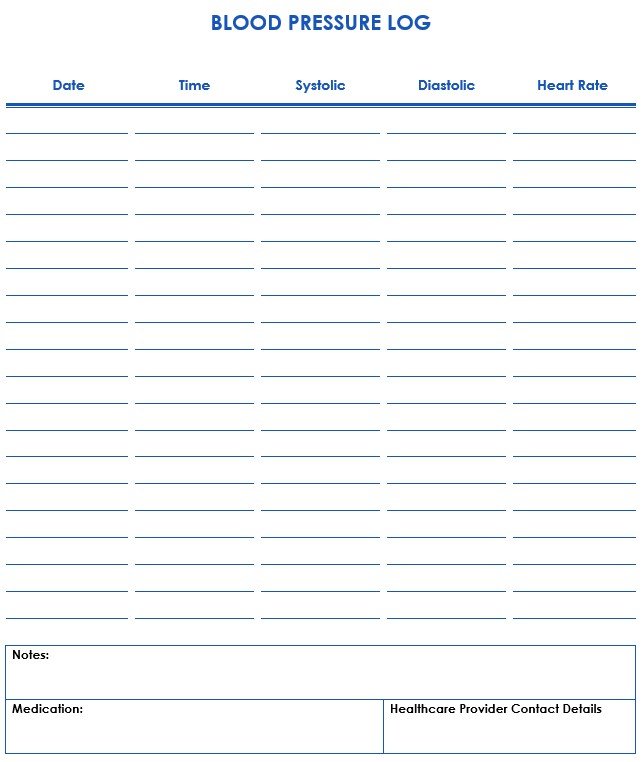
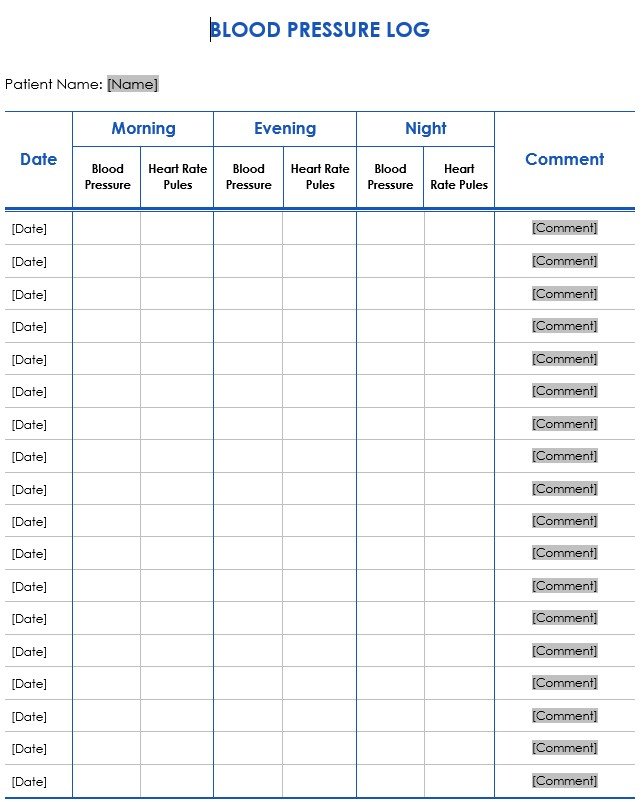
A blood pressure log template is a printable or digital chart used to record blood pressure readings over a period of time.
Instead of having random readings saved in your blood pressure machine, written on pieces of paper, or stored in different notes on your phone, the template keeps everything together.
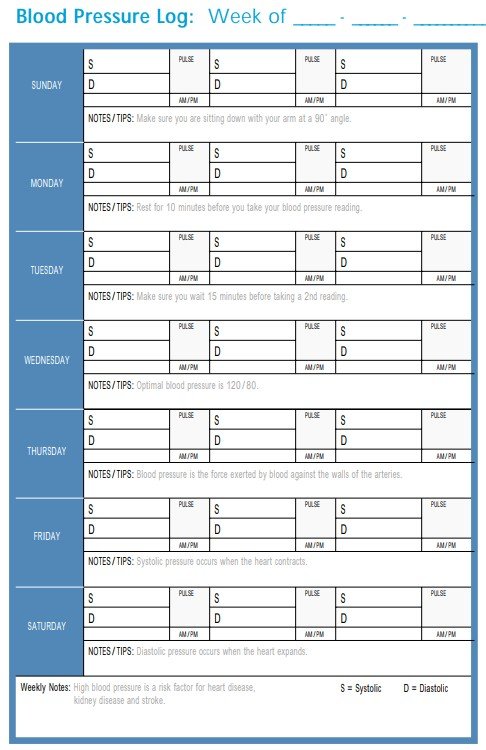
A typical blood pressure log includes spaces for:
- Date
- Time
- Systolic blood pressure
- Diastolic blood pressure
- Pulse or heart rate
- Morning reading
- Evening reading
- Medication information
- Symptoms
- Notes
Some people may only need the first five columns, while others may want a more detailed health tracking sheet.
I personally think the best blood pressure tracker is the one you will actually continue using. There is no point creating an incredibly detailed spreadsheet if filling it in feels like homework every morning.
Start simple and add more information only when it is genuinely helpful.
Why Use a Blood Pressure Log?
One isolated blood pressure reading gives you information about that particular moment.
A series of readings can provide much more context.
Blood pressure can vary depending on circumstances, which is why consistently recording readings can make it easier to look at patterns rather than focusing excessively on one number.
The CDC describes self-measured blood pressure monitoring as measuring blood pressure outside a clinical setting, such as at home.
A written record also makes your information easier to share with a doctor or other healthcare professional.
The American Heart Association specifically recommends recording home blood pressure results and sharing them with a healthcare professional.
A blood pressure log can help you:
See patterns over time
You may notice that your readings are generally different at particular times of the day or under certain circumstances.
Keep your readings organized
Instead of searching through the memory function of your monitor or scrolling through phone notes, everything appears in one place.
Prepare for medical appointments
Bringing several days or weeks of organized readings may provide your healthcare professional with more context than relying only on a single measurement taken during an appointment.
Build a consistent habit
When there is an empty row waiting to be filled in, remembering to check your blood pressure can become part of your daily routine.
Record additional details
A log gives you space to note symptoms, medication timing, exercise, illness, stress, or other information you may want to discuss with your healthcare professional.
Blood pressure logs lead to healthy life:
By using blood pressure logs, people can also make charts and graphs. One can easily see the real situation regarding their blood pressure through these charts and graphs. A visit to the doctor is warranted in case the blood pressure is rising steadily with time. One should also go to the doctor when the blood pressure is going down with time. It is a fantastic habit to keep track of your blood pressure. It enables you to stay ahead of any issues.
When the issue starts to get severe, you will only start to notice blood pressure related problems. It is always better to be proactive about things, when it comes to our health. You should go for a professional check-up if you are not feeling well.
By having blood pressure log, your doctor can make decisions about your health. You, as a patient, cannot accurately define what is ailing you. Also, your doctor doesn’t have any idea about your condition which would allow them to make a proper medical diagnosis. Tracking your blood pressure will assist your doctor in determining your illness accurately.
Getting accurate readings:
If you are monitoring your blood pressure then you should ensure that you are entering accurate numbers in your chart. There are various factors that can results in you getting the wrong reading. These wrong readings would be useless in letting you know the true status of your health. Before taking blood pressure, the first thing you have to do is go to the toilet. The reason behind it is that any sort of pressure on the body can result in a higher blood pressure reading. You will get an accurate representation of how your body is normally handling blood pressure when you are completely relaxed while monitoring blood pressure reading.
Furthermore, you should also take some rest before you take a reading. When you are in stress, you should wait until you feel calmer. Take some rest for a few minutes or doing something you like. Before you take reading, you also have to ensure that you do not intake anything that might affect your heart rate. Also, you don’t have to take no cigarettes, alcohol, or coffee before taking your reading. Therefore, it is a good idea to take a reading in the morning. This is because people are fresh in the morning and they aren’t stressed and haven’t eaten, drunk, or smoked anything that might affect results.
Understand your readings:
Here is the explanation of what your blood pressure reading indicates;
Systolic Pressure (The Higher Number)
The systolic pressure is a type of blood pressure that is indicates the maximum pressure exerted by your heart when it pumps. It is the maximum pressure that is created within your body when the blood is pumped. It is represented by the bigger number on the heart pressure reading. The systolic blood pressure is essential to measure. This is because it indicates how well the heart is functioning.
Diastolic Pressure (The Lower Number)
The lower number reading in your blood pressure indicates diastolic pressure. In your arteries, it is the pressure that exists during 2 different beats of your heart. Your heart generally pumps blood constantly to your body. When the heart beats, the systolic pressure is putted in your arteries. However, there is a pressure within your arteries as well aside from the beat. It is simply due to the presence of blood and its flow. It is displayed by the lower number in your blood pressure reading.
In a blood pressure reading, many people think that the 2 numbers somehow denote the minimum and maximum blood pressure. But, this isn’t true. Actually, the different numbers represent different things. The difference between diastolic pressure and systolic pressure is referred as a pulse pressure. The number you get by taking out the diastolic pressure from your systolic pressure will be your pulse pressure.
Pulse
Pulse indicates that how fast your heart is beating in a minute. This doesn’t due to blood pressure. Sometimes, there is congestion in arteries and due to various reasons pulse can be very different. To maintain a blood pressure, sometimes your heart will beat faster. Thus, you shouldn’t simply write down pulse and without a medical opinion, you shouldn’t signify anything from a pulse reading.
Who Can Use a Blood Pressure Log Template?
A blood pressure tracker is not limited to people who have already been diagnosed with high blood pressure.
A log may be useful for someone who:
- Has been asked to monitor blood pressure at home
- Wants organized readings for an upcoming medical appointment
- Is tracking measurements after a healthcare professional recommends home monitoring
- Helps a family member manage their health records
- Wants a printable health organizer
- Prefers having physical records instead of relying on a device’s memory
- Wants to keep measurements together with symptoms or medication notes
However, home monitoring is not a substitute for professional medical evaluation.
The American Heart Association advises people using home monitoring to continue regular medical visits and not stop blood pressure medication without consulting a healthcare professional.
Conclusion:
In conclusion, a blood pressure log template is a helpful document that helps you in maintain and keeping track of your blood pressure. You should have to make sure that you are entering accurate reading in your log.
weekly blood pressure log template
printable blood pressure log template
home blood pressure log sheet
home blood pressure diary template
free blood pressure log template
daily blood pressure log template
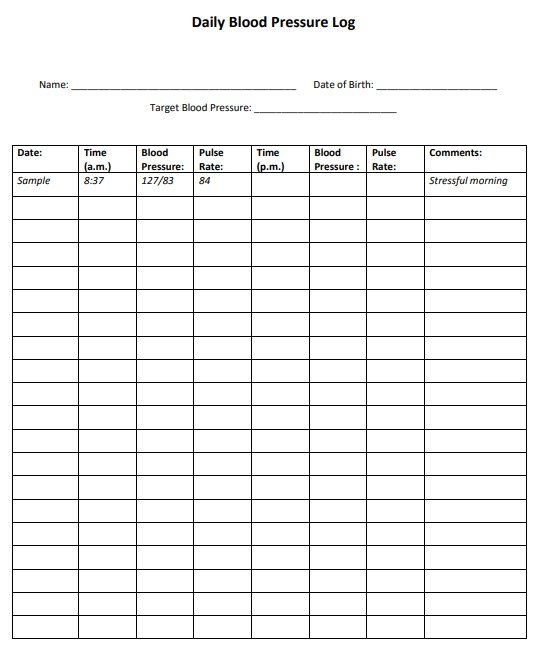
blood pressure tracker template excel
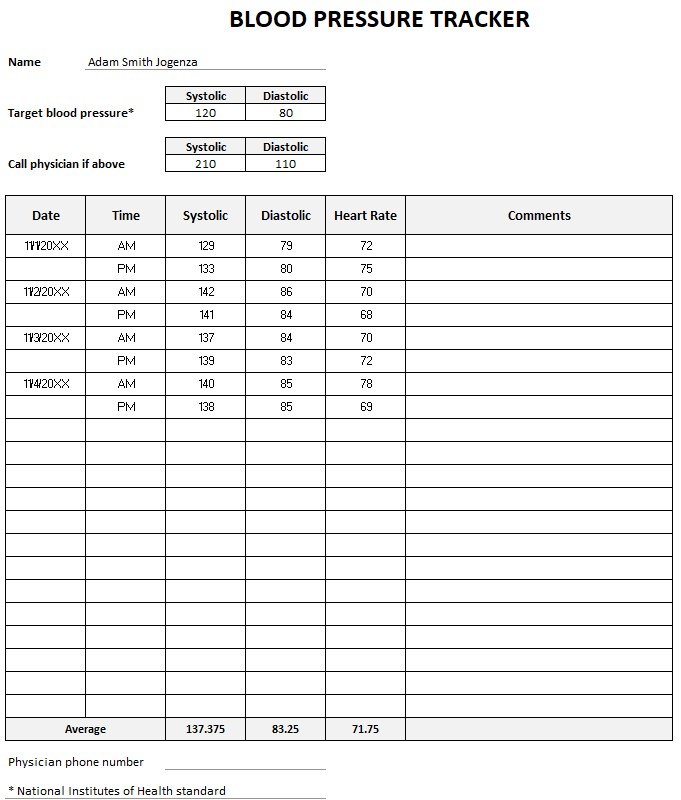
blood pressure record chart
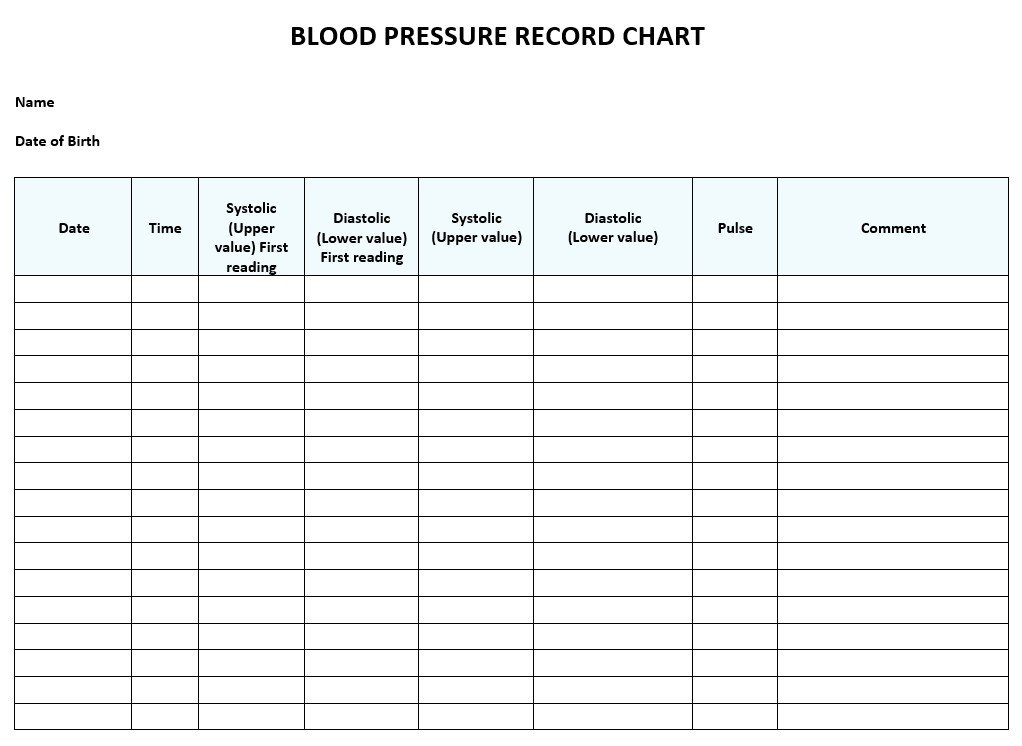
blood pressure log template
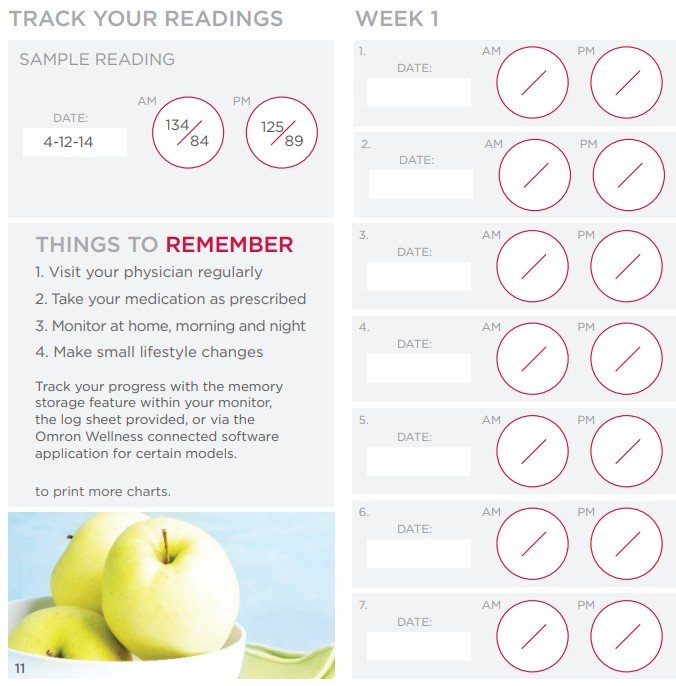
blood pressure log template word
Blood pressure log template FAQ’s:
What are the causes of high blood pressure?
The heart pumps blood into blood vessels. These vessels carry the blood throughout the body. High blood pressure is also referred as hypertension. It makes the heart work harder to pump blood out to the body, so it is dangerous. The causes of high blood pressure are;
- Smoking
- Overweight
- Lack of physical activity
- Taking too much salt in diet
- Too much alcohol consumption
- Stress
- Older age
- Genetics
- Chronic kidney disease
- Thyroid disorders
- Family history of high blood pressure
What is “Normal” Blood Pressure?
The normal blood pressure is less than 120 over 80 (120/80). Other ranges of blood pressure are;
- Elevated: 120-129/less than 80
- High blood pressure: stage#1; 130-139/80-89 and stage#2; 140 and above/90 and above
- Hypertension crisis: higher than 180/higher than 120
What is a healthy blood pressure?
The pressure is high when the heart is squeezing blood into the arteries and it is low when the heart is relaxed. From day to day and moment to moment, your blood pressure varies. A heathy blood pressure as per the doctor is higher than 90/60 mmHg but lower than about 140/90.
How can you lower your blood pressure?
Here are the tips that can help you in lowering your blood pressure and keep it at a healthy level;
- Exercise daily
- Follow a balanced diet
- Take less salt
- You should lose your weight if you are overweight
- Limit alcohol
- If you smoke, quit smoking
You May also Like
 Free Price / Rate Increase Letter Word (Samples & Examples)
- Free Tenant Information Update Forms [PDF]
- Free Printable Wedding Guest List Templates (Word / PDF / Excel)
- Free Printable Rental Receipt Templates (Word / PDF / Excel)
- Business Report Template (Word, PDF)
- Free Employee Counselling Form (Word, PDF)
![Free Tenant Information Update Forms [PDF]](https://exceltmp.com/wp-content/uploads/2021/07/printable-tenant-information-update-form-150x150.jpg)