When I first learned about business agreements, the term sheet template felt like a complicated legal document. But after understanding its purpose, it became much easier to see why founders, investors, and business owners rely on it so much. A term sheet is not always a final contract, but it works like a roadmap. It sets the direction before both parties spend time and money on detailed legal paperwork.
Whether you are raising startup funding, bringing in a new investor, selling part of your company, or forming a strategic partnership, a well-written term sheet template can save you from confusion later.
Table of Contents
What is a Term Sheet Template?
A term sheet template is a ready-made document format that outlines the key terms and conditions of a business agreement. It usually includes important points such as investment amount, company valuation, ownership percentage, payment structure, investor rights, voting rights, confidentiality, and closing conditions.
The template makes the process easier because you do not need to start from zero. You can simply customize the sections according to your deal. For startups, especially, a term sheet template can be very helpful during seed funding, venture capital investment, angel investment, or private equity discussions.
Why is a Term Sheet Important?
A term sheet is important because it helps both parties agree on the main deal points before creating a long legal agreement. Without a term sheet, misunderstandings can happen easily. One side may think the deal includes certain rights, while the other side may have a completely different understanding.
For example, if an investor is putting money into a startup, the term sheet can explain how much equity the investor will receive, what the company valuation is, and whether the investor gets any special rights. This gives clarity before the final investment agreement is drafted.
A good term sheet also shows professionalism. It tells investors, partners, or buyers that you are serious, organized, and ready to move forward in a structured way.
Key Elements Included in a Term Sheet Template
A strong term sheet template should cover the most important parts of the deal. The exact sections may change depending on the type of agreement, but most term sheets include the following elements.
Company and Investor Information
This section includes the basic details of the parties involved. It may include the company name, investor name, business address, contact details, and the date of the agreement.
This looks simple, but it is important because the document must clearly show who is involved in the deal.
Investment Amount
The investment amount explains how much money the investor or buyer is planning to contribute. For startups, this section may mention whether the investment is part of a seed round, Series A funding, or another financing stage.
For example, a term sheet may state that the investor will invest $250,000 in exchange for a certain percentage of company ownership.
Company Valuation
Valuation is one of the most important parts of any investment term sheet. It explains how much the company is worth before or after the investment.
There are usually two common types:
- Pre-money valuation means the value of the company before the investment.
- Post-money valuation means the value of the company after the investment is added.
This section matters because it directly affects how much ownership the investor will receive.
Equity Ownership
Equity ownership explains what percentage of the company the investor will get after the deal closes. This is very important for founders because giving away too much equity early can create problems later.
A clear term sheet template helps both sides understand the ownership structure before signing the final agreement.
Type of Security
This section explains what the investor is receiving in return for their investment. It could be common shares, preferred shares, convertible notes, or SAFEs.
For startup funding, preferred shares are common because they often give investors special rights. Convertible notes and SAFEs are also popular in early-stage startup financing.
Investor Rights
Investor rights can include voting rights, information rights, board seats, anti-dilution protection, and participation rights. These terms decide how much control or protection the investor will have after investing.
This part should be written carefully because it can affect future decision-making in the company.
Liquidation Preference
Liquidation preference explains what happens if the company is sold, merged, or shut down. It tells who gets paid first and how much they receive.
For example, if an investor has a 1x liquidation preference, they may get their original investment back before other shareholders receive money.
Board Structure
If the investor wants a seat on the company’s board, this section explains it. It may mention how many board members the company will have and who has the right to appoint them.
This is especially important for startups raising venture capital because board control can influence major business decisions.
Confidentiality Clause
A term sheet often includes a confidentiality clause. This means both parties agree not to share sensitive business information with outsiders.
This is useful when financial details, business strategies, customer data, or product plans are being discussed.
Exclusivity Period
The exclusivity period means one party agrees not to negotiate with others for a certain time. For example, an investor may ask the startup not to discuss funding with other investors for 30 or 60 days.
This gives both sides time to complete due diligence and prepare final documents.
Closing Conditions
Closing conditions explain what must happen before the deal becomes final. This may include legal review, financial checks, due diligence, board approval, or signing final agreements.
This section protects both parties by making the deal dependent on certain requirements.
Is a Term Sheet Legally Binding?
In most cases, a term sheet is not fully legally binding. It is usually a summary of the proposed agreement, not the final contract. However, some sections can be legally binding, such as confidentiality, exclusivity, and governing law.
That is why it is always smart to read the document carefully and get legal advice before signing. Even if the main deal terms are non-binding, certain promises inside the term sheet may still create legal responsibility.
Types of Term Sheet Templates
There are different types of term sheet templates depending on the deal. Some common ones include:
- Startup investment term sheet template for angel investors and venture capital funding.
- Convertible note term sheet template for loans that may convert into equity later.
- SAFE term sheet template for early-stage startup fundraising.
- Merger and acquisition term sheet template for buying or selling a business.
- Partnership term sheet template for joint ventures or strategic partnerships.
- Real estate term sheet template for property investment or development deals.
Choosing the right template matters because every deal has different terms and risks.
How to Use a Term Sheet Template
Using a term sheet template is simple, but it should be done carefully. First, choose a template that matches your deal type. Then, replace the sample details with your own business information. Add the investment amount, valuation, ownership terms, and any special conditions.
After that, both parties should review the document and negotiate any unclear points. Once the major terms are agreed, the term sheet can be signed and used to prepare the final legal agreement.
A term sheet should not be treated as a casual document. Even if it is short, it can shape the entire deal.
Benefits of Using a Term Sheet Template
A term sheet template saves time, creates clarity, and makes negotiations more professional. It helps both sides focus on the most important deal terms before spending money on final legal documents.
For startups, it can make fundraising smoother. For investors, it provides a clear view of the opportunity. For business owners, it reduces confusion and builds trust between parties.
Final Thoughts
A term sheet template is more than just a business form. It is a practical tool that helps people discuss serious deals with clarity and confidence. Whether you are a startup founder, investor, business owner, or consultant, having a well-structured term sheet can make negotiations smoother and more organized.
Before signing any term sheet, take time to understand every section. The better you understand the terms, the better decisions you can make for your business future.
term sheet template
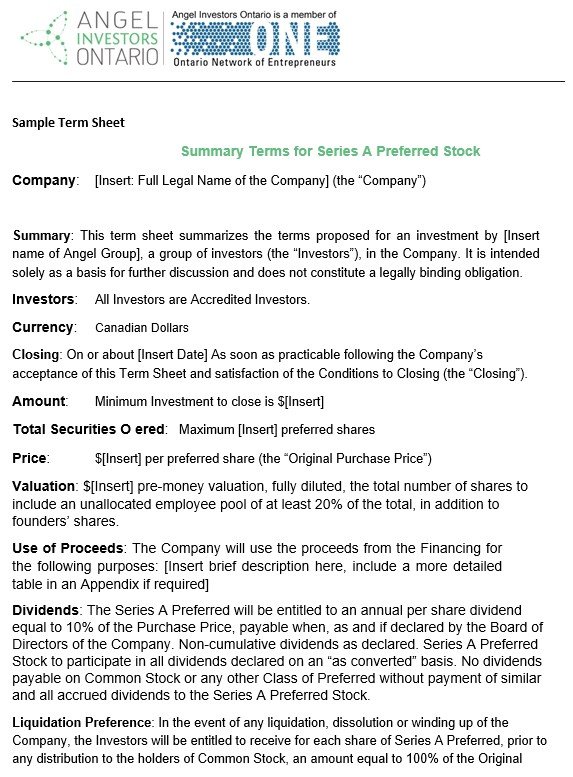
term sheet outline template
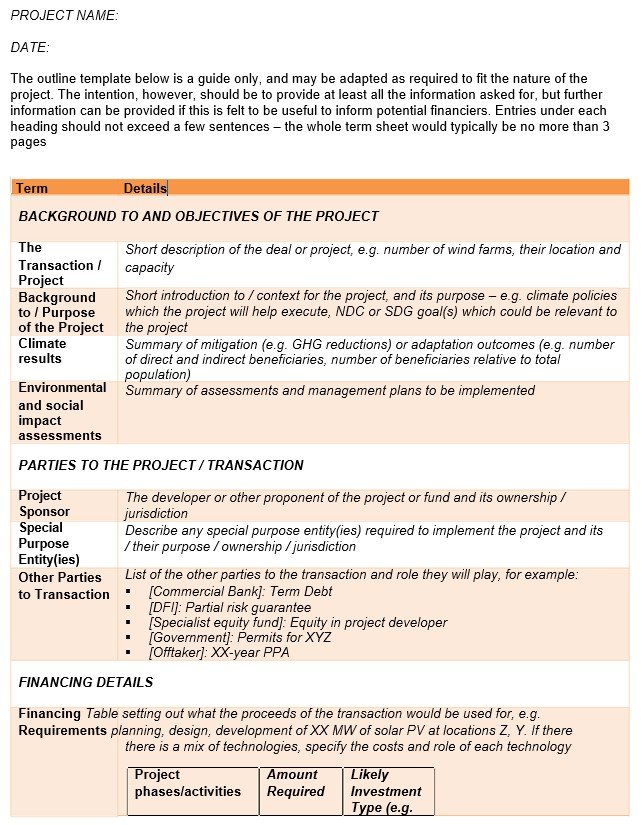
seed investment term sheet template
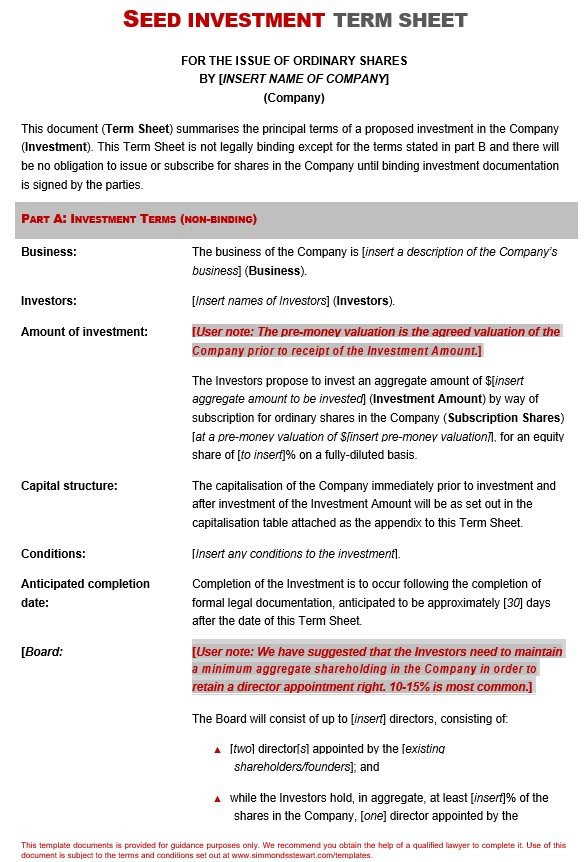
non binding term sheet community research project template
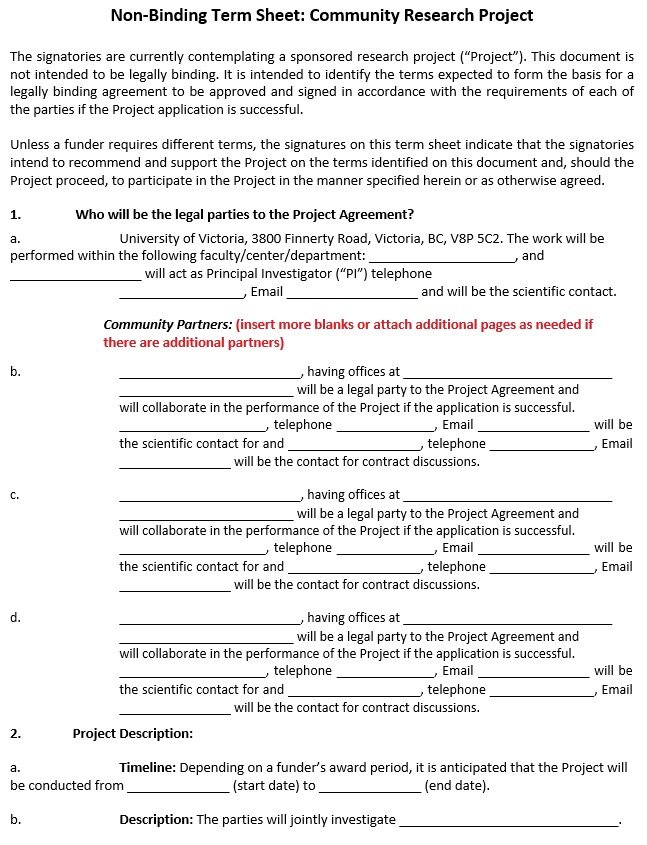
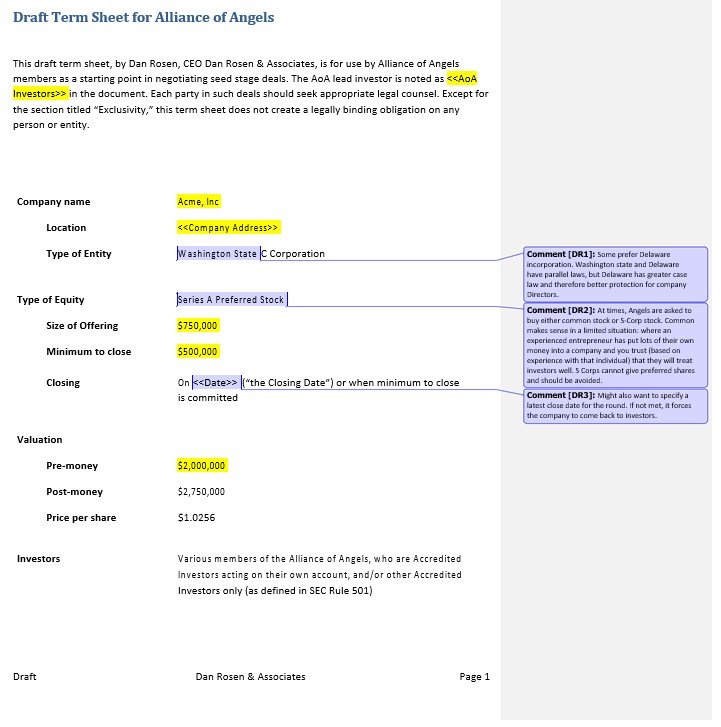
draft term sheet for alliance of angels
FAQs:
What is a term sheet template used for?
A term sheet template is used to outline the main terms of a business deal before creating a final legal agreement. It is commonly used for startup funding, investments, mergers, partnerships, and acquisitions.
Is a term sheet the same as a contract?
No, a term sheet is usually not the same as a final contract. Most of its terms are non-binding, but some sections like confidentiality and exclusivity may be legally binding.
Who prepares a term sheet?
A term sheet can be prepared by the investor, founder, buyer, seller, or legal advisor. In startup funding, investors often provide the first draft, but founders should review it carefully.
What should be included in a startup term sheet?
A startup term sheet should include investment amount, valuation, equity percentage, investor rights, board structure, liquidation preference, voting rights, confidentiality, and closing conditions.
Why do investors use term sheets?
Investors use term sheets to clearly define the proposed investment terms before moving to final agreements. It helps them protect their rights and avoid confusion later.
What is the difference between a term sheet and an LOI?
A term sheet and a Letter of Intent are similar, but an LOI is often written in letter format, while a term sheet is usually more structured and point-based. Both are used before final contracts.
Should I hire a lawyer before signing a term sheet?
Yes, it is always better to get legal advice before signing a term sheet. Some terms may affect ownership, control, and future financial rights.
You May also Like
 Free Sales Commission Calculator Templates (Excel)
- Sample Authorization Letter to Transfer Ownership of a Vehicle (Word, PDF)
- Free Professional Event Planning Checklist Templates (Excel / Word / PDF)
- Free Contract for Sale of Goods Template (Word / PDF)
 How the Daily Expenses Tracker Template Can Help You Manage Your Budget?
- Free Business Model Template (Word, PDF)