The employee reimbursement form is a standard template used by an employee. They use it to report expenses paid on behalf of the company while seeking repayment. The specific reimbursable items are based on the agreement among the employer and the employee. Usually, employees who travel to conferences, meetings, and off-site work locations use this type of form.
Table of Contents
What is a reimbursement form?
A reimbursement form is a document used to request repayment for expenses someone has already paid themselves. Instead of the company, institution, or organization paying the vendor directly, the person covers the cost first and then submits proof to get the amount returned.
This could apply to all kinds of situations. Maybe an employee bought office supplies for a meeting. Maybe a teacher paid for classroom materials. Maybe someone traveled for work and paid for hotel stays, meals, or transportation. Maybe a patient needs reimbursement from insurance for a medical expense. In all these situations, the reimbursement form acts like the bridge between the purchase and the refund.
Without this form, there is usually no formal record of the expense, no way to verify the cost, and no clear process for approval.
The purpose of employee reimbursement form:
The reimbursement form can be a very valuable tool for employees who travel to business conferences, meetings, and off-site work locations. This form assists in making sure that such employees are not left covering for the business expenses for themselves. Here are the reasons that why the expense reimbursement form is beneficial; You may also like Employee Counselling Form.
- At first, an expense reimbursement form creates documentation that strengthens your accounting records. They also prevent you against fraud. The form can be used as a point of reference in case any discrepancies are found between the amount reimbursed and the actual amount spent.
- Next, the expense reimbursement form is used as a standard form of gathering information relevant to reimbursement. This document also makes it easy for the accounting department to process the information presented. Departments who use the expense reimbursement form will enjoy the basic structure made. On the basis of your company’s policies, it will enable them to edit the categories with the appropriate program quickly and easily.
- Employee reimbursement form is a standard part of any expense reimbursement policy. For business-related expenses, they assist you to avoid overpaying or underpaying employees. You should also check the Employee Reprimand Form.
Why reimbursement forms matter more than people think
I used to think reimbursement forms were just another piece of paperwork, but they actually serve a very useful purpose. They protect both sides.
For the person requesting money back, the form creates a paper trail. It shows what was purchased, why it was purchased, how much it cost, and when it happened. That matters because memory is unreliable. A receipt gets lost, a conversation is forgotten, and suddenly your “I already paid for that” becomes hard to prove.
For the organization, reimbursement forms help control spending. They make sure expenses are legitimate, approved, and connected to actual business or policy needs. They also help with accounting, audits, taxes, budgets, and internal transparency.
What information is usually included in a reimbursement form?
A good reimbursement form is not just a blank page asking for money back. It usually includes several important sections to make the request easy to review and approve.
- This often includes the requester’s name, department, employee ID if relevant, contact details, and sometimes bank information if payment is made through direct deposit.
- This is where the real details go. You typically list the date of purchase, description of the item or service, category of expense, amount paid, and vendor name. Some forms also ask for currency, especially in travel-related claims.
- This part matters more than people realize. Saying “Taxi fare” is not always enough. Saying “Taxi fare to client meeting on March 5” gives useful context. A clear explanation helps the approver quickly understand why the expense should be reimbursed.
- Most reimbursement forms require receipts, invoices, tickets, proof of payment, or supporting documents. Without proof, many claims get delayed or rejected.
- Depending on the organization, this may include signatures from the employee, manager, finance department, HR team, or accounts office.
Employee Reimbursement Form Template Excel
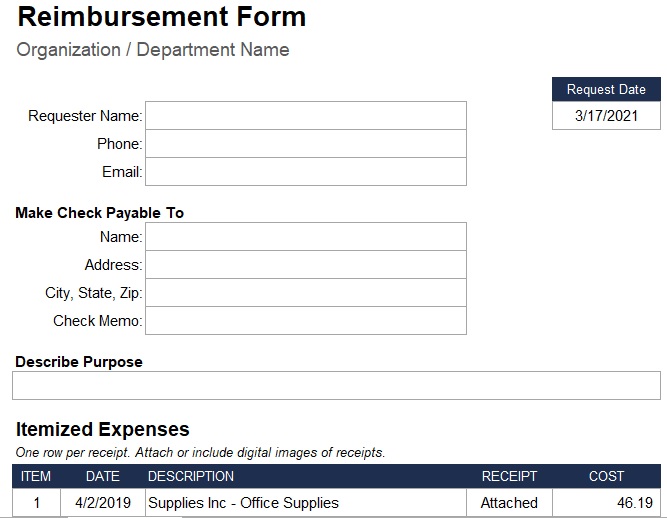
Expense Reimbursement Form Template
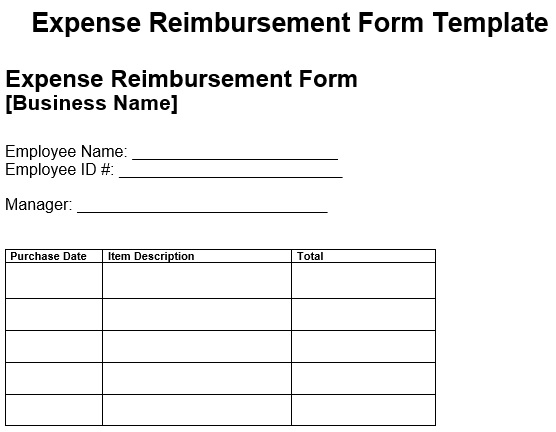
Free Employee Reimbursement Form
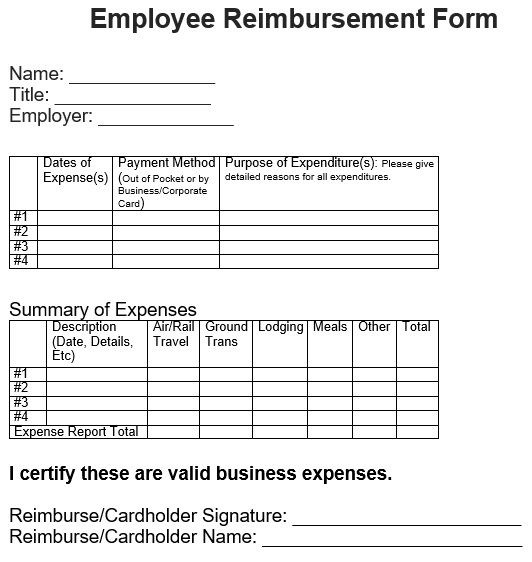
Printable Employee Reimbursement Form
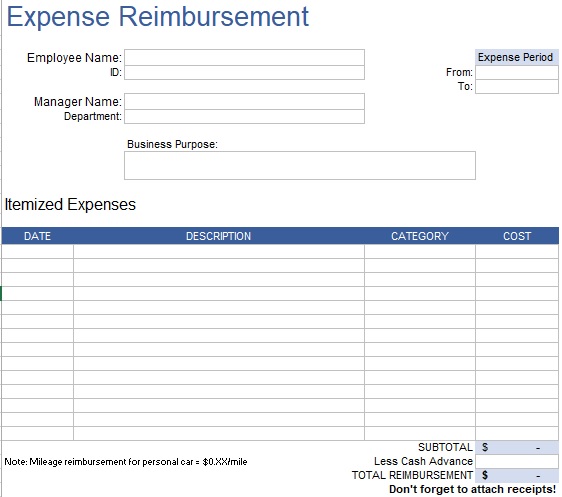
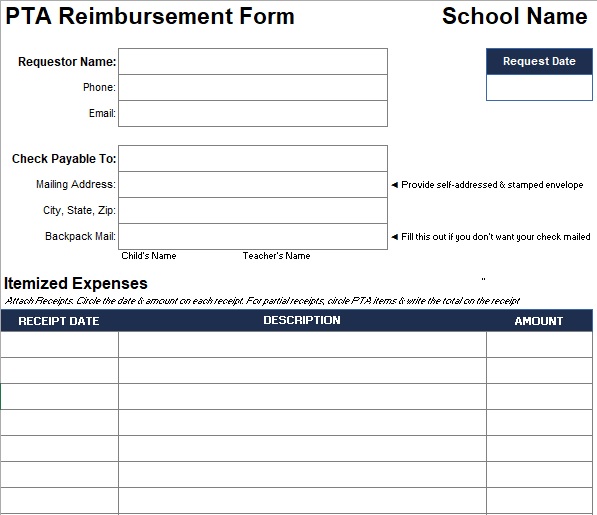
PTA Reimbursement Form Editable
How to fill the employee reimbursement form?
You should include the following key information in your employee reimbursement form in order to make sure that you receive full expense reimbursement from your employer.
Add your personal information
After downloading the employee reimbursement form, write the following;
- your full legal name
- employee identification number
- your department
- job title
You can also include the other relevant information that may be needed in the form so that the receiver of the form knows whom to remit the reimbursement to.
Write the expense details
In most reimbursement form, you have to include the purchase or expense details including;
- the date the expense was incurred
- a brief and precise description of what was paid for
- the total amount spent
- the mode of payment used such as a credit card, check, or cash
Furthermore, itemize each expense individually if you have more than one expense.
Sign the expense reimbursement form
Include your signature and write the current date at the bottom-most part the form. Your signature indicates that you are certifying that the information provided is accurate. This also shows that the actual business expenses incurred on behalf of the company using your personal funds.
Enclose receipts
For each item listed on the expense claim form, enclose purchase receipts. By attaching your receipts with the form indicates that you actually paid for the expense as mentioned in the reimbursement form. If you do not display them with the appropriate physical, then most employers will not reimburse. This is important to protect potentially fraudulent activities from some employees. You may also see Employee Disciplinary Action Form.
Submit the reimbursement form
After completing all the details in the form, you have to attach the required receipts, and then submit the document to your manager or the appropriate department right away. Most organizations usually accept reimbursement requests within 30 days of the original expense. So, you don’t have to stay with the document for too long. You should submit it immediately.
Mistakes that often delay reimbursement
- One common mistake is missing receipts. Even when the expense is real, finance teams usually need proof before processing payment. Another common issue is unclear descriptions. If the reason for the expense is not obvious, the form may be sent back for clarification.
- Late submissions are another big problem. Some people hold onto receipts for weeks or months, then rush everything at once. That usually leads to incomplete forms, missing details, and avoidable back-and-forth.
- Personal expenses mixed with business expenses also create problems. A reimbursement form should only include eligible costs. If someone combines approved and non-approved purchases in one receipt, it can complicate the claim. In those cases, it helps to highlight the reimbursable portion clearly.
- And honestly, one of the biggest mistakes is assuming approval is automatic. It is not. A reimbursement form is a request, and requests still need to meet policy requirements.
Tips for creating a better reimbursement form for your business or organization
If you run a business, manage a team, or handle admin work, the form itself matters a lot. A poorly designed reimbursement form creates unnecessary confusion for everyone.
Keep the layout clean. Ask only for information that is actually needed. Include clear labels for dates, amounts, and categories. Leave space for explanations. Make receipt attachment instructions obvious. Add a short note about approval timelines and policy rules.
You can also improve the user experience by including examples. A small sample entry can show people exactly how to describe an expense. That tiny detail can reduce errors more than most people expect.
It also helps to standardize categories like travel, meals, supplies, training, medical, and miscellaneous. When categories are consistent, reviewing and recording expenses becomes much easier.
Conclusion:
In conclusion, an employee reimbursement form is used by an employee to claim expenses paid on behalf of the employer in the hope of repayment. You should fill in the form appropriately while writing a reimbursement request. It is also important to give a detailed description of the expense and provide a reason for requesting the refund.
FAQs:
What is the purpose of a reimbursement form?
A reimbursement form is used to request repayment for approved expenses that were paid out of pocket by an individual.
What documents should be attached to a reimbursement form?
Usually, receipts, invoices, tickets, proof of payment, and any approval documents should be attached.
Can a reimbursement form be submitted without a receipt?
Sometimes, but it depends on the organization’s policy. Many companies require receipts for all claims or for expenses above a certain amount.
Why do reimbursement forms get rejected?
Common reasons include missing receipts, incomplete information, unclear expense descriptions, late submission, or expenses that do not follow company policy.
Who approves a reimbursement form?
It is often approved by a manager, supervisor, finance officer, HR department, or accounts team, depending on the organization.
You May also Like
 Free Baptism Certificate Template Word & PDF (Samples and Examples)
- Free Ohio LLC Operating Agreement Templates (Word / PDF)
- Printable Painting Estimate Template (Word, Excel, PDF)
- Free Massachusetts Bill of Sale Form (PDF)
- Free Recreational Vehicle (RV) Bill of Sale Forms (Word / PDF)
- Printable Auto Detailing Checklist Templates (Word / PDF)