The current situation of the world has shown that many businesses can go through all sorts of situations. However, it doesn’t matter you are a small business, a hospital, or a bank. You should have a strategy to continue your work no matter what happens. Therefore, a business continuity plan template is an important part of your company’s risk management. It will help you to know what to do in an emergency and other disastrous scenarios.
Table of Contents
What is a Business Continuity Plan?
A business continuity plan is generally an initiative that is used to make a system of preventing and recovering from risk to the company. Furthermore, it includes procedures that ensure employees’ security. Despite disastrous events and unfavorable circumstances, it allows the employees to continue doing their work.
Thus, the main purpose of this plan is to prevent business operations from stopping completely. Moreover, it enables them to recover once the situation ends. You may also like Business Proposal Cover Letter.
What is a business continuity plan template?
A business continuity plan template is a structured framework that helps organizations prepare for disruptions by outlining processes, roles, and recovery strategies.
Why Every Business Needs a Continuity Plan
Many people assume continuity planning is only for large corporations. In reality, smaller businesses often suffer the most when disruptions occur because they lack backup systems and structured responses.
A well-prepared continuity plan gives you:
Operational Stability
Instead of reacting emotionally in a crisis, your team follows a clear path forward.
Financial Protection
Downtime costs money. A BCP helps reduce losses by keeping key functions running.
Customer Trust
Clients notice how you handle problems. A quick, organized response builds credibility.
Employee Confidence
When your team knows there’s a plan, panic is replaced with action.
Competitive Advantage
While others struggle to recover, your business continues moving forward.
Key Components of a Business Continuity Plan
To build something that actually works in real life—not just on paper—you need to understand the core elements.
Business Impact Analysis (BIA)
A Business Impact Analysis helps you identify which parts of your business are critical and what happens if they stop functioning.
You’ll want to look at:
- Which operations are essential for survival
- How long you can afford downtime
- The financial and reputational damage caused by interruptions
Risk Assessment
Once you understand what’s critical, the next step is identifying what could go wrong.
This doesn’t mean thinking pessimistically—it means thinking realistically.
Common risks include:
- Natural disasters like floods or earthquakes
- Cybersecurity threats such as hacking or ransomware
- Equipment or system failures
- Supply chain disruptions
- Human errors or staff shortages
Each risk should be evaluated based on:
- Likelihood of occurring
- Potential impact on your business
This helps you prioritize what needs the most attention.
Recovery Strategies
Now comes the practical part—what will you do when something actually happens?
Recovery strategies are your backup plans.
These might include:
- Cloud-based data backups
- Remote work systems for employees
- Alternative suppliers or vendors
- Backup power solutions
- Redundant IT systems
The idea is simple: if one system fails, another takes over.
Emergency Response Plan
This section focuses on immediate actions during a crisis.
It answers questions like:
- How do we protect employees?
- Who contacts emergency services?
- What steps are taken in the first hour?
It should include:
- Evacuation procedures
- Safety protocols
- Incident reporting steps
Clarity here can literally save lives.
Communication Plan
In times of disruption, communication becomes everything.
Without it, confusion spreads quickly.
Your communication plan should define:
- Who communicates with employees
- How customers are informed
- What channels are used (email, phone, social media)
- How often updates are provided
Clear communication builds trust and prevents misinformation.
Roles and Responsibilities
One of the biggest mistakes businesses make is assuming people will “figure it out” during a crisis.
They won’t.
Every person involved should know exactly what they are responsible for.
Typical roles include:
- Crisis manager (overall decision-making)
- IT lead (systems and data recovery)
- HR manager (employee safety and coordination)
- Communications lead (internal and external messaging)
When roles are defined, execution becomes faster and smoother.
Testing and Maintenance
A plan that’s never tested is just a document.
To make your BCP effective, you need to:
- Conduct regular drills
- Simulate real-life scenarios
- Update outdated information
- Adjust strategies based on feedback
Think of it like a fire drill—practice makes response automatic.
How To Plot a Business Continuity Plan?
Here are a few ways on how you can draft the business continuity plan;
Consider all threats:
Firstly, think about every disaster event that can negatively affect your business tasks. Do a risk assessment for each disaster event. Then, see if it will be safe for employees to continue work during that time. If testing shows it is safe to carry on, then plot plans to circumvent these issues.
Go online:
Nowadays, information technology has made our lives easier. It enables you to continue to work online from a convenient location. Thus, your business task has a smooth transition and makes it convenient for everybody. Emails, video calls, and other online tools are considered to be effective for various jobs.
Plot it comprehensive:
Your plan should have a guide that will enable any individual to understand how to execute the plan. However, there must be easily understandable instructions to make sure that business continuity is all set.
Take everyone’s input:
Make sure that your plan is a document created out of collaborative efforts. In addition, you should involve particular entities and employees. This is because they can adequately determine the items that are a threat to the business. You may also see Business Contact List Template.
What components business continuity plan include?
There are four key components of a business continuity plan;
Scope and goals/objectives:
Describe the purpose of the business continuity plan template. This includes such as the particular business functions that have to be prioritized for recovery during an emergency. Furthermore, this part includes examples of emergency events.
Operations at threat:
This section involves feasible threats with key operational functions that disrupt business continuity. Moreover, this also includes the magnitude of each risk to each function.
Recovery strategy:
Next, outlines the relevant recovery strategy to restore business operations after an incident. A good strategy must include a realistic recovery timeline and significant emergency resources.
Roles and responsibilities:
In this section, responsibilities are assigned to each team member. Every member has a unique set of responsibilities to successfully carry out BCP. You should also check the Business Plan Template.
Instructions of Business Continuity Plan

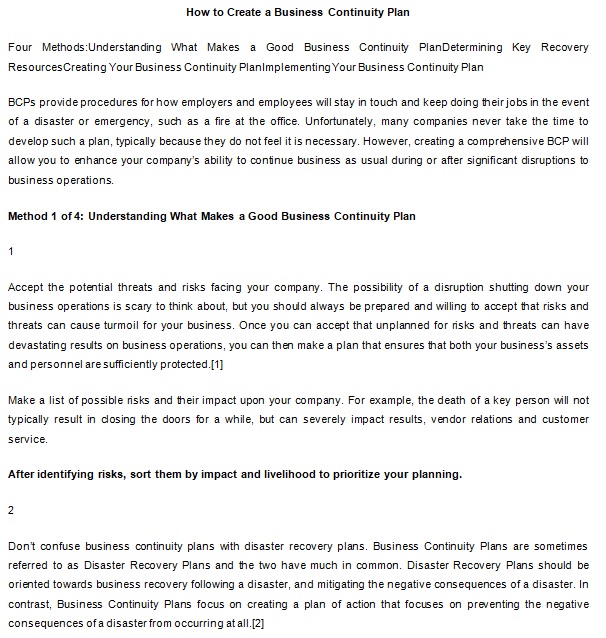
How To Write Business Continuity Plan Template
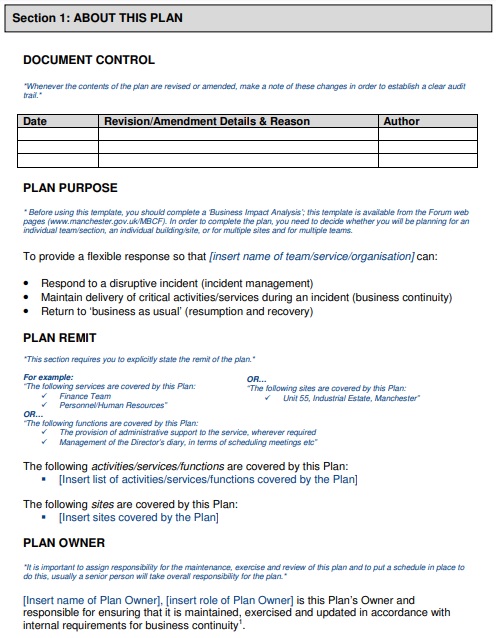
Business Continuity Plan Template for Small Businesses
Business Continuity Plan Template for Manufacturing
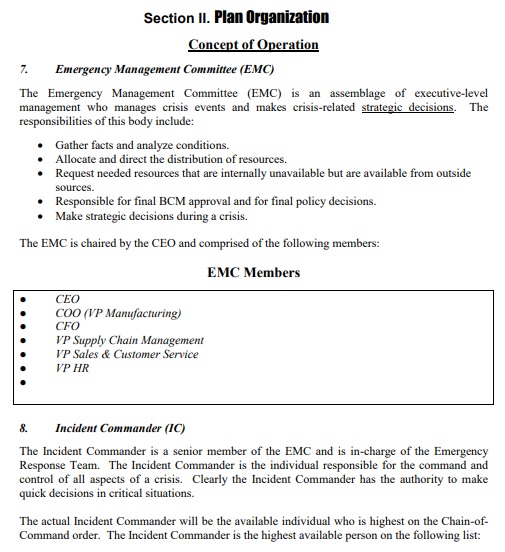
Business Continuity Plan Template Excel
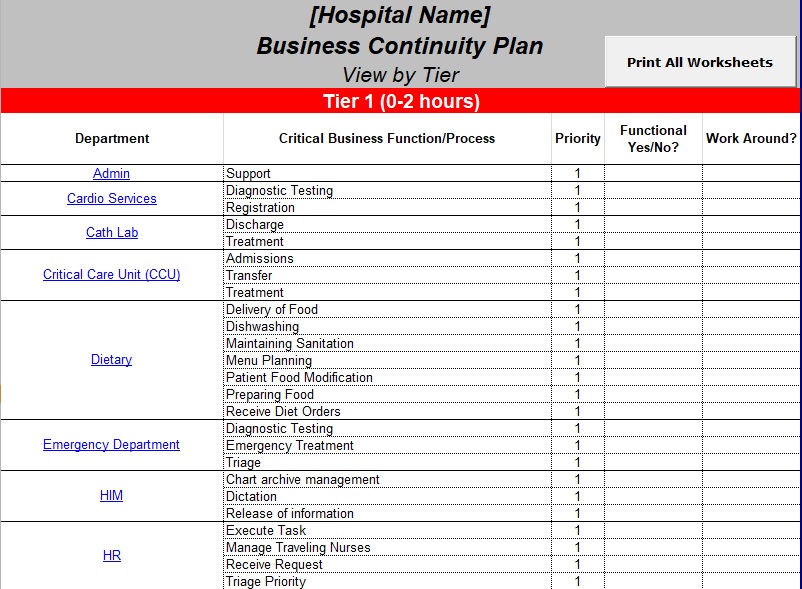
Business Continuity Plan Sample
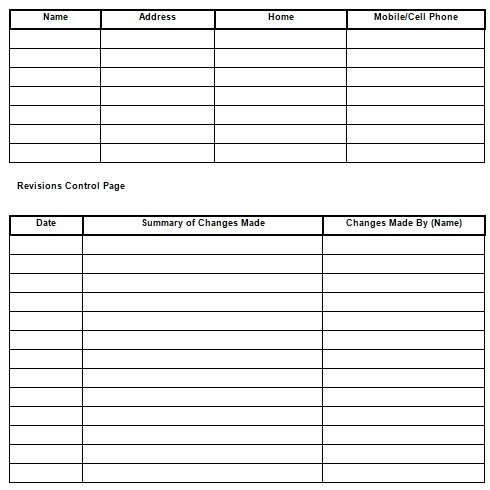
Business Continuity Plan Example
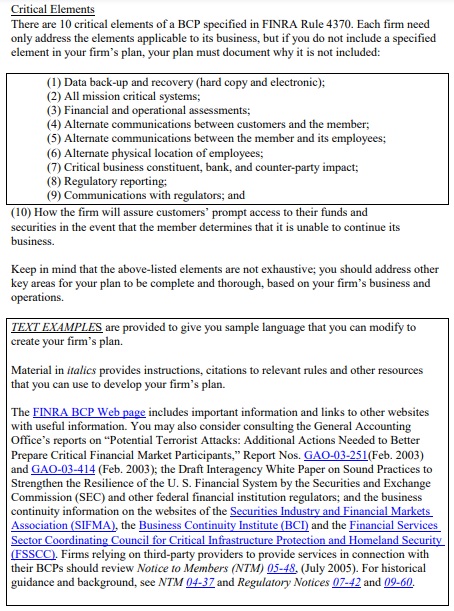
Business Continuity Plan Example for Software Company
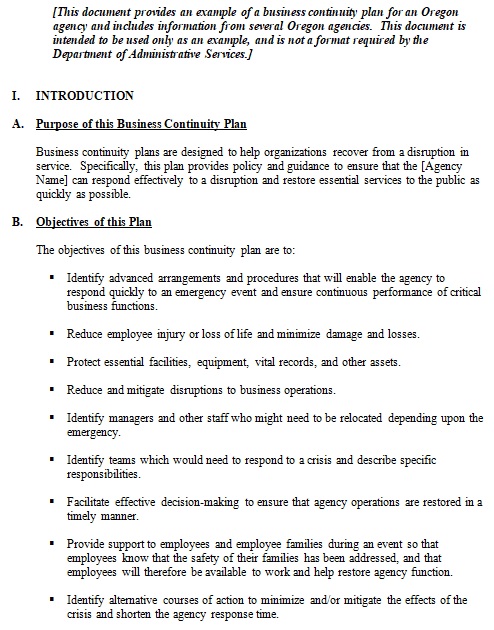
Business Continuity Plan Checklist Template
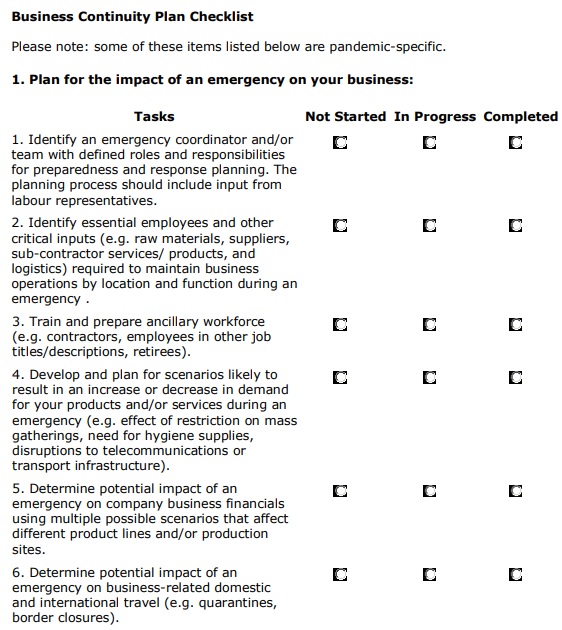
Business Continuity Management Template
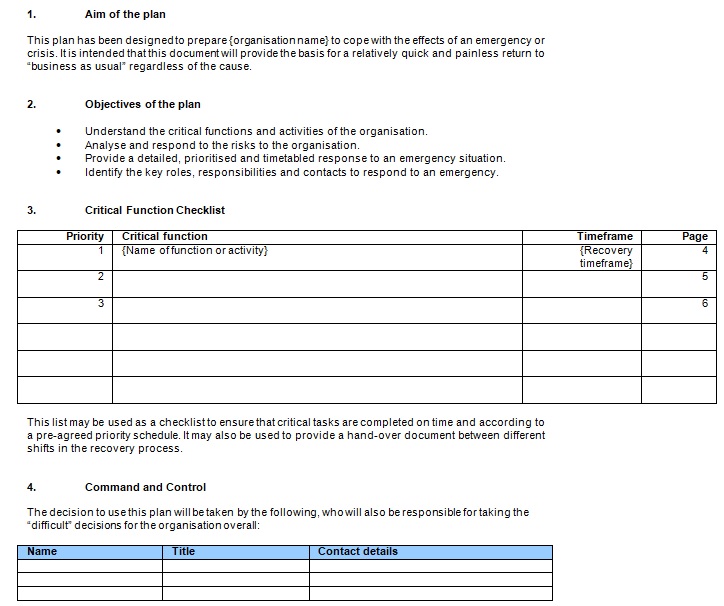
Business Continuity and Disaster Recovery Plan Template
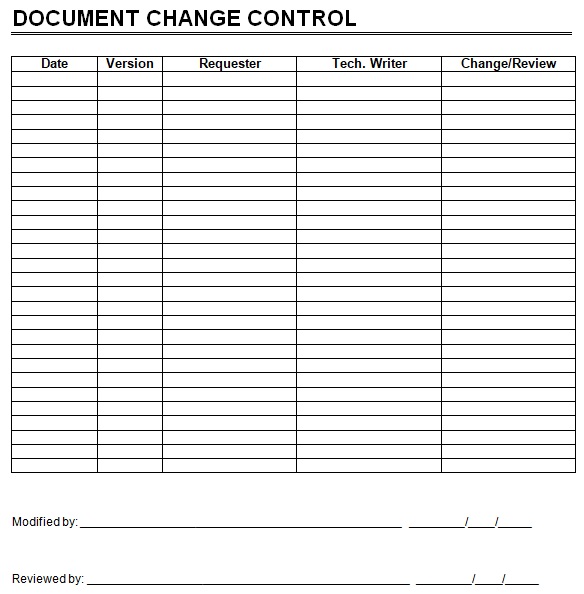
Bcp Plan Template PDF
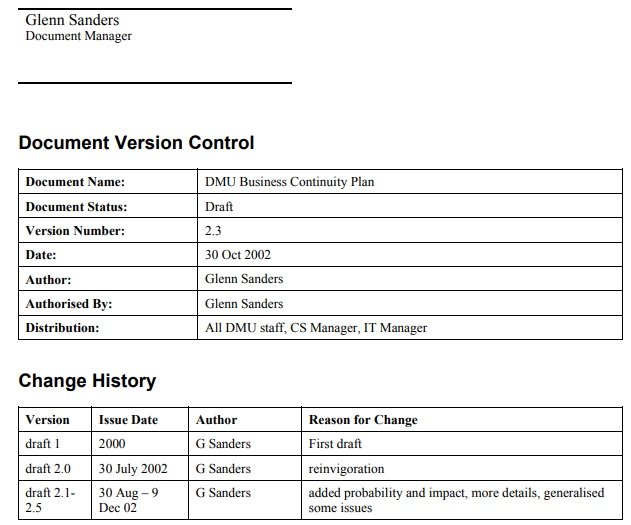
Tips for Making Your BCP Actually Work
Let me share something practical—simplicity beats complexity every time.
Keep It Easy to Understand
If your team can’t quickly understand the plan, it won’t help in a real situation.
Make It Accessible
Store it in multiple places:
- Cloud storage
- Printed copies
- Accessible devices
Train Your Team
Awareness is key. Everyone should know where the plan is and how to use it.
Keep Improving
Every test, every incident, every update makes your plan stronger.
Common Mistakes to Avoid
Even well-intentioned plans can fail if these mistakes are made:
- Overcomplicating the document
- Not assigning clear roles
- Ignoring minor risks that can grow into major issues
- Failing to update contact information
- Skipping testing and drills
Avoiding these pitfalls can significantly improve your preparedness.
Final Thoughts
A business continuity plan isn’t just about preparing for disasters—it’s about building resilience. It gives you confidence that no matter what happens, your business has a way forward. Start small if you need to. Build step by step. What matters most is that you start. Because when disruption comes—and at some point, it will—you won’t be reacting blindly. You’ll be ready.
Hence, we concluded that a business continuity plan plays a significant role in every business. It provides an ideal strategy to prevent business operations from stopping completely.
Frequently Asked Questions (FAQs)
Why is a business continuity plan important for small businesses?
Small businesses often have limited resources, making them more vulnerable to disruptions. A BCP helps them recover faster and reduce losses.
What should be included in a business continuity plan?
It should include risk assessment, business impact analysis, recovery strategies, communication plans, and assigned responsibilities.
What is the difference between business continuity and disaster recovery?
Business continuity focuses on maintaining operations, while disaster recovery specifically deals with restoring IT systems and data.
Who is responsible for creating a business continuity plan?
Typically, senior management along with department heads and risk management teams collaborate to create the plan.
What industries need a business continuity plan the most?
All industries benefit from it, but it is especially critical for healthcare, finance, IT, manufacturing, and e-commerce.
Is business continuity planning a legal requirement?
In some industries, yes. Even when it’s not mandatory, it is highly recommended as a best practice.
You May also Like
 100% Free Maine Motor Vehicle Bill of Sale Form (Word)
- Printable Georgia Power of Attorney Form (Word / PDF)
- Free Disaster Recovery Plan Templates (Word)
- Free Construction Proposal Template [Word, Excel, PDF]
- Free Hold Harmless Agreement Templates & Examples (Word, PDF)
- Free Construction Estimate Templates (Excel / Word)
![Free Construction Proposal Template [Word, Excel, PDF]](https://exceltmp.com/wp-content/uploads/2021/01/construction-proposal-template-excel-150x150.jpg)