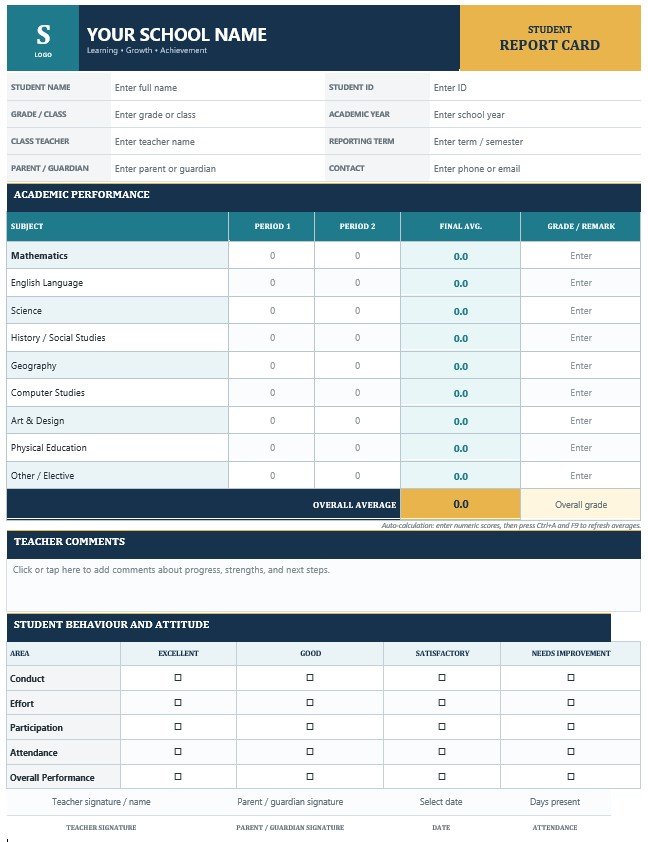
A school report card template is more than a simple document filled with grades. It is an important communication tool that helps teachers, parents, students, and school administrators understand a learner’s academic performance, classroom behavior, attendance, strengths, and areas that need improvement.
When I first looked closely at how report cards are prepared, I realized that a well-designed report card can make a major difference in the way student progress is communicated. A confusing report card may leave parents with unanswered questions, while a professional and organized template can present the same information clearly within a few minutes.
Whether you are a classroom teacher, school administrator, tutor, homeschool parent, or education center manager, using a structured school report card template can save time and improve the accuracy of student evaluations.
Table of Contents
What is a School Report Card Template?
A school report card template is a pre-designed document used to record and present a student’s academic results, attendance, behavior, skills, and overall progress during a specific school term.
The template usually contains organized sections for:
- Student information
- School information
- Subject names
- Marks or grades
- Teacher comments
- Attendance records
- Conduct or behavior
- Skills assessment
- Final result
- Promotion status
- Teacher and parent signatures
Instead of designing a report card from the beginning for every student or every term, teachers can enter the required information into a reusable template.
Why a Professional School Report Card Template Matters
A report card represents both the student and the educational institution. Parents often use it to judge not only their child’s progress but also the professionalism of the school.
A poorly organized report card with missing information, inconsistent fonts, incorrect calculations, or unclear grading criteria may create confusion. On the other hand, a professional school report card template makes the information easy to understand and strengthens trust between families and the school.
Makes Student Performance Easier to Understand
Parents should not have to study a report card for a long time to understand whether their child is performing well.
A clear template displays subjects, marks, percentages, grades, and teacher comments in separate sections. Parents can quickly identify strong subjects and areas where additional support may be needed.
Saves Teachers Valuable Time
Preparing report cards manually can become exhausting, especially when a teacher is responsible for many students.
A reusable template allows teachers to follow the same structure for every learner. They only need to update personal information, grades, attendance, and comments.
Creates Consistency Across the School
Every student should receive a report card that follows the same evaluation standards.
A standardized school report card format ensures that all teachers use consistent subject names, grade scales, attendance categories, and performance indicators.
This consistency makes school records more reliable and easier to review.
Encourages Better Communication
A report card should not only say that a student received a B grade or scored 78 percent. It should help parents understand what the student is doing well and what can be improved.
A well-designed template includes space for constructive teacher comments, learning habits, classroom participation, social development, and recommendations.
Essential Elements of a School Report Card Template
Although report card designs vary between schools, most effective templates include several common sections.
School Information
The top section of the report card should clearly identify the school or educational institution.
It may include:
- School name
- School logo
- School address
- Phone number
- Email address
- Website
- Academic year
- Term or semester
- School registration number
This section gives the report card an official appearance and ensures that the document can easily be connected to the issuing institution.
Student Information
The student information section should provide enough details to correctly identify the learner.
Common fields include:
- Student name
- Student identification number
- Roll number
- Grade or class
- Section
- Date of birth
- Gender
- Parent or guardian name
- Class teacher
- Academic session
Avoid overcrowding this area with unnecessary information. The goal is to identify the student clearly while keeping the report card visually balanced.
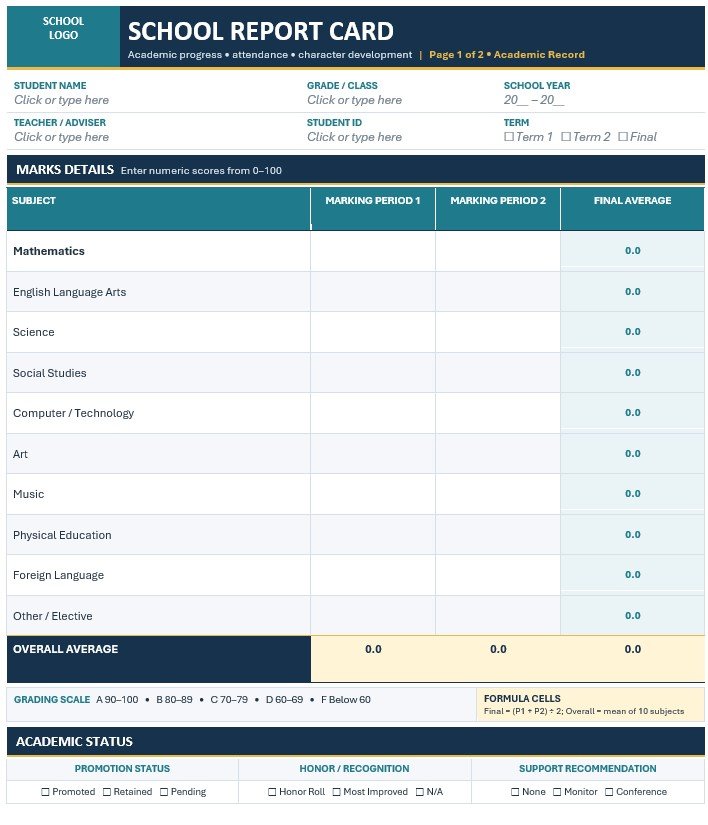
Subject-Wise Academic Results
The academic results table is usually the most important part of a school report card template.
It may contain columns for:
- Subject name
- Maximum marks
- Marks obtained
- Percentage
- Letter grade
- Grade point
- Teacher remarks
Subjects may include English, mathematics, science, social studies, computer studies, art, physical education, religious studies, and additional languages.
For younger students, the evaluation may focus less on marks and more on skill levels such as:
- Beginning
- Developing
- Satisfactory
- Proficient
- Excellent
The language should match the student’s grade level and the school’s assessment system.
Grading Scale
Every report card should explain how marks are converted into grades.
For example:
| Percentage Range | Grade | Performance Level |
|---|
| 90–100% | A+ | Outstanding |
| 80–89% | A | Excellent |
| 70–79% | B | Very Good |
| 60–69% | C | Good |
| 50–59% | D | Satisfactory |
| Below 50% | F | Needs Improvement |
The grading system may differ depending on the country, school board, grade level, or educational program.
Including the grading scale directly on the report card helps parents interpret the results correctly.
Attendance Record
Attendance can strongly affect academic performance. A student who misses many lessons may struggle even if they have strong learning abilities.
A useful attendance section may include:
- Total school days
- Days present
- Days absent
- Excused absences
- Unexcused absences
- Late arrivals
- Attendance percentage
Some schools also use attendance ratings such as excellent, satisfactory, or needs improvement.
The attendance record should be accurate and should match the school’s official register.
Behavior and Conduct Evaluation
Academic grades alone do not provide a complete picture of student development.
A school report card template may include behavior categories such as:
- Respect for teachers
- Respect for classmates
- Classroom discipline
- Punctuality
- Responsibility
- Cooperation
- Honesty
- Leadership
- Organization
- Care of school property
Teachers can evaluate these areas using letter grades, numerical ratings, checkboxes, or performance labels.
For example:
- Excellent
- Very Good
- Satisfactory
- Developing
- Needs Improvement
This section helps parents understand how the student behaves and participates within the school environment.
Learning Skills and Work Habits
Learning skills show how a student approaches academic work.
Common categories include:
- Completes assignments on time
- Follows classroom instructions
- Works independently
- Participates in discussions
- Demonstrates creativity
- Uses time effectively
- Shows problem-solving ability
- Maintains organized work
- Seeks help when needed
- Works well in groups
These skills are especially useful in elementary and middle school report cards because they reveal habits that may affect future academic success.
Teacher Comments
The teacher comment section gives meaning to the marks and grades shown in the report.
A helpful comment should be specific, respectful, balanced, and focused on improvement.
For example:
“Daniel demonstrates strong reading comprehension and regularly contributes thoughtful ideas during class discussions. He should continue working on organizing his written answers and reviewing his spelling before submitting assignments.”
This comment is more useful than a general statement such as:
“Good student. Keep working hard.”
Effective report card comments should mention:
- A clear strength
- A specific area for improvement
- A practical recommendation
- Encouragement for the next term
Teachers should avoid harsh, emotional, or embarrassing language. The purpose is to support student growth, not to discourage the learner.
Overall Result and Promotion Status
The final result section summarizes the student’s performance.
It may include:
- Total marks
- Marks obtained
- Overall percentage
- Grade point average
- Final grade
- Class position
- Pass or fail status
- Promoted or retained status
Not every school includes class position because some institutions prefer to focus on individual progress instead of competition.
Signatures and Approval
A report card becomes more official when it contains signature fields.
Common signature areas include:
- Class teacher signature
- Principal or head teacher signature
- Parent or guardian signature
- Student signature
- Date issued
- School stamp
A parent signature may confirm that the report card has been received and reviewed.
Types of School Report Card Templates
There is no single report card design that works for every educational setting. The template should match the age of the student and the method of assessment.
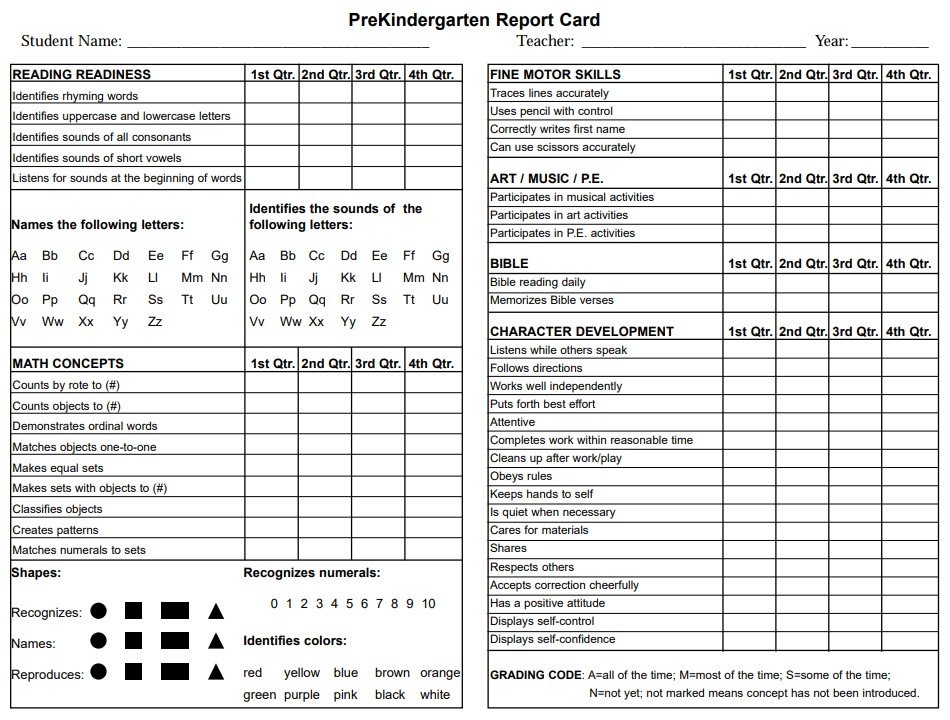
Preschool Report Card Template
A preschool report card usually focuses on development rather than traditional academic grades.
It may evaluate:
- Language development
- Number recognition
- Fine motor skills
- Gross motor skills
- Social interaction
- Emotional development
- Listening skills
- Personal hygiene
- Classroom routines
- Creative expression
Preschool report cards often use checkboxes, icons, short comments, and simple performance levels.
A warm and visually friendly design works well, but it should still remain professional and easy to read.
Kindergarten Report Card Template
A kindergarten report card may include early literacy, basic mathematics, behavior, social skills, and physical development.
Typical learning areas include:
- Letter recognition
- Phonics
- Reading readiness
- Writing skills
- Counting
- Shapes
- Colors
- Following directions
- Sharing
- Classroom participation
Instead of using A, B, C, and F grades, many kindergarten templates use categories such as mastered, progressing, beginning, and not yet assessed.
Elementary School Report Card Template
Elementary report cards usually combine academic performance with learning habits and social development.
Subjects may include:
- Reading
- Writing
- Mathematics
- Science
- Social studies
- Art
- Music
- Physical education
This template should provide enough space for teacher comments because parents often need explanations about skill development and classroom progress.
Middle School Report Card Template
Middle school report cards usually become more subject-focused.
Different teachers may provide grades for different subjects. The template may therefore include:
- Course name
- Teacher name
- Assignment grade
- Test grade
- Project grade
- Final term grade
- Credits
- Attendance
- Conduct
A clear and structured design is important because the number of subjects and assessment categories may increase.
High School Report Card Template
A high school report card may contain more detailed academic information, including:
- Course code
- Course title
- Credit value
- Letter grade
- Numerical grade
- Grade points
- Semester average
- Cumulative GPA
- Class rank
- Graduation requirements
The design should look formal because high school report cards may be used for college applications, scholarship applications, transfers, and employment records.
Homeschool Report Card Template
A homeschool report card template allows parents or guardians to document academic progress in a professional format.
It may include:
- Homeschool name
- Student information
- Academic year
- Courses completed
- Curriculum used
- Credits earned
- Grades
- Attendance
- Learning activities
- Parent-teacher comments
- Signature
A well-prepared homeschool report card can be helpful when transferring to a traditional school, applying to a college, participating in extracurricular programs, or maintaining education records.
Homeschool parents should check local education requirements because reporting rules can vary by location.
Special Education Progress Report Template
A special education report may include both academic results and progress toward individual learning goals.
It may evaluate:
- Communication skills
- Motor development
- Social interaction
- Daily living skills
- Behavioral goals
- Academic objectives
- Therapy participation
- Individualized Education Program goals
Comments should describe measurable progress and specific support strategies.
This type of report should be developed according to the learner’s needs and the school’s special education policies.
How to Create a School Report Card Template
Creating a professional template becomes easier when the process is divided into clear steps.
Step 1: Define the Purpose
First, decide who will use the report card and what information they need.
Ask yourself:
- What is the student’s grade level?
- Does the school use marks, grades, skill ratings, or all three?
- Is attendance required?
- Are behavior and learning habits included?
- Does the report card need automatic formulas?
- Will it be printed or shared digitally?
Step 2: Choose the Page Layout
Most report cards use portrait orientation, but landscape orientation may be better when there are many subjects or assessment columns.
Keep enough margins around the page so that nothing is cut off during printing.
A one-page template is convenient, but a two-page design may be more appropriate when detailed comments and skill evaluations are required.
Step 3: Create a Clear Header
Add the school name, logo, contact details, academic year, and term.
The heading should be visible without being oversized.
Use one main font for headings and another simple font for body text if needed. Avoid using several decorative fonts because they can make the document look unprofessional.
Step 4: Organize Information into Sections
Use tables, shaded headings, and spacing to separate information.
A logical order may be:
- School information
- Student information
- Academic results
- Attendance
- Skills and behavior
- Teacher comments
- Final result
- Signatures
The reader should be able to move through the report naturally.
Step 5: Add the Grading Formula
When using Excel or Google Sheets, create formulas for totals, averages, percentages, and grades.
For percentage:
Percentage = Marks Obtained ÷ Maximum Marks × 100
For example, if a student receives 425 marks out of 500:
425 ÷ 500 × 100 = 85%
The grade formula should follow the school’s approved grading scale.
Step 6: Add Teacher Comment Areas
Provide enough space for meaningful comments.
A very small comment box often forces teachers to write vague statements. A larger section encourages more useful feedback.
You may create separate spaces for:
- Class teacher comments
- Subject teacher comments
- Principal remarks
- Parent response
Step 7: Review the Design
Before finalizing the template, check:
- Spelling
- Grammar
- Alignment
- Font size
- Table spacing
- Formula accuracy
- Printing layout
- Logo quality
- Grade scale
- Signature fields
How Report Cards Can Support Student Improvement
A report card should not be treated as the end of a term. It should become the beginning of a conversation.
Parents can use the report card to ask:
- Which subjects does the student enjoy most?
- Where is the student struggling?
- Are missing assignments affecting the grade?
- Does attendance need improvement?
- What support can be provided at home?
- What goals should be set for the next term?
Students should also be encouraged to review their own report cards.
A simple goal-setting section can make the report more useful. The student may write one academic goal and one personal development goal for the next term.
For example:
“My academic goal is to improve my mathematics grade by practicing for 20 minutes every evening.”
“My personal goal is to participate more confidently in class discussions.”
This turns the report card into a learning and motivation tool.
school report card template
school home daily report card template
preschool report card template
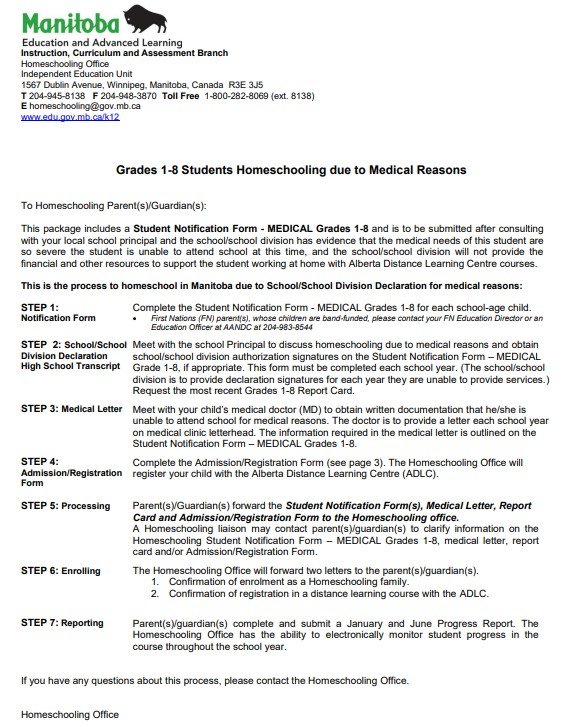
grades 1 8 students homeschooling report card template
free printable report card template
Final Thoughts
The school report card template can make student evaluation clearer, faster, and more meaningful.
A template does not simply display marks. It explains academic progress, attendance, behavior, learning habits, strengths, challenges, and future goals in a structured way.
For teachers, it saves time and reduces calculation errors. For parents, it provides a clear picture of their child’s development. For students, it offers recognition, guidance, and motivation.
When choosing or designing a report card, focus on clarity before decoration. Use a readable layout, an understandable grading scale, accurate formulas, meaningful teacher comments, and enough space for all essential information.
A professional report card should answer three important questions:
- How is the student performing?
- What is the student doing well?
- What should the student work on next?
Frequently Asked Questions:
What should a school report card template include?
A school report card template should normally include school details, student information, subject grades, attendance, behavior, learning skills, teacher comments, overall results, and signature fields.
How do I calculate a student’s percentage?
Divide the marks obtained by the total maximum marks and multiply the answer by 100.
For example:
450 ÷ 500 × 100 = 90%
Should report cards include teacher comments?
Yes. Teacher comments help parents understand the reasons behind the grades and provide practical guidance for improvement.
Can homeschool parents issue report cards?
Yes. Homeschool parents can prepare professional report cards to document courses, grades, attendance, credits, and academic progress. Local education requirements should be checked before selecting the format.
How often should report cards be issued?
Report cards may be issued monthly, quarterly, at the end of each term, every semester, or annually. The schedule depends on the school’s academic system.
You May also Like
 Free Lodger Agreement Templates – Simple & Legally Binding (Word / PDF)
- How to Write an Effective Insurance Cancellation Letter (+Templates)
- 100% Free Editable and Printable High School Diploma Templates (Word)
- Simple Employee Performance Review Template Excel And Word
- Printable Tooth Fairy Certificate Template [PDF]
- Free Handover Report Templates (PDF)

![Printable Tooth Fairy Certificate Template [PDF]](https://exceltmp.com/wp-content/uploads/2020/09/first-tooth-fairy-certificate-template-150x150.jpg)