If you manage a home, office, school, shop, warehouse, or rental property, you already know one truth: buildings never stop needing attention. A small leak can become a major repair. A weak wire can turn into a safety risk. A dirty HVAC unit can quietly raise energy bills month after month. That is why a solid building maintenance checklist template is not just a nice document to keep in a folder. It is one of the most useful tools for staying organized, preventing expensive surprises, and keeping a property in good shape.
I always think of building maintenance like regular health care for a property. When you check things early and consistently, you avoid bigger problems later. A checklist gives structure to that process. Instead of relying on memory or random inspections, you have a clear system for what needs to be checked, when it should be reviewed, and what action should be taken.
Table of Contents
What Is a Building Maintenance Checklist Template?
A building maintenance checklist template is a ready-to-use format that helps property owners, managers, caretakers, maintenance teams, and facility staff inspect and track the condition of a building. It lists the key areas that need regular review, such as plumbing, electrical systems, roofing, safety equipment, lighting, HVAC, walls, floors, doors, windows, and exterior spaces.
Instead of writing inspection notes from scratch every time, a template gives you a consistent structure. You simply fill in the date, mark the condition of each item, add comments, and note any repair or follow-up action. This saves time and makes the maintenance process more accurate.
The real value of a template is consistency. When the same items are checked regularly, it becomes much easier to spot patterns, prevent breakdowns, and keep records for future reference.
Why a Building Maintenance Checklist Is So Important
Many people only think about maintenance when something stops working. That approach usually costs more. Emergency repairs are stressful, expensive, and often avoidable. A checklist helps shift maintenance from reactive to preventive.
Here are a few reasons it matters so much.
It Reduces Expensive Repairs
Small issues usually start quietly. A tiny roof crack, a blocked drain, a flickering light, or a worn-out door hinge may not seem urgent at first. But when left unchecked, these small issues can grow into major repairs. A checklist helps catch them early.
It Improves Safety
Buildings need to be safe for everyone who uses them. Fire alarms, extinguishers, emergency exits, electrical panels, stair railings, smoke detectors, and security systems all need regular attention. A checklist makes sure these safety essentials are not ignored.
It Helps With Compliance
In many workplaces, commercial spaces, and rental properties, regular maintenance records can support inspections, regulations, insurance requirements, and internal audits. A checklist creates a paper trail that shows proper care and routine inspection.
It Extends the Life of the Building
A well-maintained building lasts longer. Systems work better, surfaces stay in better shape, and replacement costs are delayed. Preventive care protects the value of the property over time.
It Keeps Everyone Accountable
A maintenance checklist is also a communication tool. It helps owners, managers, and staff know what has been checked, what still needs repair, and who is responsible for follow-up.
Who Should Use a Building Maintenance Checklist Template?
This type of template is useful for more people than most realize. It is not only for large commercial properties. It can be used by:
- Property managers
- Building supervisors
- Facility maintenance teams
- School and college administrators
- Landlords and rental property owners
- Apartment management staff
- Office administrators
- Warehouse managers
- Hotel and hospitality teams
- Homeowners managing large houses or multiple properties
Whether the building is residential, commercial, industrial, or institutional, a checklist helps create order and reduce guesswork.
What Should a Good Building Maintenance Checklist Template Include?
A strong checklist should be simple enough to use regularly but detailed enough to be useful. It should cover both interior and exterior areas, safety systems, and equipment that often gets overlooked.
Basic Property Information
Start with the building details. This section usually includes the property name, address, inspection date, inspector name, department, and any reference number or maintenance log ID. This may sound basic, but it makes the record easier to store and review later.
Exterior Inspection
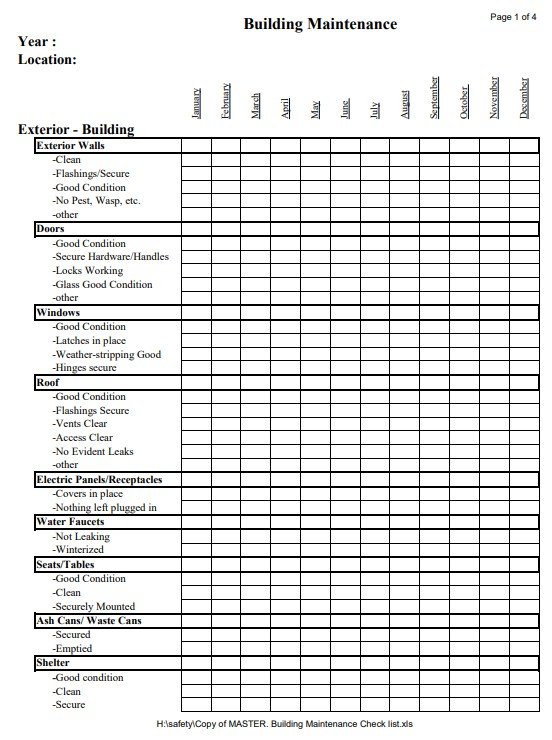
The outer structure of a building often gives early signs of damage. This part of the checklist should cover the roof, gutters, exterior walls, paint, drainage, sidewalks, parking areas, fences, gates, and outdoor lighting. Landscaping and nearby tree branches should also be checked if they can affect the building.
Interior Areas
Inside the building, the checklist should cover walls, ceilings, floors, stairways, corridors, handrails, doors, locks, windows, and any visible water damage. Cleanliness and general wear can also be noted.
Plumbing System
A good maintenance checklist should include sinks, faucets, pipes, drains, toilets, water heaters, water pressure, leakage points, and signs of mold or moisture. Even minor plumbing issues can turn into serious damage if ignored.
Electrical System
Electrical checks are essential for safety. This section may include light fixtures, switches, outlets, wiring condition, breaker panels, backup systems, exposed wires, and emergency lighting. If something looks unsafe, it should be recorded and handled quickly.
HVAC and Ventilation
Heating, cooling, and ventilation systems have a big effect on comfort, air quality, and energy costs. The checklist should include air filters, thermostats, vents, duct condition, AC units, heating equipment, and unusual sounds or performance issues.
Fire and Safety Equipment
This is one of the most important sections. It should include fire extinguishers, smoke detectors, alarm systems, sprinkler systems, emergency exits, exit signs, first aid kits, and evacuation paths. Safety tools only help when they are working properly.
Doors, Windows, and Security
The condition of doors, hinges, locks, windows, shutters, access systems, CCTV cameras, and alarms should be checked regularly. This helps protect both people and property.
Notes and Corrective Actions
A checklist should never end with only tick marks. It should also include a space for observations, repair needs, priority level, action taken, and the name of the person assigned to fix the issue. This turns inspection into action.
How to Organize the Checklist by Time Frame
One of the smartest ways to use a building maintenance checklist template is to break it into daily, weekly, monthly, quarterly, and annual tasks. This prevents overload and helps teams focus on what matters at the right time.
Daily Checks
Daily tasks are usually simple but important. These may include checking lights, entry points, washrooms, leaks, unusual smells, security systems, and visible hazards. In busy buildings, these quick checks can prevent service interruptions.
Weekly Checks
Weekly maintenance can include cleaning vents, checking drainage, inspecting common areas, reviewing plumbing fixtures, and testing selected safety equipment. These are tasks that do not always need daily review but still need frequent attention.
Monthly Checks
Monthly checks may include HVAC filters, electrical panels, roof condition from visible access points, pest control signs, fire extinguisher status, door hardware, and water heater inspection.
Quarterly Checks
Quarterly inspections are useful for more detailed review. This may include deep HVAC servicing, structural condition checks, generator tests, exterior wall review, parking lot condition, and emergency lighting tests.
Annual Checks
Annual maintenance is usually broader and more technical. This can include full system servicing, professional roof inspections, major plumbing and electrical review, repainting decisions, compliance review, and long-term repair planning.
Tips for Creating a Useful Building Maintenance Checklist Template
A checklist only works if people actually use it. I think the best templates are not the most complicated ones. They are the ones that are clear, realistic, and easy to follow.
Keep the language simple. Use direct inspection points. Leave enough space for comments. Group items by area or system so the user does not feel lost. Add a status column such as Good, Needs Repair, Urgent, or Not Applicable. If the building is large, make separate pages for different sections or floors.
It also helps to update the template over time. If the same issue keeps showing up, the checklist should reflect that. A good template grows with the needs of the building.
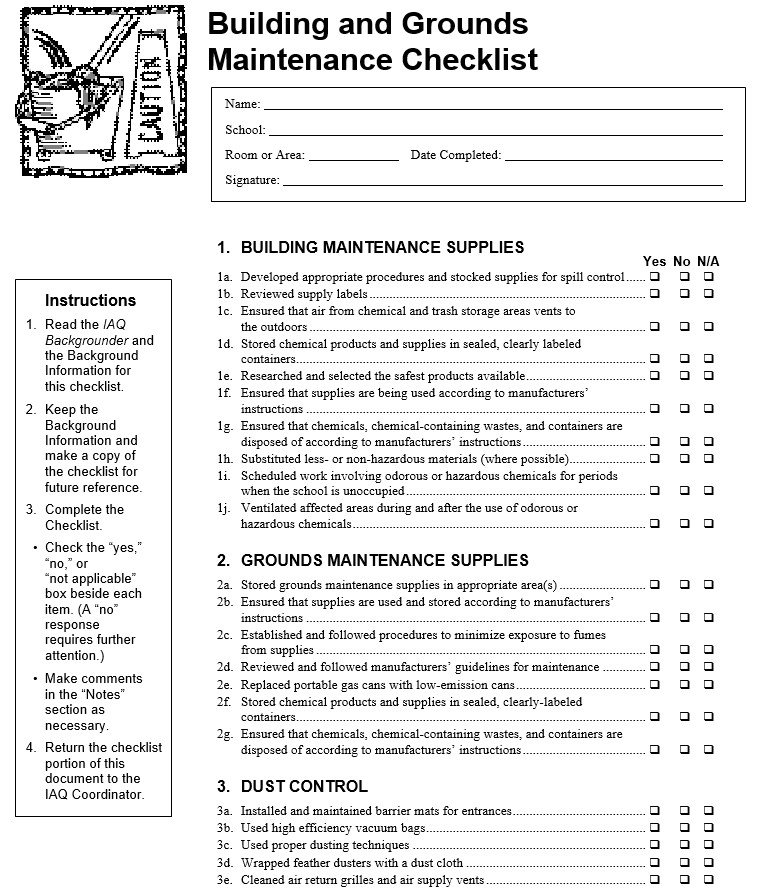
building and grounds maintenance checklist template
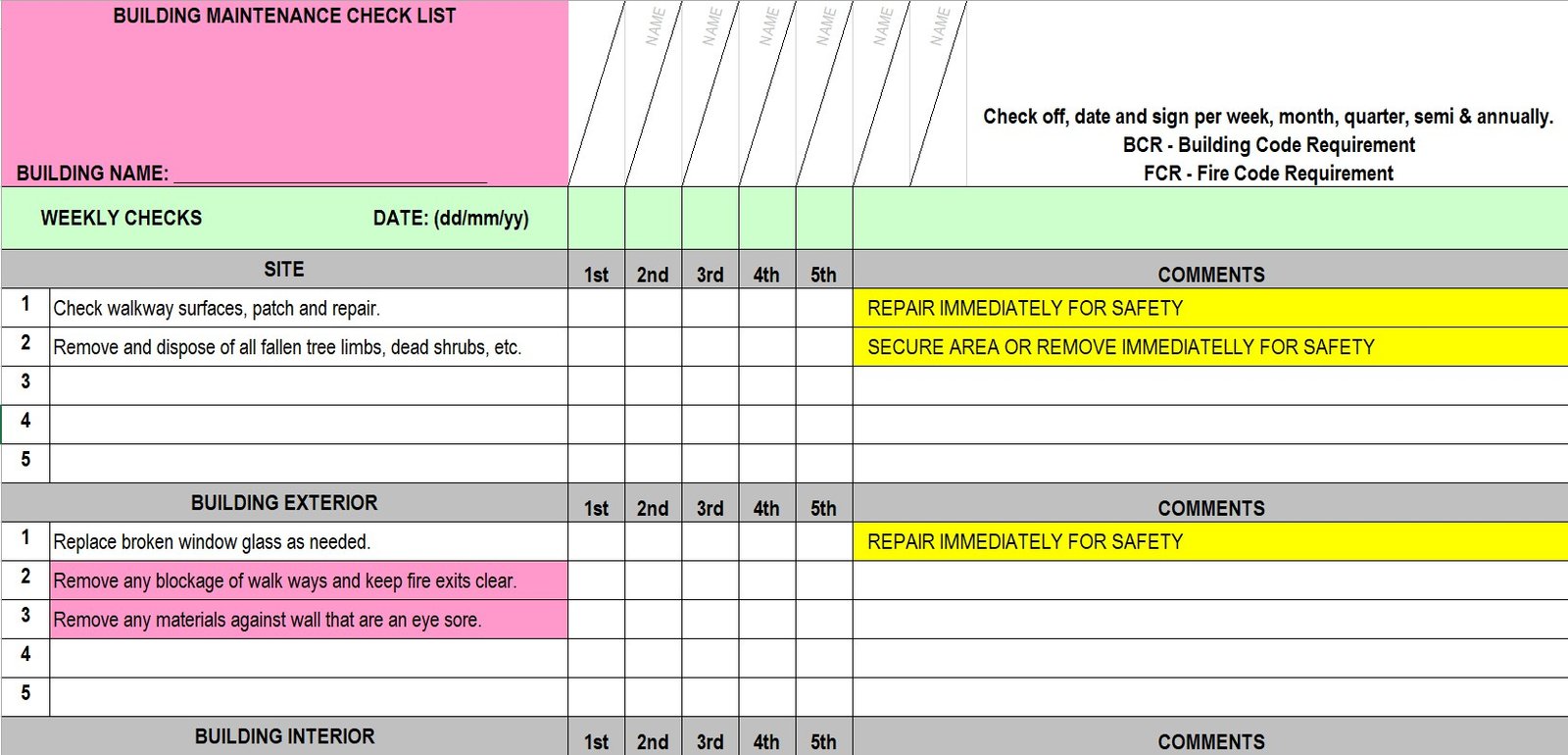
building maintenance checklist template excel
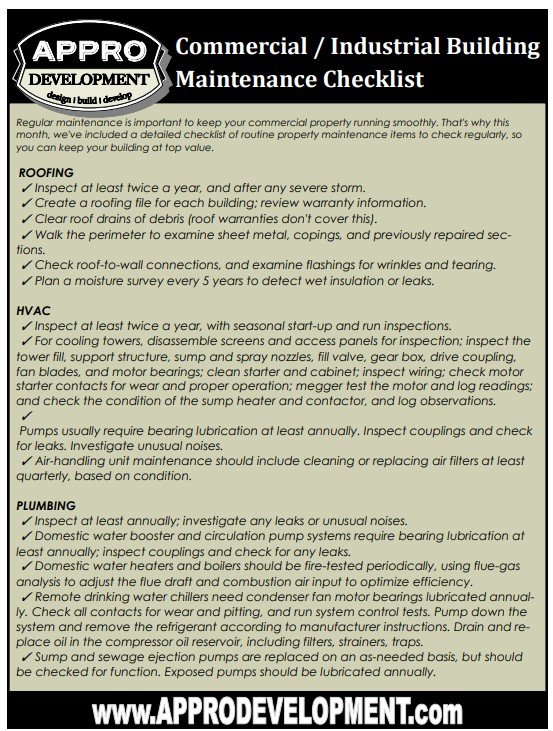
commercial building maintenance checklist pdf
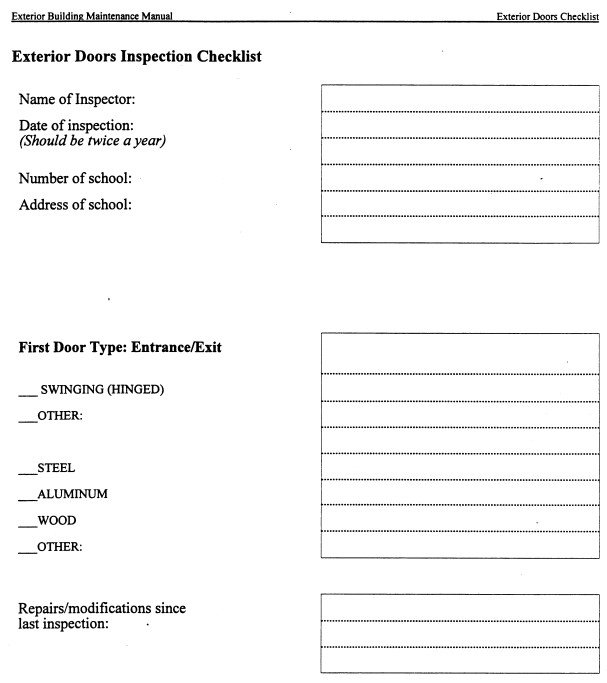
exterior door inspection checklist
office building maintenance checklist
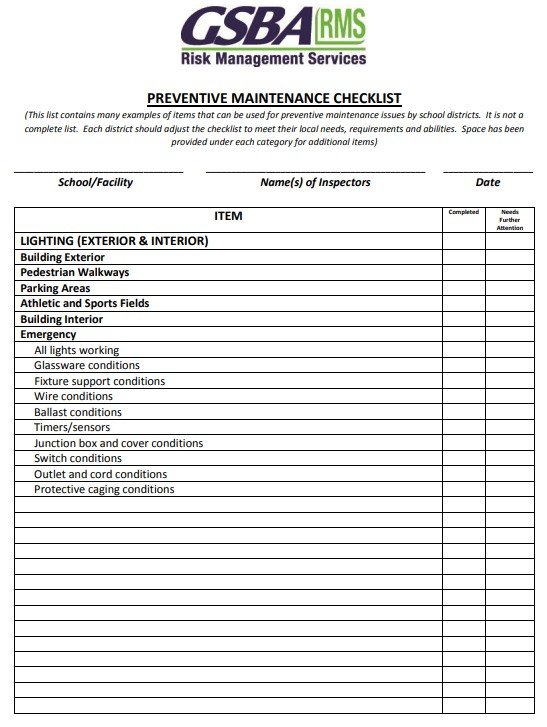
preventive maintenance checklist
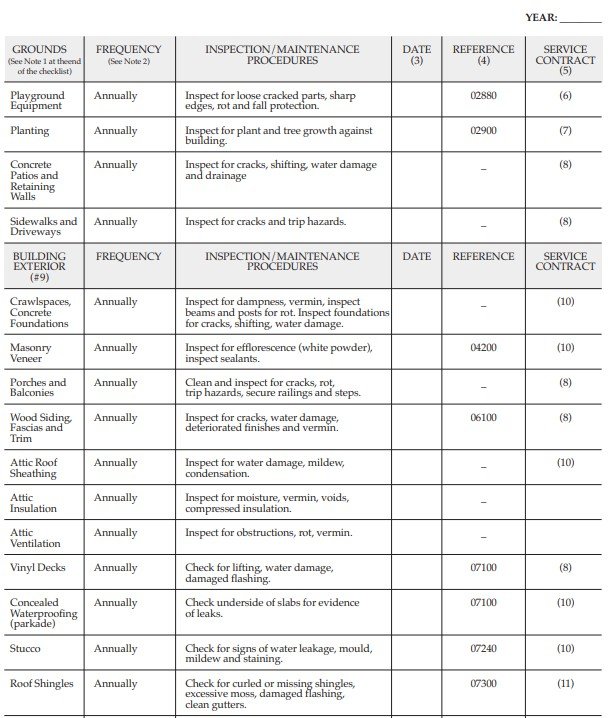
sample maintenance checklist template
Final Thoughts
A building maintenance checklist template is one of those simple tools that can save time, money, and stress. It helps keep inspections organized, repairs timely, and buildings safer for everyone. Whether you manage a small rental unit or a large commercial property, having a clear maintenance checklist gives you more control and fewer surprises.
The best part is that once you have a strong template in place, the entire maintenance process becomes easier. You stop depending on memory, avoid missed tasks, and create a better routine for property care. In the long run, that consistency is what protects the value and performance of a building.
FAQs:
What is the purpose of a building maintenance checklist template?
The purpose of a building maintenance checklist template is to help track inspections, spot problems early, improve safety, and keep maintenance work organized. It creates a clear system for checking a building regularly instead of waiting for something to fail.
How often should building maintenance be checked?
It depends on the type of building and how heavily it is used. Some items should be checked daily, while others can be reviewed weekly, monthly, quarterly, or annually. Safety systems and high-use areas usually need more frequent attention.
Can a building maintenance checklist template be used for residential properties?
Yes, absolutely. A building maintenance checklist template can be used for homes, apartments, rental properties, and residential buildings. It is not limited to offices or commercial spaces.
Why is preventive maintenance better than emergency repair?
Preventive maintenance is usually cheaper, safer, and less stressful. It helps catch small issues before they become major damage. Emergency repairs often cost more and may interrupt normal building use.
Can landlords use a building maintenance checklist template?
Yes. Landlords can use it to inspect rental units, common areas, plumbing, electrical systems, and safety features. It also helps maintain records and show that regular property care is being done.
How does a checklist help save money?
A checklist saves money by reducing surprise repairs, extending the life of equipment, improving energy efficiency, and helping maintenance teams act before issues become serious and expensive.
You May also Like
 Printable Quickbooks Deposit Slip Template
- Free Part-time Job Cover Letter (Word, PDF)
- Free California LLC Operating Agreement Template (Word / PDF)
 Metric Conversion Chart Template (Excel, Word, PDF)
- A Comprehensive Guide to Creating and Using a Food Budget Template (Excel / PDF)
- Earned Value Management Template Excel