A solicitation letter is commonly used to request support, donations, sponsorship, funds, goods, or services for a cause, event, school activity, nonprofit effort, church project, or community need. In practice, many online templates and guides group solicitation letters closely with donation request letters and sponsorship request letters, because all of them are built around one thing: asking for support in a clear and persuasive way.
Table of Contents
What Is a Solicitation Letter?
A solicitation letter is a formal or semi-formal letter written to request help, support, or contribution from a person, company, business, or organization.
That support may come in different forms. Sometimes it is money. Sometimes it is sponsorship. Sometimes it is food, supplies, printing, event support, uniforms, medicine, or equipment. The exact purpose changes, but the goal stays the same: to present a need honestly and respectfully, and to encourage the reader to respond positively. Guides and sample libraries online consistently describe these letters as requests for financial or in-kind support, especially in fundraising, nonprofit, event, church, and school contexts.
Why Solicitation Letters Still Matter
Some people think letters are old-fashioned now. They assume a message, a social media post, or a quick email is enough.
But the truth is, a proper solicitation letter still carries weight.
- It shows seriousness.
- It gives structure to your request.
- It explains your purpose clearly.
- And it gives the reader confidence that your request is real and organized.
The Main Purpose of a Solicitation Letter
A good solicitation letter helps the reader understand four things:
- Who you are.
- What you need.
- Why it matters.
- How their support can make a difference.
That is why the best letters are not overly dramatic and not too dry either. They balance emotion with clarity.
Common Types of Solicitation Letters
One reason people get confused is because solicitation letters appear in many forms. The name stays the same, but the purpose changes depending on the situation.
Solicitation letter for donations
This is one of the most common types. It is used when asking individuals, families, companies, or local businesses to give money for a cause, campaign, or need. Donation request guides often explain that these letters work best when they clearly describe the need, the mission, and how the funds will be used.
Solicitation letter for sponsorship
This version is usually sent to a business, brand, or company to ask for event sponsorship or project support. Sponsorship resources describe these letters as formal requests for financial help or partnership for events, initiatives, or ongoing programs.
Solicitation letter for financial support
This type is often used for school needs, community support, emergency situations, educational expenses, medical needs, or charitable outreach. The tone usually needs to be respectful, direct, and sincere.
Solicitation letter for school projects or events
Schools, colleges, student groups, and parent associations often use these letters to request support for competitions, events, supplies, uniforms, educational drives, and school improvement efforts. Template libraries and fundraising resources commonly include school-focused versions among their most used request letters.
Solicitation letter for church or community programs
Church groups and local organizations often use solicitation letters for community feeding programs, outreach, mission work, building funds, and special events. Church donation letter guides remain a common subcategory of solicitation writing online.
What Makes a Solicitation Letter Effective?
An effective solicitation letter usually does the following:
- It gets to the point early.
- It explains the need in a way people can understand.
- It makes a specific request.
- It shows where the support will go.
- It ends with a clear next step.
Fundraising and sponsorship writing guides repeatedly emphasize the same pattern: tailor the message to the audience, explain the need, clarify the impact, and make the ask easy to understand.
How to Write a Solicitation Letter
If you are writing from scratch, do not try to sound “official” first. Try to sound clear first. The professionalism will come from structure.
Start with the right greeting
Whenever possible, write to a real person instead of using a generic greeting. A name instantly makes your letter feel more intentional.
For example:
Dear Mr. Ahmed
Dear Ms. Fatima
Dear Sir or Madam
A specific name is always stronger than a cold opening.
Introduce yourself properly
Do not write a full biography. Just give enough context so the reader knows who is writing and why.
For example, you may mention:
your name,
your organization,
your role,
or the event or cause you represent.
This creates trust from the beginning.
Explain the purpose early
Do not make the reader guess why you are writing.
State your purpose in the first paragraph. If you need donation support, say it. If you need sponsorship, say it. If you need materials or supplies, say that too.
A lot of weak letters become weak simply because the request comes too late.
Describe the need honestly
This is the heart of the letter.
- What are you raising support for?
- Why is it important?
- Who will benefit?
- What problem are you trying to solve?
This part should feel real. Not exaggerated. Not dramatic for no reason. Just honest.
Be specific about what you need
People respond better when they know exactly what kind of help you are requesting. A vague request creates hesitation. A clear request builds confidence.
Ask for:
a donation amount,
event sponsorship,
food support,
school supplies,
venue support,
printing services,
or any other specific help.
Explain how the support will be used
One of the biggest trust-builders in any solicitation letter is transparency.
The reader should know where their money, goods, or services will go. This makes the request feel organized and genuine rather than random.
End with appreciation and a call to action
Never end weakly.
Thank the reader for their time and consideration. Then tell them what to do next. Contact you, reply to the email, confirm support, or reach out for more details.
A good closing makes the letter feel complete.
Basic Format of a Solicitation Letter
If you want a clean structure, think of it like this:
Sender details
Date
Recipient details
Greeting
Opening paragraph with purpose
Middle paragraph explaining need and request
Closing paragraph with appreciation and contact information
Signature
This basic structure appears across many modern solicitation and sponsorship templates, whether they are created for downloadable Word files, printable PDFs, or editable online documents.
Sample Solicitation Letter:
Here is a simple sample written in a natural format:
Subject: Request for Support for Our Community Education Drive
Dear [Name],
I hope you are doing well. I am writing to respectfully ask for your support for our upcoming community education drive, which aims to provide learning materials and essential supplies to students from low-income families.
Our team is currently preparing educational kits that will include notebooks, pens, learning resources, and basic school items for students who need assistance. We believe that even small support can make a meaningful difference in a child’s academic journey.
In this regard, we would be grateful for any financial contribution or in-kind donation you may be willing to provide. Your support will directly help us prepare and distribute these educational kits to deserving students in our area.
Thank you for your time and kind consideration. We would truly appreciate the opportunity to discuss this with you further. Please feel free to contact us at
.Sincerely,
[Your Name] [Your Organization] [Contact Information]
Mistakes to Avoid in a Solicitation Letter
Here are some common mistakes:
- Writing long introductions before stating the request.
- Using language that sounds copied and unnatural.
- Being too vague about the need.
- Forgetting to explain how the support will be used.
- Making the letter too emotional without enough practical detail.
- Ending without contact information or next steps.
How to Make Your Solicitation Letter More Persuasive
A persuasive solicitation letter usually has:
- a genuine reason,
- a clear request,
- a believable tone,
- and a visible impact.
Personalization matters too. Advice from current donation and sponsorship letter resources consistently stresses tailoring the message to the specific recipient rather than sending the exact same wording to everyone.
That one small effort can completely change how your letter is received.
Solicitation Letter vs Sponsorship Letter
A solicitation letter is the broader category. It can ask for donations, services, materials, sponsorship, or support.
A sponsorship letter is more specific. It usually asks a business or organization to sponsor an event, project, or campaign, often with a mutual benefit involved such as brand visibility or public recognition. Current sponsorship guides describe these letters as formal requests for support tied to an event, activity, or initiative.
So every sponsorship letter can be seen as a type of solicitation letter, but not every solicitation letter is specifically a sponsorship letter.
Final Thoughts
A solicitation letter is more than just a request on paper. It is often written at a moment when something important is needed. Support. Funding. Sponsorship. Supplies. Help. Opportunity.
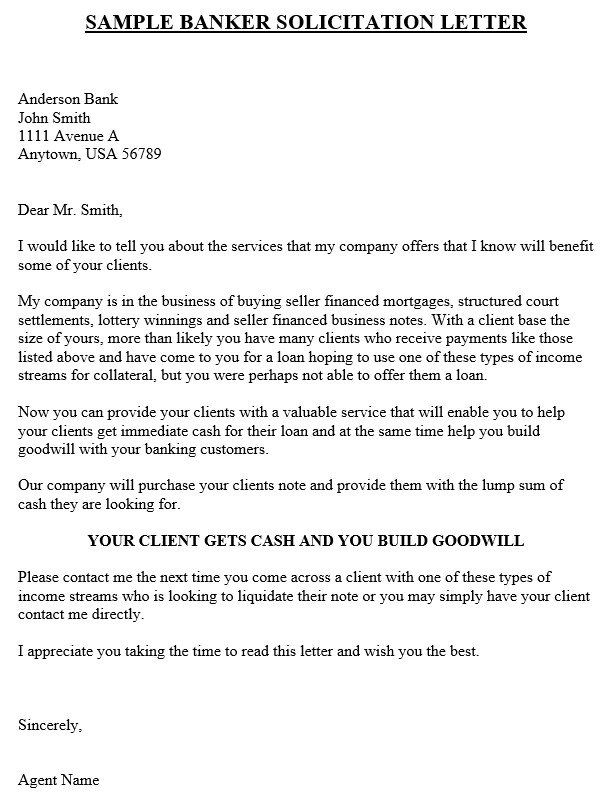
banker solicitation letter
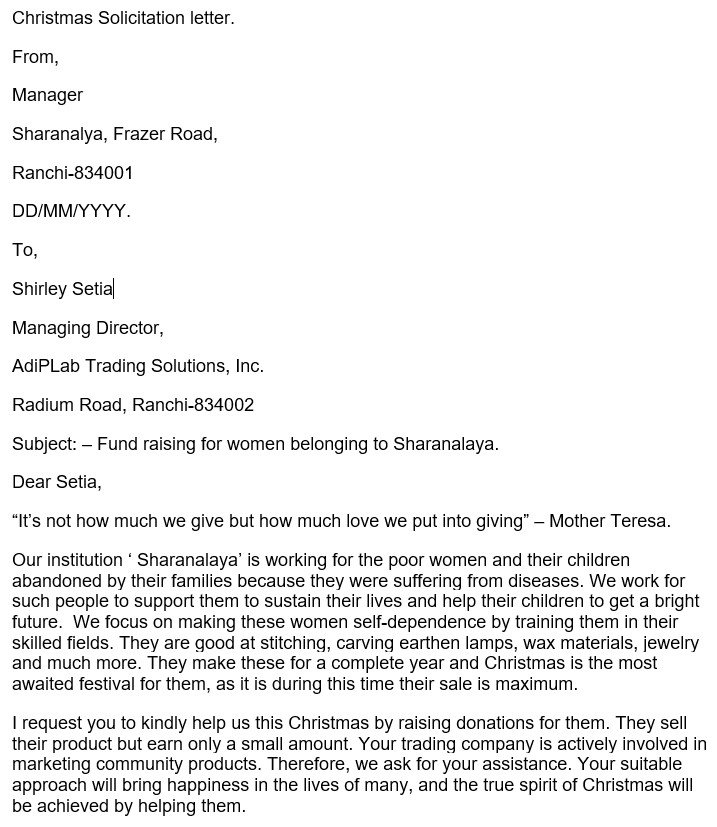
christmas solicitation letter template
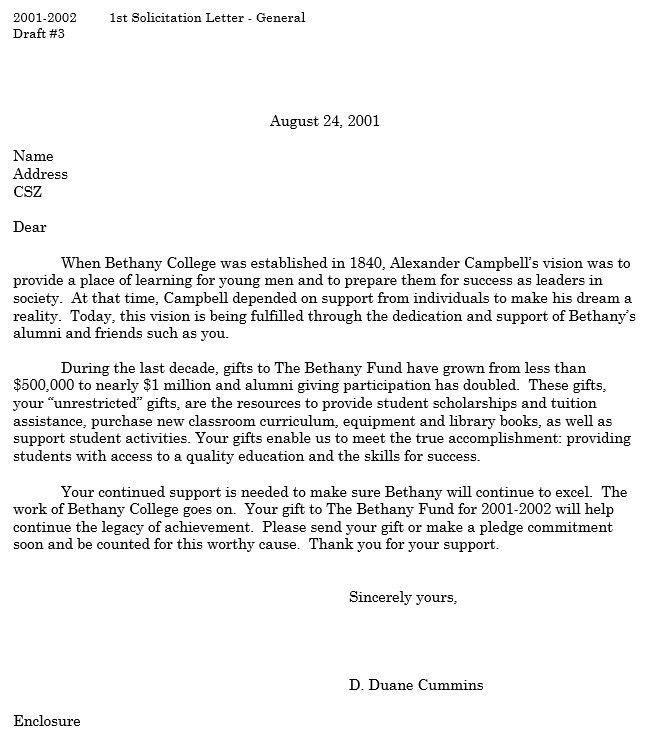
free solicitation letter
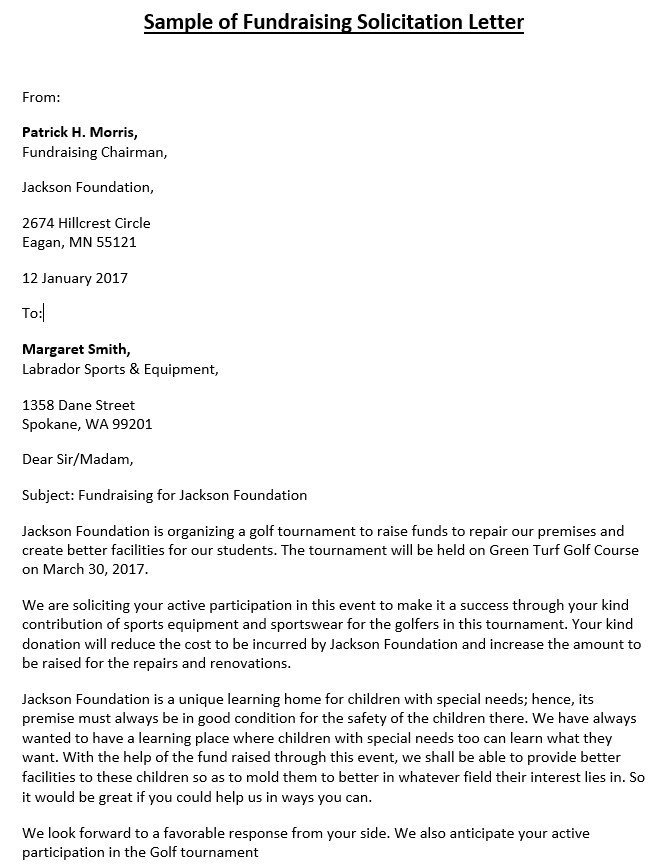
fundraising solicitation letter
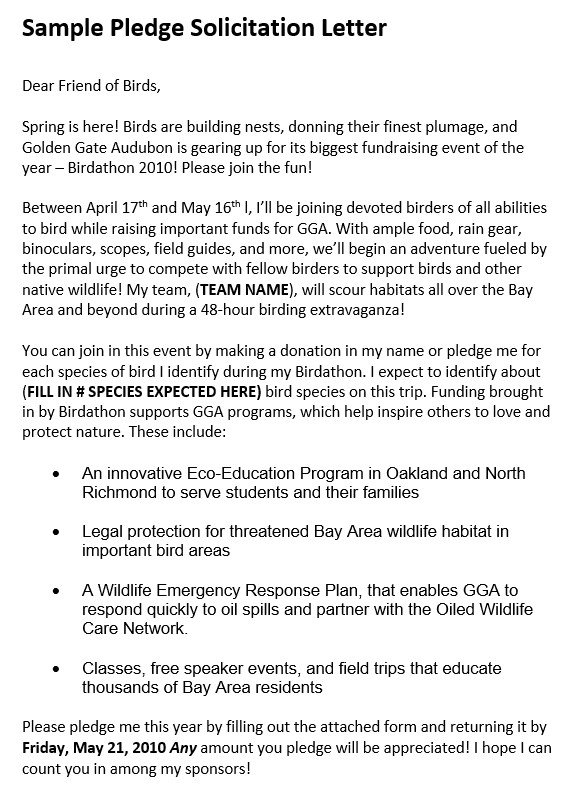
pledge solicitation letter
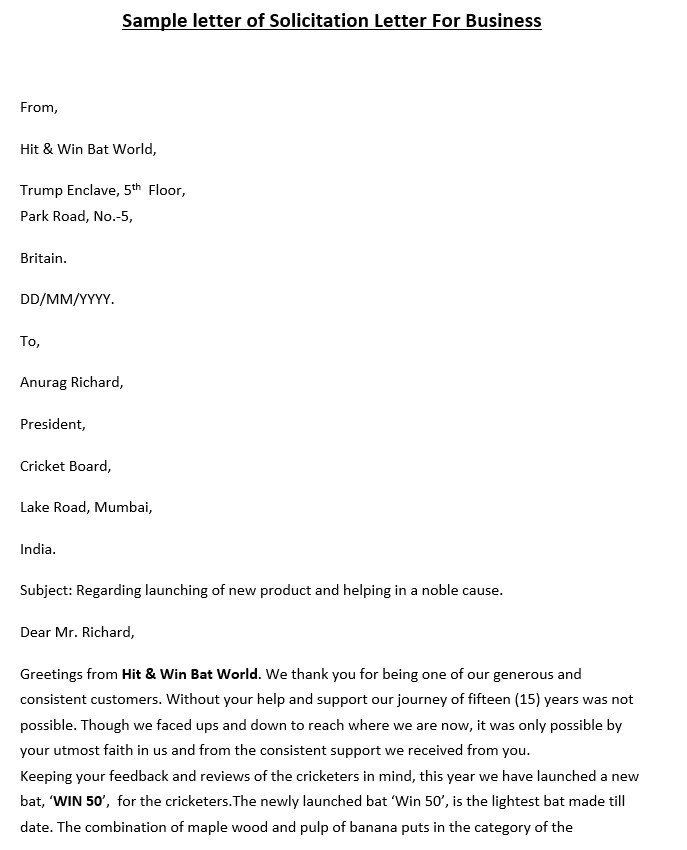
solicitation letter for business
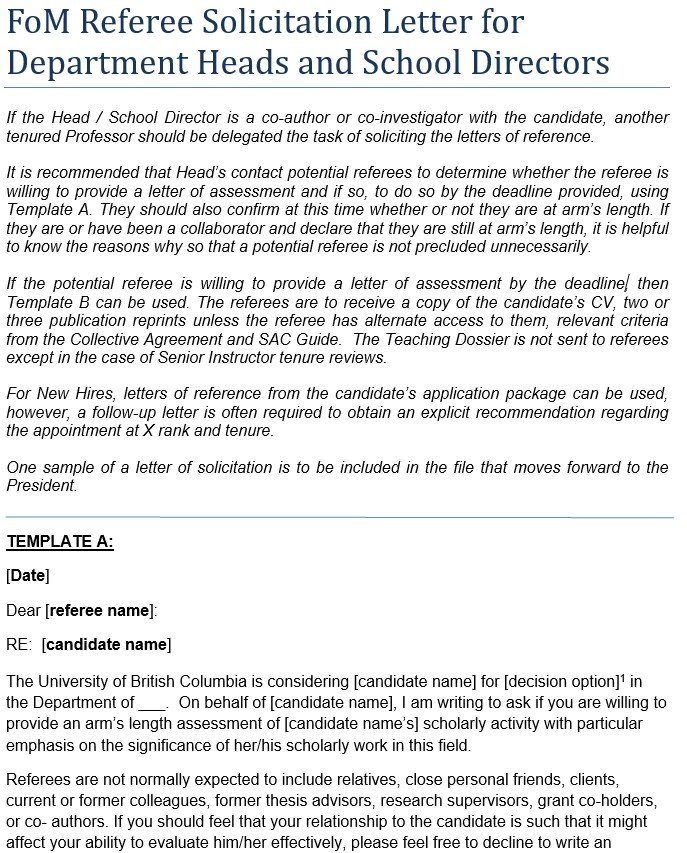
solicitation letter for department heads and school directors
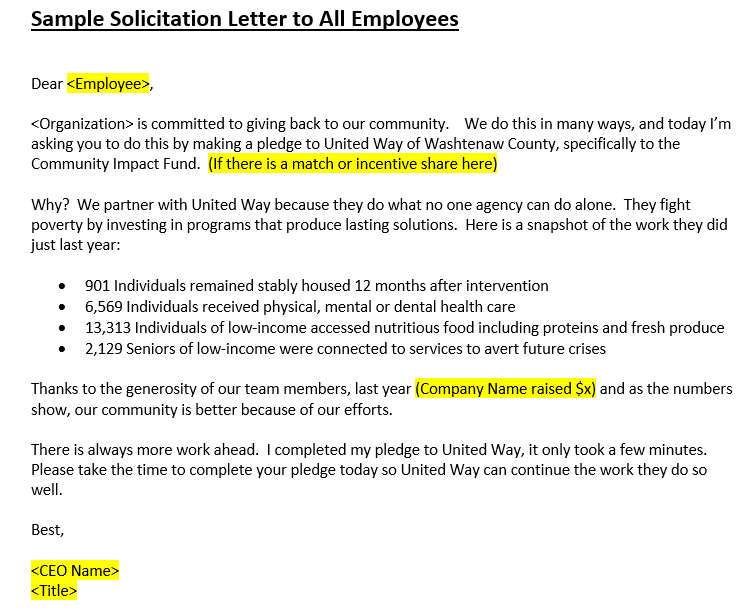
solicitation letter to all employees
FAQs:
What is the main purpose of a solicitation letter?
The main purpose is to explain a need clearly and respectfully so the reader understands the request and is encouraged to provide support.
How do you write a good solicitation letter?
A good solicitation letter should introduce the sender, explain the purpose early, describe the need honestly, ask clearly for support, explain how the help will be used, and end with appreciation.
What is the difference between a solicitation letter and a donation letter?
A donation letter usually focuses specifically on asking for money or charitable giving. A solicitation letter is broader and may ask for donations, sponsorship, services, materials, or other support.
Can a solicitation letter be used for sponsorship?
Yes. Sponsorship letters are one of the most common forms of solicitation letters, especially for events, school functions, nonprofit programs, and community projects.
What should be included in a solicitation letter?
It should include the sender’s details, the purpose of the letter, a clear explanation of the need, the exact type of support requested, how the support will be used, and contact details.
Can I send a solicitation letter by email?
Yes. Many organizations now send solicitation letters through email as well as printed copies, especially for donation and sponsorship requests.
What is a solicitation letter for financial support?
It is a request letter written to ask for financial help for a cause, project, emergency, educational need, medical support, or charitable activity.
Can students use a solicitation letter for school projects?
Yes. Students and schools often use solicitation letters for events, supplies, competitions, fundraising drives, and educational activities.
You May also Like
 Professional Cash Flow Projection Template Excel
- The Insurance Agency Business Plan Template: Unlocking Your Potential
- Boost Your Crypto Investments with a Custom Portfolio Tracker Template (Excel)
- Free Minnesota Motor Vehicle Bill of Sale Form (Word)
- Free Printable Assignment Cover Page Template
- Hunting Lease Agreement Template (Word, PDF)