When you’re about to head out on a trip, the last thing you want is to be surprised by vehicle issues on the road. Whether it’s a car, truck, or bus, the importance of pre-trip inspections cannot be overstated. A pre-trip inspection sheet helps you check the condition of your vehicle, making sure everything is safe and in good working order before hitting the road.
Table of Contents
What is a Pre-Trip Inspection Sheet?
A pre-trip inspection sheet is a checklist used to inspect all the critical parts of a vehicle before a trip. It’s a systematic way to ensure that your vehicle is in top shape, reducing the risk of breakdowns, accidents, and costly repairs.
By using this sheet, you can identify potential problems before starting your journey, which can save you time, money, and frustration. It’s an essential tool for vehicle operators, particularly those driving commercial vehicles like trucks and buses.
Why is a Pre-Trip Inspection Sheet Important?
Here’s why a pre-trip inspection sheet should be a must-have for anyone traveling long distances:
1. Safety Comes First
This is the most important reason. Whether you’re driving a family car or operating a commercial truck, safety is non-negotiable. A pre-trip inspection ensures that critical parts like brakes, lights, and tires are in working condition, reducing the likelihood of accidents.
2. Prevent Expensive Repairs
A vehicle that is regularly checked is more likely to remain in good working order. By catching minor issues early, you can avoid costly repairs down the road. Regular inspections help identify problems before they become big headaches.
3. Legal Compliance
For commercial vehicles, pre-trip inspections are required by law in many countries. Failing to perform these inspections can result in fines, penalties, or even being barred from driving. For individual drivers, although not legally required, performing a pre-trip inspection is a good practice.
4. Improved Performance and Efficiency
A vehicle that is regularly maintained performs better. From better fuel efficiency to fewer breakdowns, regular pre-trip inspections help your vehicle run smoothly and more efficiently, leading to a better overall experience.
What to Include in a Pre-Trip Inspection Sheet
A pre-trip inspection sheet typically includes several key sections that target different parts of your vehicle. Let’s take a look at the essential components to check during a pre-trip inspection.
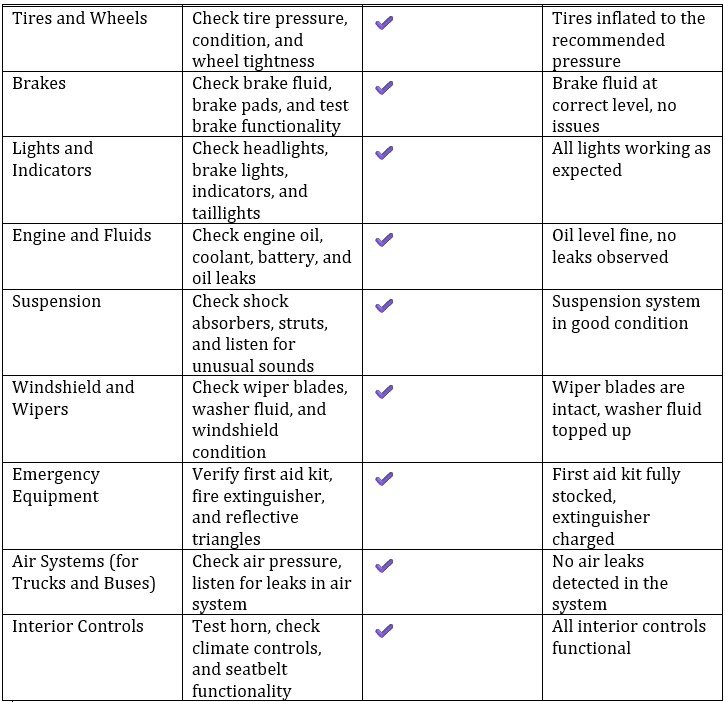
Tires and Wheels
- Tire Pressure: Always check the tire pressure. Under-inflated tires can be dangerous and lead to poor fuel efficiency.
- Tire Condition: Inspect for visible damage like cuts, punctures, or bulges.
- Wheel Inspection: Check rims for cracks or dents. Ensure that lug nuts are tight.
Brakes
- Brake Fluid: Ensure the brake fluid is at the correct level to maintain proper braking power.
- Brake Pads: Inspect the brake pads for wear and replace them if needed.
- Brake Functionality: Test the brakes to make sure they respond smoothly and quickly.
Lights and Indicators
- Headlights: Make sure both high and low beams work.
- Taillights and Brake Lights: Ensure that the taillights and brake lights are bright and operational.
- Turn Signals: Check the blinkers and hazard lights to ensure they flash when activated.
Engine and Fluids
- Engine Oil: Check the oil level and make sure it’s at the recommended level to keep the engine running smoothly.
- Coolant: Ensure that the radiator coolant is topped up to prevent the engine from overheating.
- Battery: Look for signs of corrosion on the battery terminals and ensure the battery is properly secured.
Suspension
- Shocks and Struts: Inspect the suspension system for any leaks or damage. A compromised suspension can lead to a rough and unsafe ride.
- Listen for Noise: While driving, listen for unusual sounds coming from the suspension. These could indicate problems.
Windshield and Wipers
- Wiper Blades: Check the wiper blades for wear and replace them if they’re cracked or worn out.
- Windshield Washer Fluid: Top up the washer fluid to ensure you can clean your windshield during your journey.
Emergency Equipment
- First Aid Kit: Ensure your first aid kit is fully stocked and accessible.
- Fire Extinguisher: Verify that the fire extinguisher is present, fully charged, and within easy reach.
- Reflective Triangles: These are necessary in case of a breakdown. Make sure they are easily accessible.
Air Systems (for Commercial Vehicles)
- Air Pressure: Check the air pressure in air brake systems (if applicable).
- Leaks: Listen for any hissing sounds that could indicate a leak in the air system, which could affect performance.
Interior Controls
- Horn: Test the horn to make sure it works properly in case you need it.
- Climate Controls: Make sure the air conditioning or heating systems are working, especially if you’re traveling in extreme temperatures.
- Seatbelts: Check that all seatbelts are functioning properly and are free from damage.
How to Complete a Pre-Trip Inspection Sheet
Filling out a pre-trip inspection sheet is easy once you know what to look for. Here’s a simple guide on how to fill it out:
- Start with the Exterior: Begin by checking the tires, wheels, and lights. These are critical for visibility and safety.
- Inspect the Engine and Fluids: Check oil levels, coolant, and battery condition. These are essential for keeping your vehicle running.
- Check the Suspension and Interior: Test the brakes, suspension, and make sure interior controls like the horn and wipers are working.
- Note any Issues: If you find any problems, make sure to write them down on the sheet. Some forms include a “remarks” section for additional notes.
- Sign and Date: Always sign and date the sheet after completing the inspection. This keeps a record of your inspection.
Conclusion
A pre-trip inspection sheet is more than just a form—it’s a vital tool for ensuring your vehicle is safe, reliable, and ready for the road. Whether you’re a commercial driver or just someone heading out on a road trip, taking a few minutes to go through a pre-trip inspection can save you time, money, and stress.
By following this checklist, you’re not only protecting yourself but also contributing to safer roads for everyone. It’s always better to be safe than sorry, so don’t skip this important step before your next journey. Happy travels!
pre trip inspection sheet
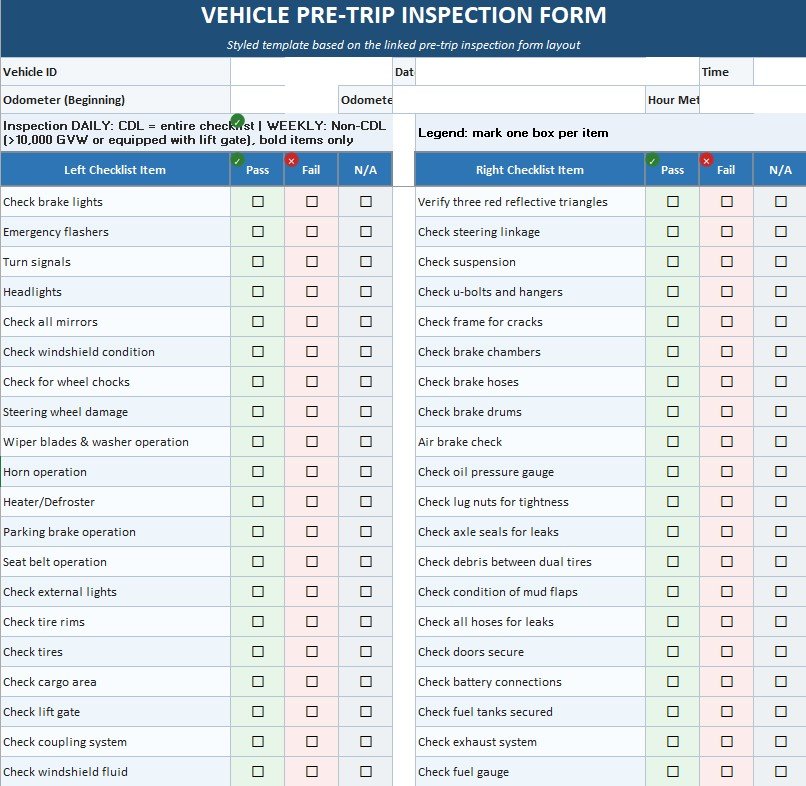
free printable pre trip inspection sheet
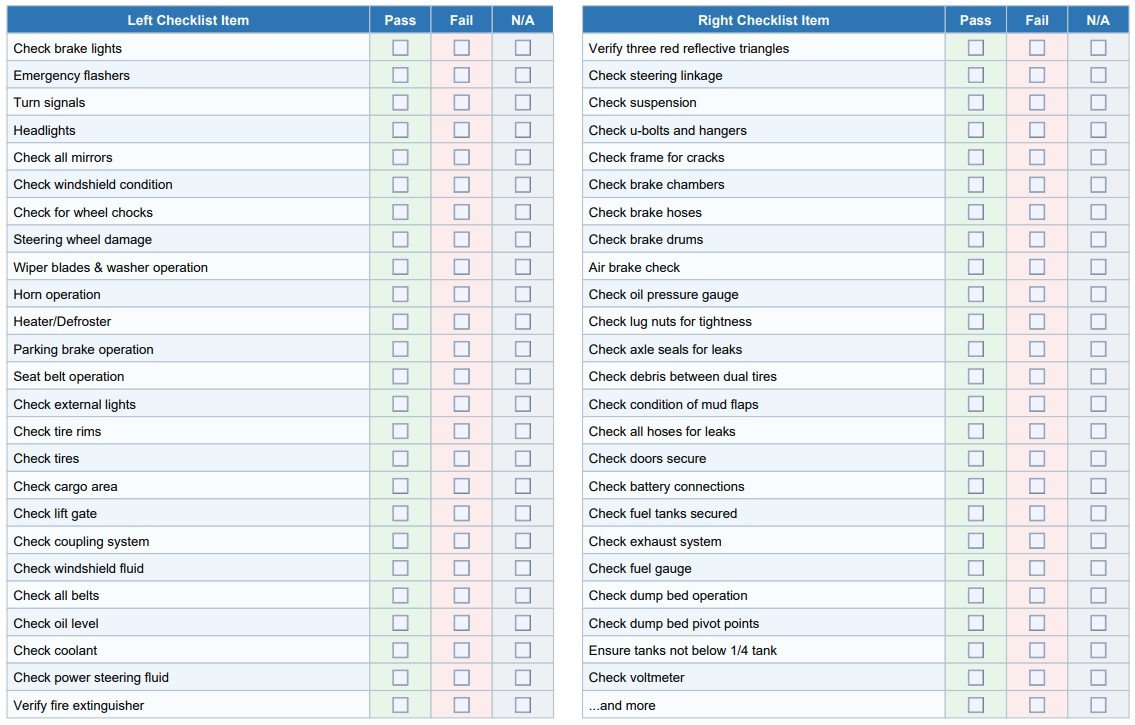
fillable vehicle pre trip inspection checklist template
FAQs:
How Often Should I Complete a Pre-Trip Inspection?
Pre-trip inspections should be done before every trip, no matter how long or short it is. For commercial vehicles, it’s required by law.
What Happens if I Don’t Do a Pre-Trip Inspection?
Skipping a pre-trip inspection could lead to dangerous situations, such as unexpected breakdowns or accidents. It also puts you at risk of legal penalties if you’re required to do one.
Can I Create My Own Pre-Trip Inspection Sheet?
Yes! Many drivers and companies create custom pre-trip inspection sheets based on their vehicle type and needs. Just make sure to include all critical safety components.
Is a Pre-Trip Inspection Sheet Required for All Vehicles?
While it’s required for commercial vehicles, it’s also highly recommended for personal vehicles. It helps ensure your car is in good condition and can save you from costly repairs later.
How Long Does a Pre-Trip Inspection Take?
A thorough pre-trip inspection usually takes between 15-30 minutes, depending on the vehicle size and complexity.
You May also Like
 Simple Action Plan Template – 4+ Excel, Word and PDF Examples
- 10+ Free Influencer Contract Templates (Word)
- Free Car Accident Release of Liability Forms (Word, PDF)
- Essential At Will Employment Contract Template for Your Business Needs
- Free Contract for Sale of Goods Template (Word / PDF)
- Free Printable Thank You Letter for Job Offer (Word)