Renewing a lease may seem as simple as changing the expiration date and signing a new page. In reality, a lease renewal is an important legal and financial decision for both the landlord and the tenant.
When I look at a lease renewal, I do not see it as routine paperwork. I see it as an opportunity to review the rental arrangement, update outdated terms, confirm the new rent, resolve maintenance concerns, and make sure both parties understand what will happen during the next rental period.
A properly written lease renewal agreement template can make this process much easier. Instead of creating a completely new lease from the beginning, the landlord and tenant can use a renewal agreement to extend the existing tenancy while documenting any changes.
Table of Contents
What is a lease renewal agreement?
A lease renewal agreement is a written document used to continue an existing landlord-tenant relationship after the original lease term ends.
The agreement normally identifies the original lease, confirms the new rental period, states the new rent amount, and explains whether any other lease terms have changed. Once signed, it becomes part of the rental agreement between the landlord and tenant.
For example, imagine that a tenant signed a one-year lease beginning on January 1, 2026, and ending on December 31, 2026. If both parties want the tenancy to continue for another year, they may sign a lease renewal agreement covering January 1, 2027, through December 31, 2027.
The renewal may keep every original condition unchanged, or it may update specific terms such as:
- Monthly rent
- Lease expiration date
- Security deposit
- Parking fees
- Pet rules
- Utility responsibilities
- Occupant information
- Late-payment charges
- Maintenance obligations
A clear renewal document helps prevent disputes because the updated terms are recorded in writing.
Why Use a Lease Renewal Agreement Template?
A lease renewal agreement template provides a structured starting point for extending a rental arrangement. It helps the landlord and tenant avoid forgetting important information.
Without a written renewal, both parties may have different assumptions. A landlord may believe the tenant has agreed to a rent increase, while the tenant may believe the rent will stay the same. One party may expect another fixed-term lease, while the other thinks the tenancy will become month-to-month.
A written agreement removes much of that uncertainty.
Saves Time
Drafting a full lease from the beginning can take considerable time. A renewal agreement focuses only on the existing lease and the terms that are being extended or changed.
Creates a Written Record
The document records the agreed renewal period, rental amount, and updated conditions. This can be useful if a disagreement develops later.
Confirms That Both Parties Agree
A renewal should not rely only on a casual conversation, text message, or verbal promise. Signatures show that both parties reviewed and accepted the new terms.
Helps Organize Changes
A renewal agreement can clearly separate the terms that are changing from the terms that remain unchanged.
Supports Better Property Management
Landlords who manage multiple rental units can use a standardized renewal process to track lease dates, rental increases, tenant decisions, and document signatures.
When should you use a lease renewal agreement?
A landlord or a tenant should use a lease renewal agreement in the following circumstances;
- The landlord wants to continue renting your property to the current tenant.
- You as a landlord want to modify the terms of the existing lease.
- A tenant or a landlord can use this agreement to inform the other party
- If they want to change the structure of an existing lease after it ends.
- When they need to change the lease terms.
What is the process of a lease renewal?
A lease renewal process involves the following steps;
Send a lease renewal letter
Before creating a lease renewal agreement, the landlord has to send a notice to the tenant to inform either of the following;
- You want to negotiate a lease renewal or extension.
- You need to know whether the tenant is willing to continue renting the property or not.
- The rental period will end as scheduled because you don’t want to extend the lease.
The tenant can also send a renewal notice to the landlord and can also request any of the above conditions. Moreover, the tenants should send a written non-renewal notice to their landlord if they do not want to renew the lease.
Negotiate the terms
It’s up to the landlord in most cases whether to renegotiate the lease or not. They can decide whether or not to make amendments to the original terms. When they both get agreed on new terms then include them in the lease renewal agreement. In addition, specify that the original lease agreement remains unchanged in case both parties agree to keep the same terms.
Gather essential documents
Additional legal documents aren’t required for a lease renewal. But, it would be better to have the following;
- The original lease agreement
- The new rent amount
- Changes to the terms and conditions
- The old lease ending date
- The new lease period starting and ending dates
Sign the lease renewal agreement
The landlord and the tenant have to sign the form when they agree on the new lease renewal. Both parties must have a copy of the renewed lease agreement.
What to include in a lease renewal agreement?
A lease renewal agreement must include the following details;
Mention the date of the agreement
Specifying the date of the lease renewal agreement is one of the most important elements of the agreement.
Provide landlord and tenant details
Write the complete names and addresses of the landlord and the tenant. Remember that the address of the landlord isn’t the address of the leased property.
Date of the original lease agreement
Enter the date of the original lease agreement which is typically the date when both parties signed the original contract.
End date of the original lease agreement
Under the original lease agreement, write the lease term’s end date.
Specify new lease terms
- Enter the start and end dates of the new extended lease terms.
- Indicate the new monthly rent if the rent for the new lease term changes. If it remains the same then also specify it.
- State whether or not the amount of the security deposit changes. If it changes for the new lease term, write the new amount and state when the tenant has to pay it by indicating the number of days due from the start of the lease term.
- Any additional provisions you have included in the new lease agreement.
Signatures
Both the landlord and the tenant have to affix their signatures on the lease renewal agreement to make it valid.
Difference between lease renewal and lease extension:
It is important to understand the difference between lease renewal and lease extension;
Lease renewal
A lease renewal is essentially a new contract that specifies the terms of extending a lease. It may negotiate the monthly rent amount and change some rules. This is a new lease based on an original lease agreement.
Lease extension
On the other hand, a lease extension just changes the expiration date of the contract without modifying any other terms. It’s up to the landlord whether to extend the lease up to an entire year.
When Should a Lease Renewal Be Offered?
The ideal renewal timeline depends on local notice requirements, the type of property, and the rental market.
In many cases, landlords begin the renewal process between 60 and 90 days before the current lease expires. This gives both parties time to review the proposed terms and make a decision.
Starting early is helpful because the tenant may need time to:
- Review the new rent
- Ask questions about the agreement
- Decide whether to renew
- Provide notice if moving out
- Arrange housing if declining the renewal
The landlord also needs time to market the property if the tenant decides not to stay.
A landlord should first review the notice rules that apply in the property’s location. Some areas require a specific amount of notice before rent can be increased or before renewal terms can be changed.
How to Complete a Lease Renewal Agreement
Using a template is only the first step. The information added to the document must be accurate, complete, and consistent with the original lease.
Here is the process I recommend.
Step 1: Review the Original Lease
Before preparing a renewal, read the existing lease carefully.
Look for sections covering:
- Renewal options
- Automatic renewal
- Required notice
- Rent increases
- Month-to-month conversion
- Security deposits
- Early termination
- Holdover tenants
- Notice delivery methods
Some leases automatically renew unless one party gives written notice. Others terminate on a specific date unless a new agreement is signed.
Do not assume that every lease works the same way.
Step 2: Check Applicable Rental Laws
Landlords should review current laws before changing the rent or other rental conditions.
Depending on the property’s location, the rules may control:
- Maximum rent increases
- Notice periods
- Renewal rights
- Rent stabilization
- Just-cause requirements
- Security deposit limits
- Mandatory lease language
- Tenant protections
- Delivery of notices
A lease renewal clause cannot override a law that applies to the tenancy.
Step 3: Inspect the Property and Review the Tenancy
A renewal period is a useful time to evaluate the condition of the property and the overall rental relationship.
The landlord may review:
- Payment history
- Lease compliance
- Maintenance requests
- Unauthorized occupants
- Unauthorized pets
- Property damage
- Insurance documents
- Required inspections
The tenant should also raise unresolved concerns before signing. For example, if an appliance has not been repaired or there is an ongoing water leak, the renewal document may include a written repair commitment.
Step 4: Decide Which Terms Will Change
The landlord should identify proposed changes before presenting the renewal.
Common updates include:
- New rent
- New lease dates
- Revised utility responsibilities
- Updated payment instructions
- New parking arrangements
- Added renter’s insurance requirements
- Updated property rules
Changes should be specific. A statement such as “fees may be adjusted” is less useful than listing the exact amount, purpose, and effective date.
Step 5: Send the Renewal Offer in Writing
The landlord should provide the proposed renewal in a form that can be reviewed and saved.
The offer may include:
- A renewal letter
- The renewal agreement
- A rent increase notice
- A deadline for responding
- Instructions for signing
- Contact information for questions
The delivery method should follow the original lease and applicable law.
Step 6: Allow Time for Review
A tenant should have a reasonable opportunity to read the agreement before signing.
The tenant should compare the renewal with the original lease and check for unexpected changes. It is especially important to review the rent, deposit, fees, utilities, lease dates, occupants, pets, maintenance terms, and move-out provisions.
Neither party should sign a document containing blank spaces or unclear language.
Step 7: Negotiate When Necessary
A renewal offer does not always have to be accepted exactly as presented. Depending on the rental market and applicable rules, the landlord and tenant may discuss the terms.
A tenant might request:
- A smaller rent increase
- A longer lease term
- New appliances
- Painting or repairs
- Included parking
- Permission for a pet
- Flexible payment arrangements
A landlord might offer a reduced increase in exchange for a longer fixed term or early renewal.
Any final compromise should be placed in writing.
Step 8: Sign and Distribute Copies
After the agreement is finalized, all required parties should sign it.
The landlord and every tenant should receive a complete copy containing all signatures. The renewal should be stored with the original lease and related documents.
The advantages and disadvantages of a lease renewal:
A lease renewal agreement is essentially a new contract that provides you the opportunity to change the lease terms. For instance, you can use this opportunity to increase the monthly rent, allow the tenant to handle snow removal during the lease term, alter the payment terms, and more.
Some landlords refund the current security deposit and request a new while some may keep the same and carry it over into the new lease. If the deposit is higher, you can ask the tenant to pay the difference. A lease renewal bounds the tenant for the whole lease term. This makes sure the landlord’s income for the lease period.
However, the tenant may leave the property if they don’t agree to a new lease. You should use a lease extension in such a case instead of using a lease renewal.
lease extension addendum template
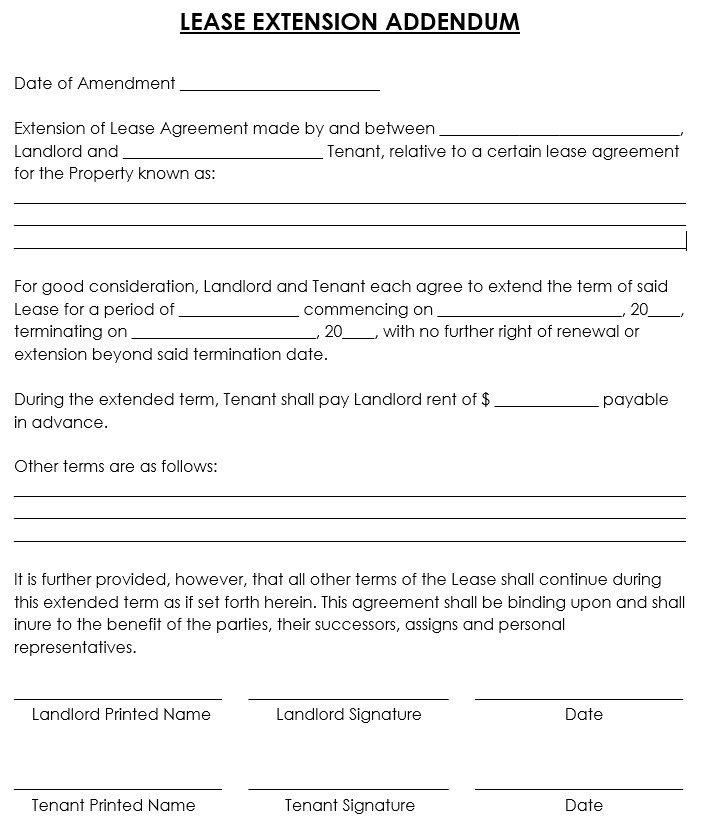
lease extension agreement pdf
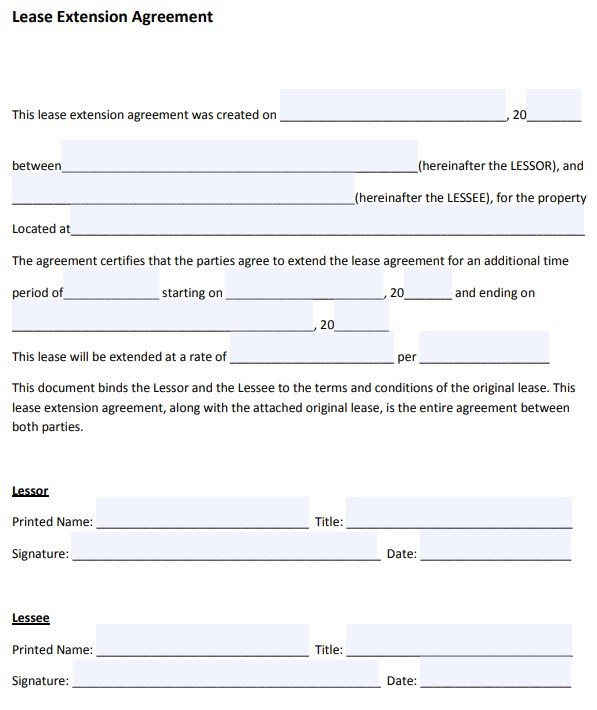
lease renewal agreement form
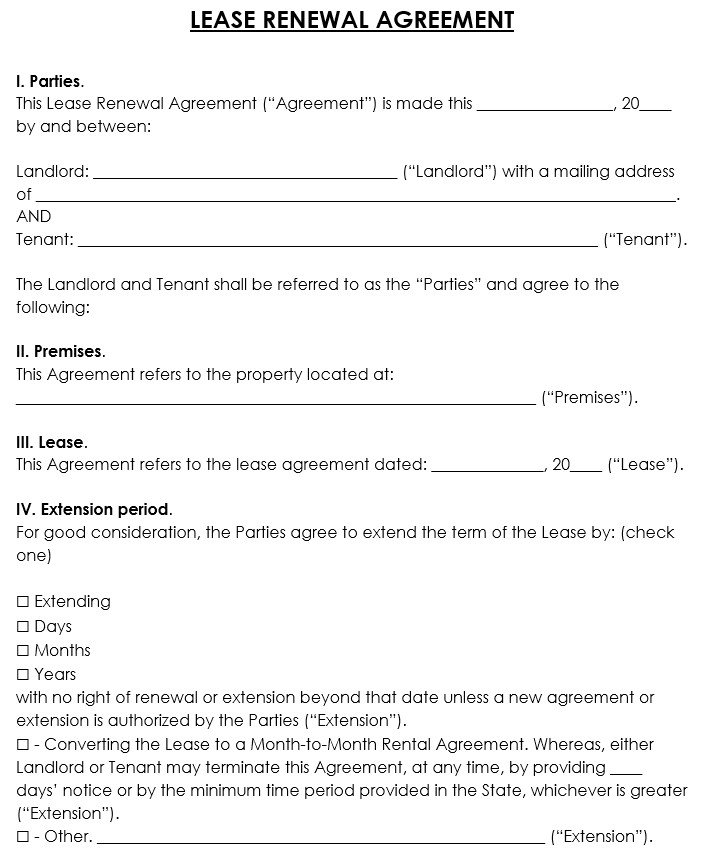
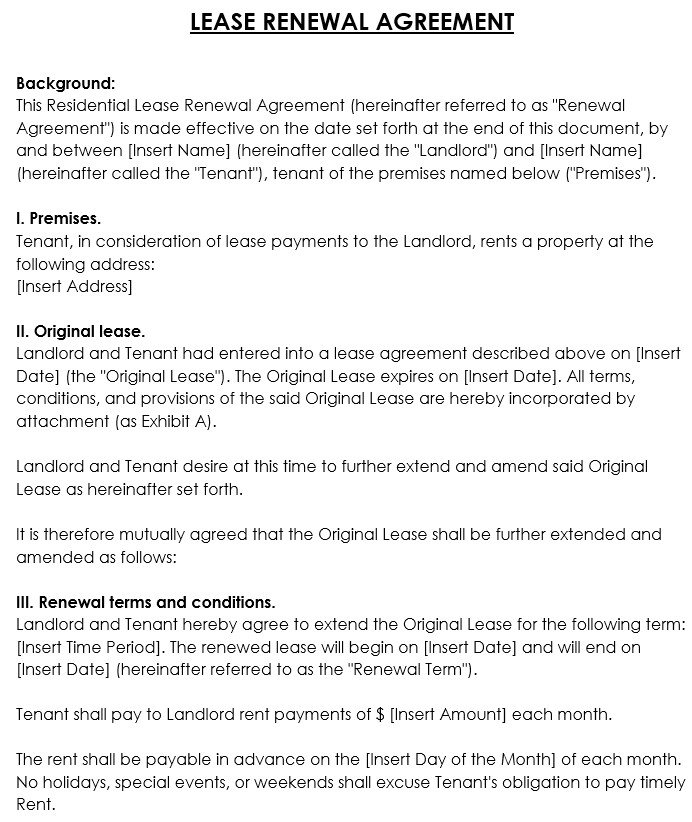
lease renewal agreement template
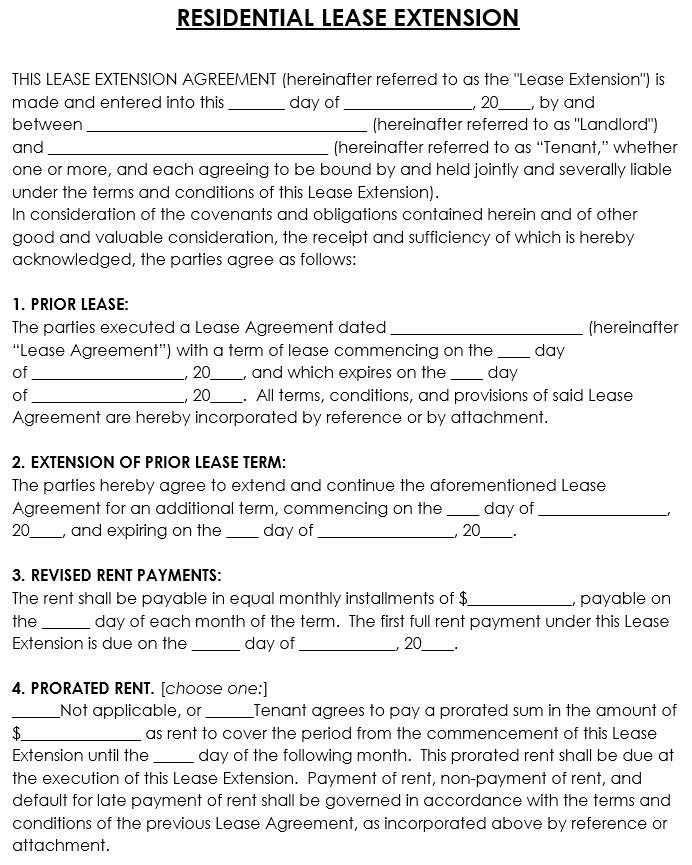
residential lease extension agreement
Final Thoughts
A lease renewal is more than an updated expiration date. It is a chance for the landlord and tenant to confirm that the rental arrangement still works for both sides.
A detailed lease renewal agreement template helps organize the process by documenting the new term, rent amount, security deposit, utilities, occupants, fees, and any changes to the original lease.
The most important part is clarity. Every date, amount, responsibility, and amendment should be easy to understand. Both parties should review the document carefully, comply with local notice requirements, and keep signed copies with the original lease.
When the renewal is handled early and documented properly, the landlord benefits from continued occupancy and predictable income, while the tenant gains greater housing stability. A well-prepared agreement gives both parties a clear foundation for the next rental term.
Frequently Asked Questions About Lease Renewal Agreements:
How many times can you renew a lease agreement?
It depends on the terms of the original lease agreement. The landlords generally renew a lease whenever they want if tenants agree to it.
Is the tenant has the right to modify the lease renewal agreement?
Both the tenant and the landlord have the right to give suggestions about the modifications of a lease agreement. Without the tenant’s permission, changes can’t be made to the rental agreement.
How to write a lease renewal agreement?
Write the lease renewal agreement in a similar way you have written the original lease agreement. Also, add the terms of the new lease and its rent amount. Don’t forget to proofread your agreement once you have completed it.
Does a lease renewal need to be notarized?
Most ordinary residential lease renewals do not require notarization, but requirements vary. The parties should confirm local rules and any special conditions that apply to the property.
Can the landlord change the lease during renewal?
The landlord may propose changes, but the changes must comply with applicable law and must be accepted when mutual agreement is required.
Can the tenant request changes before renewing?
Yes. A tenant may ask to negotiate rent, lease length, repairs, parking, pets, utilities, or other conditions. The landlord is not necessarily required to accept the request, but negotiated terms should be written into the final agreement.
Can the renewal be month-to-month?
Yes. Instead of signing another fixed-term lease, the parties may agree to continue the tenancy on a month-to-month basis. The agreement should explain the rent, notice requirements, and effective date.
You May also Like
 Free Fillable Blank Check Template (Word, PDF)
- Free Report Card Templates (Excel, Word, PDF)
- Free Vacation Budget Templates (Excel / PDF)
- Production Schedule Template (Word, Excel, PDF)
- Ultimate Price Analysis Spreadsheet Template for Budget-Savvy Consumers
- Printable Employment / Job Application Form Templates (Excel / Word / PDF)