Renovating a kitchen can be one of the most exciting home improvement projects you will ever undertake. It can also become one of the most expensive if you begin without a clear financial plan.
When I first started exploring kitchen renovation ideas, I found it easy to focus on the attractive parts of the project. I imagined beautiful cabinets, stylish countertops, modern appliances, and a brighter, more functional layout. What I did not immediately think about were demolition charges, delivery fees, plumbing adjustments, electrical work, permits, waste removal, and all the small finishing details that can quietly increase the total cost.
That is why using a Kitchen Renovation Budget Template is so important.
A well-designed budget template gives you a complete picture of the project before construction begins. It helps you organize estimates, compare contractor quotes, track actual spending, and prepare for unexpected costs. Instead of making financial decisions under pressure, you can plan each stage calmly and confidently.
Table of Contents
What Is a Kitchen Renovation Budget Template?
A Kitchen Renovation Budget Template is an organized document or spreadsheet used to estimate and track all costs associated with remodeling a kitchen.
It usually includes columns for:
- Expense categories
- Individual renovation items
- Estimated costs
- Contractor or supplier quotes
- Actual costs
- Amount paid
- Remaining balance
- Payment due dates
- Notes and project updates
The purpose of the template is not simply to create a rough total. It is designed to help you understand where your money is going.
Why You Need a Kitchen Renovation Budget Template
Kitchen renovation projects involve many separate decisions. Without a structured budget, it is easy to approve one upgrade after another without noticing how much the total cost has increased.
A Kitchen Renovation Budget Template provides several important benefits.
Gives You a Realistic Project Total
Many homeowners initially calculate only the cost of visible products, such as cabinets, appliances, tiles, and countertops. However, those products are only part of the total renovation cost.
Installation, delivery, demolition, plumbing, electrical work, permits, painting, hardware, and cleanup must also be included.
By listing every expense separately, your budget template creates a more realistic total.
Helps Prevent Overspending
A beautiful kitchen design can quickly become more expensive when you begin adding premium finishes and custom features.
A budget template acts as a financial boundary. Before approving an upgrade, you can check whether the cost fits within your available budget.
If it does not, you can decide whether to remove another feature, choose a lower-cost alternative, or increase the project budget intentionally.
Makes Contractor Quotes Easier to Compare
Different contractors may present quotes in different formats. One contractor may include demolition and disposal, while another may charge for them separately.
A Kitchen Renovation Budget Template allows you to place each quote into the same categories. This makes it easier to compare the actual scope of work rather than focusing only on the final number.
Keeps Couples and Families Aligned
Kitchen renovation decisions can become stressful when family members have different priorities.
One person may want premium appliances, while another may prefer custom cabinetry or luxury flooring. A shared budget template creates transparency and helps everyone understand the financial impact of each choice.
Prepares You for Unexpected Expenses
Unexpected costs are common during renovations. Contractors may discover outdated wiring, hidden water damage, uneven flooring, damaged pipes, or structural issues after demolition begins.
Including a contingency fund in your template helps you manage these surprises without immediately disrupting the entire project.
How Much Should You Budget for a Kitchen Renovation?
There is no single budget that works for every kitchen renovation. The total cost depends on the size of the kitchen, the condition of the existing space, the quality of materials, labor rates, and the number of structural changes involved.
A cosmetic update may include painting cabinets, replacing hardware, changing lighting, and installing a new backsplash.
A mid-range renovation may include new cabinets, countertops, flooring, appliances, lighting, and plumbing fixtures.
A major renovation may involve removing walls, relocating plumbing, installing custom cabinets, upgrading electrical systems, replacing windows, and changing the entire layout.
Before creating your Kitchen Renovation Budget Template, decide which type of renovation you are planning.
Cosmetic Kitchen Update
A cosmetic update focuses on appearance rather than major construction.
It may include:
- Cabinet painting
- New cabinet handles
- Updated light fixtures
- New wall paint
- Peel-and-stick backsplash
- Faucet replacement
- Decorative shelving
- Minor appliance upgrades
This approach is usually best when the current kitchen layout is functional and the cabinets are still in good condition.
Mid-Range Kitchen Renovation
A mid-range renovation usually replaces most visible elements without dramatically changing the room’s structure.
It may include:
- New stock or semi-custom cabinets
- New countertops
- New sink and faucet
- Updated appliances
- New flooring
- Backsplash installation
- Improved lighting
- Fresh paint
- Minor plumbing or electrical adjustments
This is one of the most common renovation levels because it can significantly improve the kitchen without requiring major structural work.
High-End Kitchen Renovation
A high-end renovation may involve a complete transformation.
It can include:
- Custom cabinetry
- Premium stone countertops
- Professional-grade appliances
- Structural changes
- Wall removal
- Plumbing relocation
- Electrical panel upgrades
- Custom lighting
- Luxury flooring
- Built-in storage
- Kitchen islands
- Smart-home technology
- Designer fixtures
Because this type of project contains more variables, a detailed Kitchen Renovation Budget Template becomes essential.
How to Create a Kitchen Renovation Budget Template
You can build your template in a spreadsheet program, budgeting application, notebook, or printable worksheet.
A spreadsheet is often the most practical option because it can automatically calculate totals and differences.
Step 1: Set Your Maximum Budget
Decide the highest amount you can comfortably spend without creating financial stress.
Your maximum budget should include the contingency fund, temporary kitchen expenses, and final cleanup.
Do not base your number only on what a lender or credit card company is willing to offer. Consider your monthly finances, emergency savings, and other upcoming expenses.
Step 2: Define the Scope of the Renovation
Write down exactly what you plan to change.
- Replace all cabinets
- Install quartz countertops
- Keep the current layout
- Replace the sink and faucet
- Install new flooring
- Add under-cabinet lighting
- Replace the refrigerator and dishwasher
- Paint the walls
- Install a tile backsplash
A clear scope reduces confusion when requesting quotes.
Step 3: Divide the Project Into Categories
Breaking the renovation into sections makes it easier to estimate costs and monitor spending.
Step 4: Research Initial Prices
Collect approximate prices for materials, appliances, fixtures, and services.
At this stage, your goal is not to find the final supplier. You are building a realistic starting estimate.
Avoid using the lowest price you find as your automatic budget figure. Include delivery, taxes, installation, accessories, and necessary preparation work.
Step 5: Request Detailed Quotes
Try to obtain multiple quotes for major categories such as cabinets, labor, countertops, plumbing, and electrical work.
Make sure each quote covers the same scope.
A cheaper quote may exclude services that another contractor has included.
Step 6: Enter Actual Costs as They Occur
- Pay a deposit
- Order a product
- Approve a change
- Receive a revised quote
- Pay a contractor
- Return an item
- Receive a refund
- Add a new expense
Step 7: Review the Remaining Balance Weekly
Set aside time each week to compare:
- Planned spending
- Actual spending
- Remaining payments
- Contingency balance
- Upcoming purchases
- Approved changes
A weekly review can reveal budget problems before they become difficult to manage.
How to Save Money on a Kitchen Renovation
Saving money does not always mean choosing the cheapest materials. The goal is to spend strategically.
Keep the Existing Layout
Moving plumbing, gas lines, walls, and major appliances can increase costs significantly.
Keeping the sink, stove, and refrigerator in their existing locations may reduce labor and construction expenses.
Refinish Instead of Replacing
If cabinet boxes are solid and the layout works well, consider:
- Repainting
- Refacing
- Replacing doors
- Adding new hardware
- Installing organizers
These updates can improve the appearance without the cost of complete cabinet replacement.
Mix Premium and Affordable Materials
Not every surface needs to be luxury-grade.
You could choose a premium countertop for the island and a more affordable material for the surrounding cabinets. You could also use a decorative backsplash only behind the range and a simpler tile elsewhere.
Compare Appliance Features Carefully
It is easy to pay for features you may rarely use.
Choose appliances based on your real cooking habits rather than showroom appearance alone.
Purchase Materials During Sales
Appliances, fixtures, lighting, hardware, and flooring are often discounted during seasonal sales or clearance events.
However, avoid purchasing too early unless you have confirmed measurements and storage arrangements.
Avoid Repeated Design Changes
Changes made after work begins can be expensive.
A revised cabinet size may affect countertops, appliances, flooring, plumbing, and electrical work.
Finalize major decisions before ordering materials.
Complete Safe DIY Tasks
Depending on your skills, you may be able to handle:
- Painting
- Hardware installation
- Simple shelving
- Cleanup
- Decorative styling
- Minor demolition
- Organizing the temporary kitchen
Leave licensed, technical, and safety-sensitive work to qualified professionals.
Questions to Ask Before Approving a Quote
Before hiring a contractor or supplier, ask:
- What exactly is included in the quoted price?
- Which materials are included?
- Are delivery and disposal included?
- Are permits included?
- Who will complete electrical and plumbing work?
- Is the contractor licensed and insured?
- What is the payment schedule?
- How are change orders priced?
- What happens if materials are delayed?
- Who is responsible for damage?
- What warranty is provided?
- What is excluded from the quote?
- How long is the quote valid?
- What is the expected project schedule?
How to Prioritize Your Kitchen Renovation Budget
When the total estimate exceeds your available budget, divide items into three groups.
Must-Have Items
These are essential for safety, function, and project completion.
Examples include:
- Plumbing repairs
- Safe electrical work
- Functional cabinets
- Durable countertops
- Proper ventilation
- Necessary appliances
- Flooring repair
High-Priority Upgrades
These features strongly improve daily use but may have flexible material choices.
Examples include:
- Deep drawers
- Pantry storage
- Better lighting
- Quality faucet
- Quiet dishwasher
- Easy-to-clean backsplash
Optional Features
These items are attractive but can be removed or added later.
Examples include:
- Wine refrigerator
- Decorative open shelving
- Luxury hardware
- Built-in coffee station
- Smart refrigerator
- Custom decorative panels
- Premium pendant lights
This system helps you reduce costs without weakening the essential parts of the renovation.
Final Kitchen Renovation Budget Checklist
Before construction begins, confirm that your template includes:
- Design fees
- Permits
- Demolition
- Waste removal
- Cabinets
- Cabinet installation
- Cabinet hardware
- Countertops
- Appliances
- Appliance installation
- Plumbing
- Electrical work
- Lighting
- Flooring
- Backsplash
- Painting
- Drywall repair
- Doors and windows
- Delivery charges
- Taxes
- Temporary kitchen expenses
- Final cleaning
- Contractor payments
- Contingency fund
You should also record all deposits, due dates, warranties, receipts, and supplier contact details.
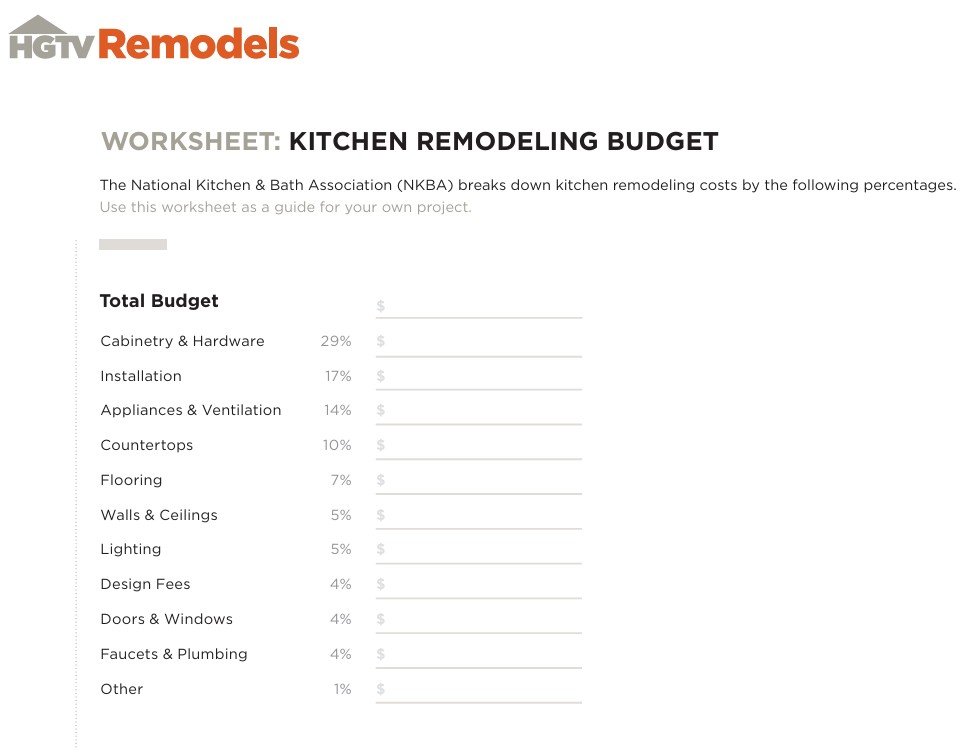
renovation budget worksheet
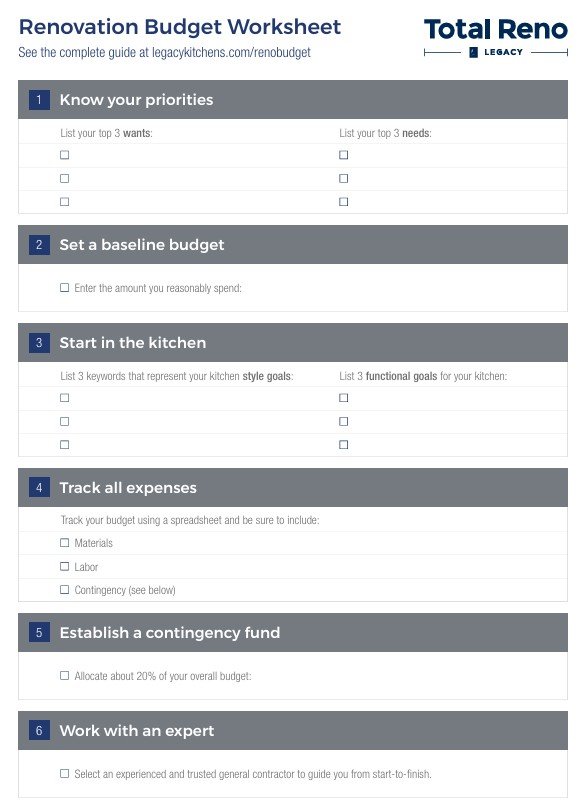
printable kitchen renovation budget template
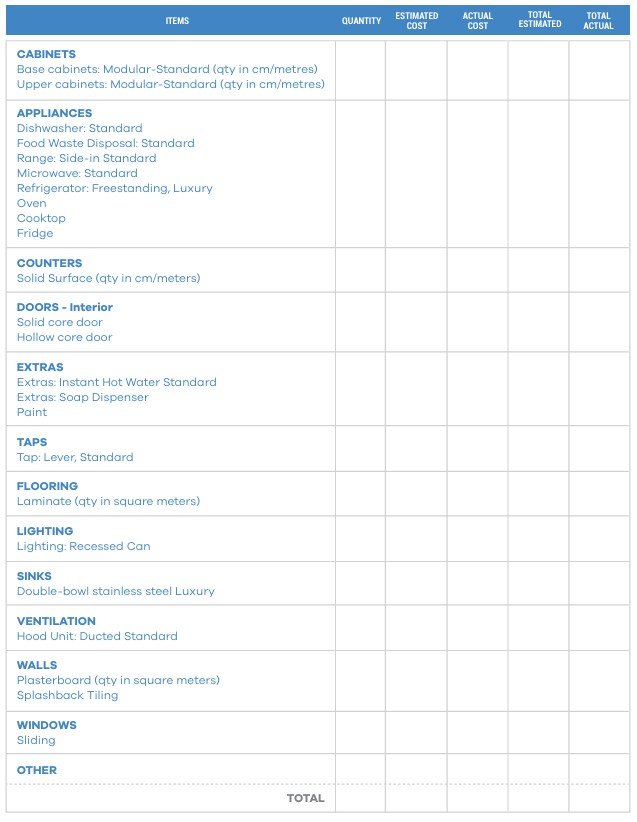
kitchen renovation checklist template

kitchen renovation budget template excel
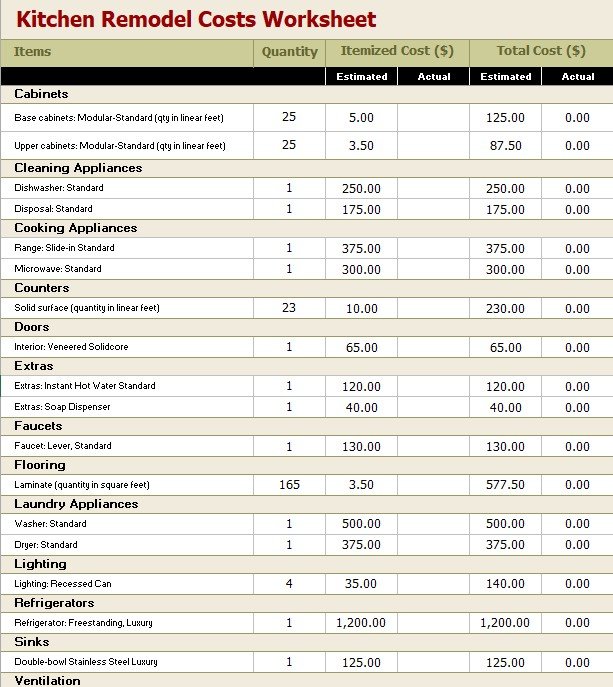
kitchen remodel budget template
Final Thoughts
A kitchen renovation is easier to manage when every financial decision is recorded in one organized place.
A Kitchen Renovation Budget Template helps you move beyond rough estimates and create a complete spending plan. It allows you to compare quotes, track payments, prepare for surprises, and decide where your money will make the greatest impact.
From my perspective, the most important part of kitchen budgeting is not finding the cheapest option for every item. It is creating a realistic plan that reflects your priorities, protects your finances, and gives you enough flexibility to handle unexpected problems.
Start with your maximum available budget. Define the project scope clearly. Divide the renovation into detailed categories. Gather written quotes, reserve a contingency fund, and update the template throughout the project.
With careful planning, your kitchen renovation can become an organized and rewarding experience rather than a constant source of financial stress.
You May also Like
 Editable Daily Standup Meeting Template – 4+ Free Documents Download in Excel, PDF, Word
 Create Impactful Reports with a Competitive Analysis Template (Excel / Word / PDF)
- Free Overhead Budget Templates for Small Businesses (Excel / PDF)
- Streamline Tasks with Our Project Management Checklist Template
- Professional Coupon Template Word
- Free Real Estate Power of Attorney Form Templates (MS Word)