A construction project can look simple on paper, but once the work begins, costs can quickly become complicated. Materials, labor, equipment, permits, subcontractors, transportation, waste, and unexpected site conditions all affect the final price.
That is why I believe every contractor, builder, remodeler, and construction business owner should use a well-organized construction estimate template.
A construction estimate template is more than a document containing a few prices. It is a practical planning tool that helps you calculate costs, explain the scope of work, communicate professionally with clients, and protect the profitability of your business.
When I look at successful construction companies, one thing is usually clear: they do not rely on memory or rough guesses when preparing estimates. They use a consistent process. A professional template gives them that consistency.
Table of Contents
What Is a Construction Estimate Template?
A construction estimate template is a reusable document used to calculate and present the expected cost of a construction project.
It organizes project expenses into clear categories, such as:
- Materials
- Labor
- Equipment
- Subcontractor charges
- Permits
- Transportation
- Overhead
- Taxes
- Contingency
- Profit markup
The main purpose of the template is to help the contractor estimate the total project cost before signing a contract or beginning work.
A good estimate should answer several important questions:
- What work will be completed?
- What materials will be required?
- How many labor hours are expected?
- What equipment will be needed?
- Are subcontractors involved?
- What additional costs may occur?
- How much profit should be added?
- How long will the estimate remain valid?
When these details are presented clearly, both the contractor and the client can make better decisions.
Why a Construction Estimate Template Is Important
I have seen many small contractors create estimates through text messages, handwritten notes, or short emails. That may work for a very small repair, but it can create problems on larger projects.
A structured construction estimate template gives you several important advantages.
Improves Cost Accuracy
Construction projects include many small expenses that are easy to overlook. A template reminds you to calculate each cost category instead of focusing only on major materials and labor.
For example, a contractor may remember the cost of concrete but forget delivery fees, reinforcement steel, formwork materials, equipment rental, disposal charges, and labor for site preparation.
Individually, these costs may seem small. Together, they can significantly reduce profit.
Saves Time
Creating every estimate from the beginning is inefficient. With a reusable construction estimating template, you can keep your standard categories, formulas, business information, terms, and pricing structure in one place.
You only need to update the project-specific details.
This is especially helpful when you prepare several estimates each week.
Creates a Professional Impression
Clients often compare estimates from multiple contractors. A detailed and organized estimate can make your company appear more reliable, even when your price is not the lowest.
A professional document shows that you have carefully reviewed the project and understand the work involved.
Reduces Misunderstandings
A vague estimate can lead to disagreements about what was included in the price.
For example, a client may assume that painting, cleanup, debris removal, or permit fees are included. The contractor may believe they are separate.
A detailed template allows you to list inclusions, exclusions, quantities, specifications, and responsibilities clearly.
Helps Protect Your Profit Margin
An estimate should not only cover project expenses. It should also include overhead and profit.
Without a template, contractors sometimes price only the direct work. They forget expenses such as office rent, insurance, fuel, administrative time, accounting, software, marketing, vehicle maintenance, and employee benefits.
A construction estimate template helps ensure that these business costs are considered.
Makes Project Tracking Easier
Once the project begins, the original estimate can be compared with actual spending.
This comparison helps you identify where the project stayed within budget and where costs exceeded expectations.
Over time, this information can make future estimates much more accurate.
What to include in a construction estimate template?
Include the following elements in a construction estimate template;
- Labor costs: the costs required for construction project which is associated with the human resources.
- Material costs: the raw materials costs which is required to establish structures.
- Direct costs: this cost is directly associated with an activity in the project like the material used, the rented or bought equipment, and more.
- Indirect costs: the cost which isn’t assigned for specific construction activity is referred as indirect cost. It may include quality control, security, etc.
How to use construction estimate template?
Consider the following steps for using a construction estimate template;
Determine the project
Firstly, you have to determine the project. There is a section at the top of the document where you have to provide the following details;
- Your company name
- The project
- The project’s number
- The client
- The location
- Date of the document
- Project manager on the site
- The architect
These details prove very helpful in future for the companies that are running more than one project.
Specify the activities
There are three main stages in which construction project is divided;
- Pre-construction (this stage consists of the activities of making the design, getting permits, looking into zoning regulations, and more.)
- Construction (it includes the activities such as digging a foundation, pouring concrete, ventilation and air conditioning, etc.)
- Post-construction (the closure of all construction documentation, removal of trash, and more.)
Additional costs
In the document, every section must contain a row for additional costs. A subtotal to tally those costs should be available in each section along with a grand total which is added up at the very bottom.
When should you use a construction estimate template?
You should make a construction estimate document at the planning stage of the construction project. This process basically consists of following four stages;
Order of magnitude
The order of magnitude is the first stage which is done before the project gets started. You can consider it as a rough sketch having a general structure of a project’s goals and objectives. Additionally, it comes up with a ballpark figure which helpful for determining whether the project is feasible or not.
Refine the figure
After that, when a schematic design has been made then a figure is refined. The number by having more data moves towards greater accuracy.
Specify the costs with greater accuracy
The construction estimate can continue and define the costs with greater accuracy when you have drawn up construction drawings and specifications. There is a set of deliverables in this planning stage that can be identified for costs.
Setting a baseline
When you reach at this stage, you know about all the construction costs. Now, you can use it for making bids and setting a cost baseline. You should update the document when changes occur during the execution of the project as well as adjust the costs or scheduling in order to keep the project on track.
Who can use the construction estimate template?
The construction estimate template is used by the following;
- General building contractors: they use it to make competitive bids.
- Project owners: they use this template to find the best bid for their construction projects.
- Construction project managers: by having this document, project managers become aware of all project costs.
- Construction companies: they use it during the cost estimating and bidding process.
Sample Construction Estimate Template Structure
A simple construction estimate may follow this format:
Header
- Company name and logo
- Company contact information
- Estimate number
- Estimate date
- Expiration date
Client and Project Details
- Client name
- Project name
- Project address
- Client contact information
- Prepared by
Project Description
A short summary of the proposed construction work.
Detailed Cost Table
| Item | Description | Unit | Quantity | Unit Cost | Total |
|---|---|---|---|---|---|
| 1 | Site preparation | Lump sum | 1 | $1,200 | $1,200 |
| 2 | Concrete foundation | Cubic yard | 12 | $180 | $2,160 |
| 3 | Framing lumber | Lump sum | 1 | $6,500 | $6,500 |
| 4 | Carpentry labor | Hour | 160 | $38 | $6,080 |
| 5 | Equipment rental | Week | 2 | $750 | $1,500 |
| Grand Total | $17,440 |
Cost Summary
- Materials: $8,660
- Labor: $6,080
- Equipment: $1,500
- Direct cost subtotal: $16,240
- Overhead: $1,624
- Contingency: $812
- Profit markup: $3,735.20
- Estimated total before tax: $22,411.20
Notes
- Pricing is based on currently available supplier rates.
- Hidden damage is not included.
- Changes to the scope require written approval.
- The estimate is valid for 30 days.
This example is intentionally simple. A real project may require additional categories and detailed specifications.
How to Use a Construction Estimate Template Accurately
Having a template does not automatically guarantee a good estimate. The information entered into it must be complete and realistic.
Review the Drawings and Specifications
Study all available project documents before calculating costs.
Look for:
- Dimensions
- Materials
- Finish schedules
- Structural requirements
- Mechanical systems
- Electrical systems
- Special installation instructions
- Quality standards
- Testing requirements
If the drawings conflict with the written specifications, request clarification before pricing.
Visit the Site
A site visit can reveal conditions that are not visible in photos or drawings.
Check:
- Access limitations
- Parking
- Storage space
- Existing damage
- Utility locations
- Ground conditions
- Ceiling heights
- Working hours
- Neighboring properties
- Safety risks
- Waste removal routes
A difficult site may require additional labor, equipment, protection, or coordination.
Perform a Detailed Quantity Takeoff
A quantity takeoff measures the materials and work required for the project.
Depending on the project, you may calculate:
- Square footage
- Linear footage
- Cubic yards
- Number of fixtures
- Number of doors
- Weight of steel
- Length of piping
- Number of electrical points
Double-check your measurements and use consistent units.
Obtain Current Supplier Prices
Do not assume that last year’s material price is still accurate.
Request current pricing for major materials and confirm:
- Delivery charges
- Minimum order quantities
- Lead times
- Taxes
- Availability
- Price expiration
- Return policies
For long projects, consider whether future price increases should be addressed in the estimate or contract.
Estimate Labor Realistically
Labor productivity is affected by:
- Worker experience
- Weather
- Site access
- Project complexity
- Repetition
- Material handling
- Inspection delays
- Occupied spaces
- Safety procedures
- Working-hour restrictions
Avoid assuming ideal conditions unless they truly exist.
Review the Estimate Before Sending It
I recommend reviewing the estimate in two stages.
First, review the calculations:
- Are the quantities correct?
- Are the unit prices current?
- Are the formulas working?
- Are taxes applied correctly?
- Is overhead included?
- Is the profit adequate?
Second, review the document from the client’s perspective:
- Is the scope clear?
- Are exclusions easy to understand?
- Is the total price visible?
- Are the payment terms explained?
- Does the estimate look professional?
- Are there spelling or formatting errors?
A second person should review large estimates whenever possible.
How to manage construction estimate document?
After making your construction estimate document, you have to stick to it. Here are some tips for you;
Tracking budgets in real time
Definitely, your construction site may face changes so you should update your progress and performance on your construction estimate if you don’t want to get off your track. There are different software that can provide you a high-level view of progress. They also calculate time and cost automatically.
Build construction schedules
Lenders, sponsors, and stakeholders always want to know whether you are progressing as planned or not. It is highly recommended to set your budget and schedule on Gantt chart. It will assist you in measuring your project against your actual process. Additionally, it makes you able to see if you’re on target or not.
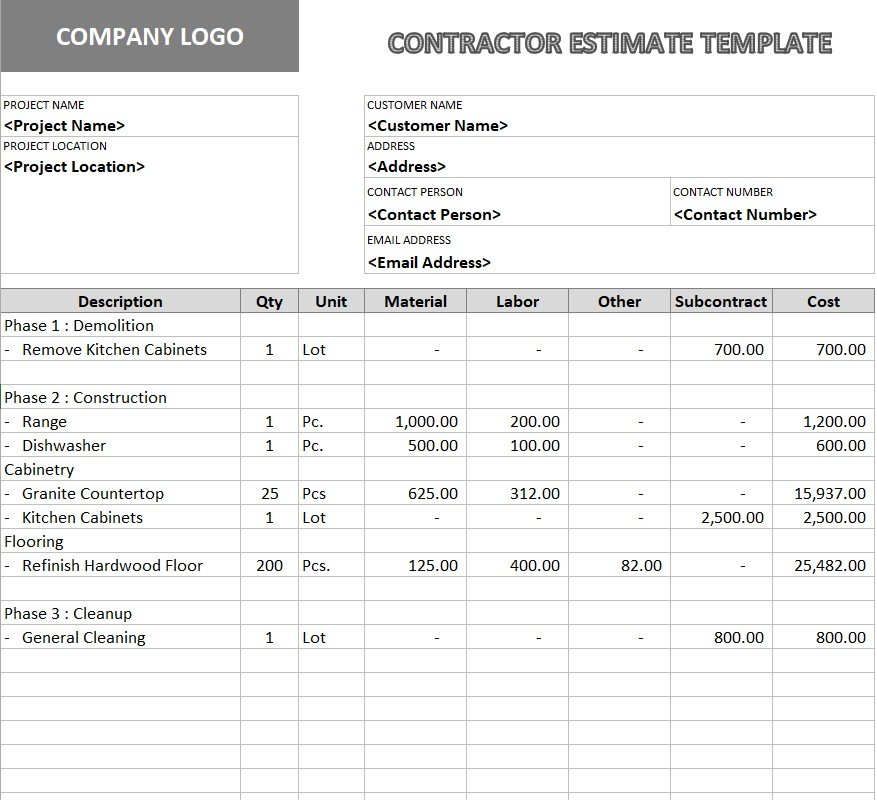
construction cost estimate template
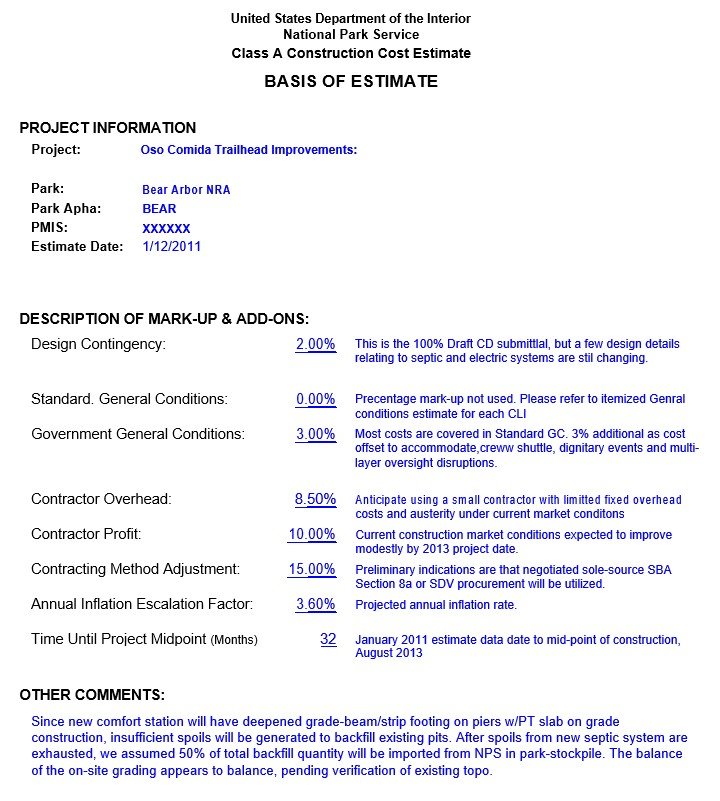
construction estimate template excel
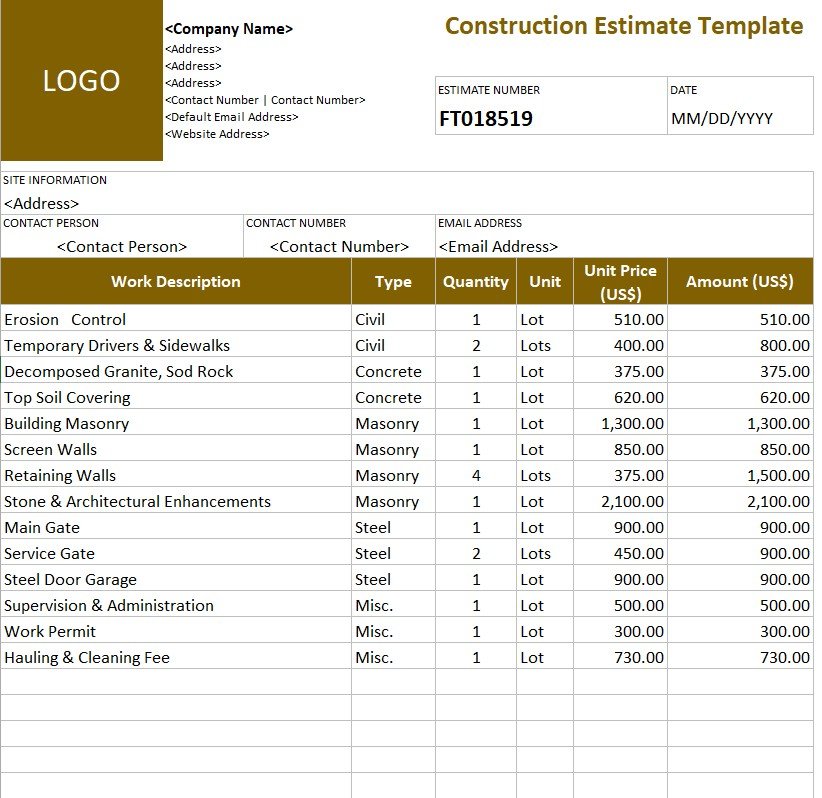
construction estimate template
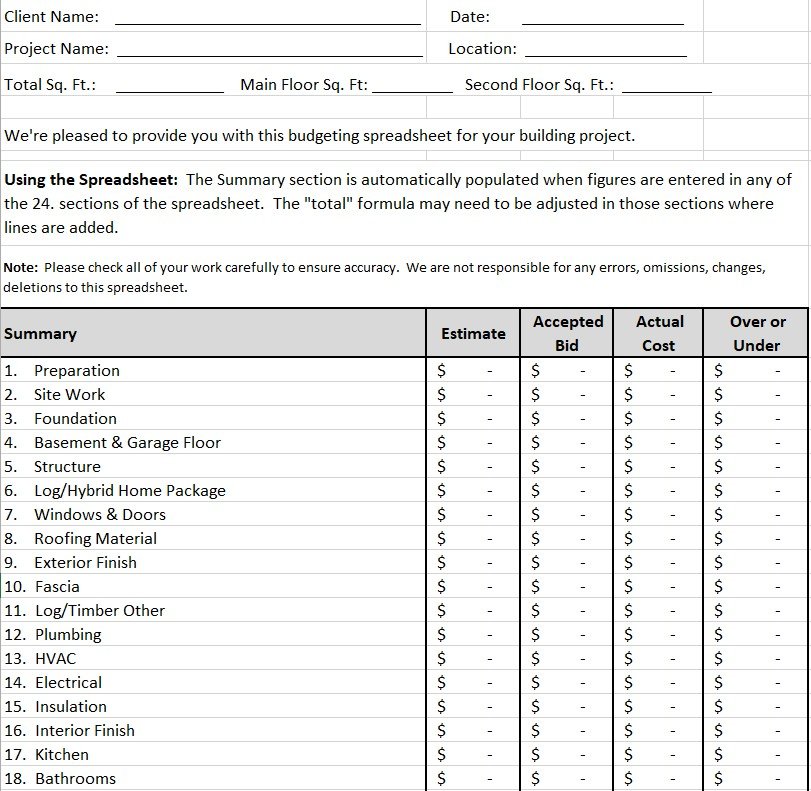
construction work estimate template
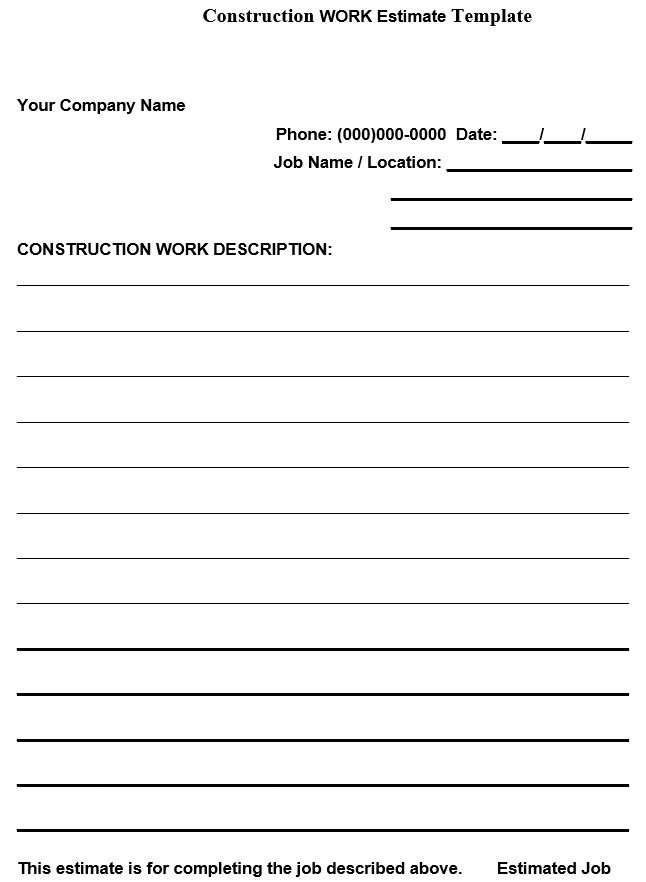
free construction estimate template
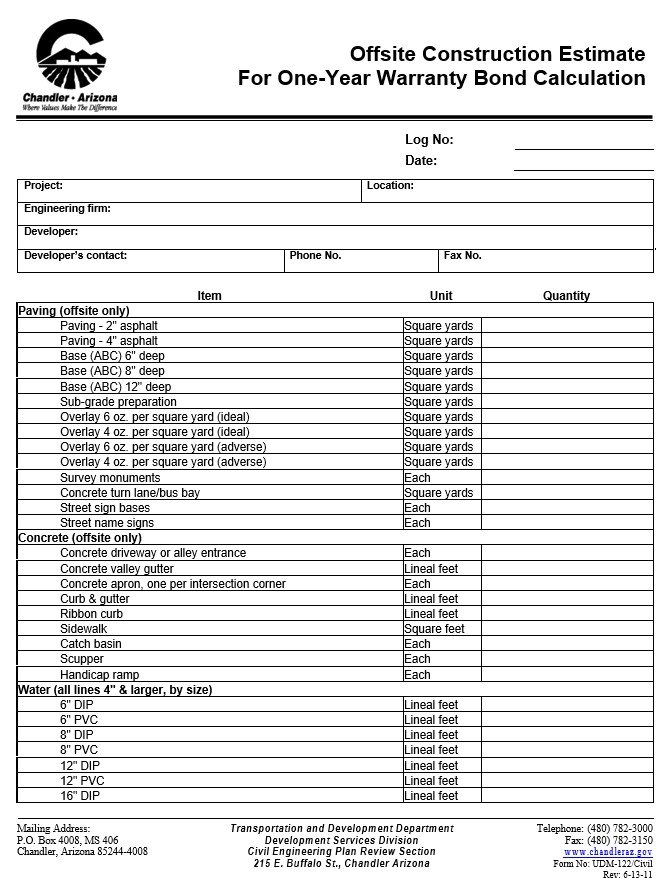
offsite construction estimate template
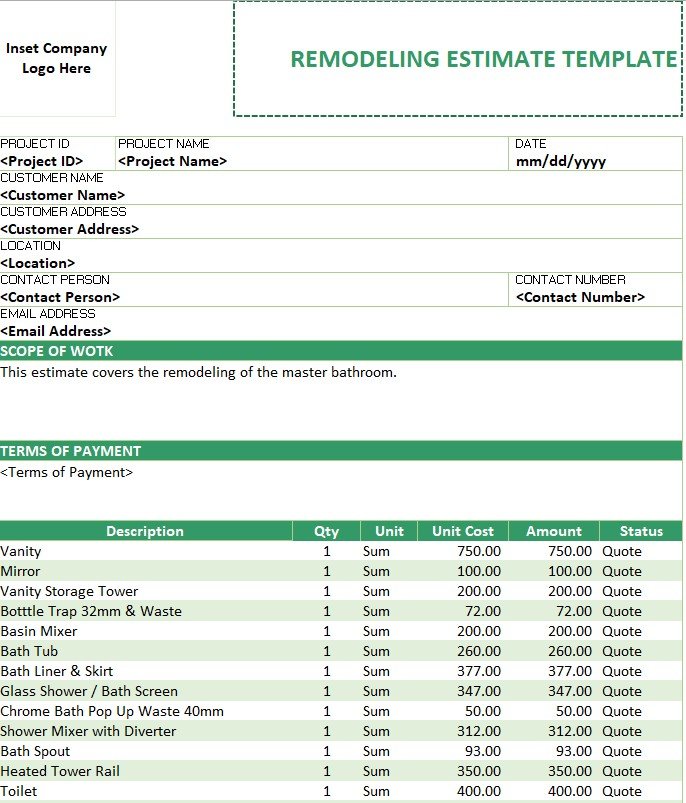
remodeling estimate template
Final Thoughts
A construction estimate template can improve nearly every part of your estimating process.
It helps you calculate costs more accurately, organize project information, communicate with clients, protect your profit, and compare estimated expenses with actual results.
The most useful template is not necessarily the most complicated one. It is the template that matches your work, includes every important cost, uses accurate pricing, and presents the project clearly.
My advice is to start with a simple structure and improve it after every completed job. Compare estimated quantities, labor hours, equipment costs, and subcontractor charges with actual results. Record what changed and why.
Over time, your construction estimate template will become more than a pricing document. It will become a valuable source of business knowledge.
The better your estimates become, the easier it will be to price projects confidently, reduce costly surprises, and build stronger relationships with your clients.
Frequently Asked Questions:
Should labor and materials be shown separately?
In many cases, separating labor and materials makes the estimate easier to review and helps the contractor track actual costs. However, some contractors use lump-sum pricing for individual work packages. The important thing is to provide enough detail to define the scope clearly.
How much contingency should be included?
There is no single percentage suitable for every project. Contingency depends on design completeness, site conditions, project complexity, price stability, and risk. A contractor should evaluate the specific uncertainties of each project.
How long should a construction estimate remain valid?
Many estimates are valid for 15, 30, or 60 days. The appropriate period depends on supplier pricing, labor availability, and market conditions. State the expiration date clearly.
What is the difference between markup and profit margin?
Markup is calculated as a percentage of cost. Profit margin is calculated as a percentage of the final selling price. A 20% markup does not equal a 20% profit margin.