A lodger agreement template is a document that sets out the terms under which a lodger shares the common parts of the property with the landlord. This agreement is used as a licence for a lodger. Live-in landlords usually use this document to rent a spare room in their home.
Table of Contents
Who is a lodger?
A lodger is a person who lives with you and shares communal areas such as the bathroom, kitchen, or living room. They live with your permission although they may have their room. Furthermore, they may have the right to exclude you from any part of the area.
What to include in a lodger agreement?
A lodger agreement typically includes the following sections;
Parties details
Provide the details of the parties (the landlord and the lodger) legally bound by the lodger agreement.
Definitions and interpretation
This section describes the specific key terms that will be used throughout the agreement. These may include;
- Property: the place that the landlord and the lodger will share
- Common areas: the areas of property the lodger will have access to during this agreement.
- Rent: the payable rent in advance and when.
- Term: the start and end dates of lodging.
Grant of licence
In this section, the type of licence that is being created is explained and its key features. It explains the right of the lodger to use the fixtures in the property and their responsibilities regarding these.
Lodger’s obligations
It specifies the lodger’s obligations during the course of the lodging. These include the following;
- Paying the rent on time
- Keep the rented area in good condition
- Pets aren’t allowed at the property
- At reasonable times, the landlord is allowed to enter the room to check its condition
Landlord’s obligations
Here, defines the landlord’s obligations during the course of the lodging. These include;
- Paying council tax for the property
- For the property, a copy of the insurance policy is given to the lodger
Termination
This section states when and how the lodger agreement will end. Moreover, it describes that when the agreement ends then the lodger’s and landlord’s obligations under the agreement will not continue.
How to make a lodger agreement?
Here are some legal tips that you must consider while creating a lodger agreement;
- You should consider whether you can take on a lodger before advertising your spare room. If applicable then contact your mortgage provider to check whether you’re able to take on a lodger. After that, go through your contents insurance policy to check whether a lodger’s possessions will be covered. Your benefit claims may be affected by taking on a lodger so you should speak to your benefits provider.
- You must familiarize yourself with the rules on HMOs (House in Multiple Occupations). It is a property in which different households live together and share a kitchen, bathroom, or toilet. The HMO is considered a large HMO if more than 5 people setting up more than one household live together.
- You should speak to your bank about opening an appropriate lodger deposit account in case you are planning to ask your lodger to pay a deposit. This way, you can keep the lodger’s deposit separate from your income.
- You must ensure that you don’t take any prohibited fees. Remember that the law has banned some fees. The lodger can reclaim the money paid if you take a prohibited payment from a lodger.
- Live-in landlords use a lodger agreement when they plan to rent a furnished room in their property. Don’t use this agreement if the landlord does not live in the property. In such a case, you should use a room rental agreement. In addition, use a Tenancy agreement for a flat or a Tenancy agreement for a house if you want to rent out a flat or a house.
- It would be recommended to consider the rent-a- scheme of your state.
- Sometimes you need to seek advice from a lawyer to make sure that you’re complying with the law. Additionally, it will protect your from risks.
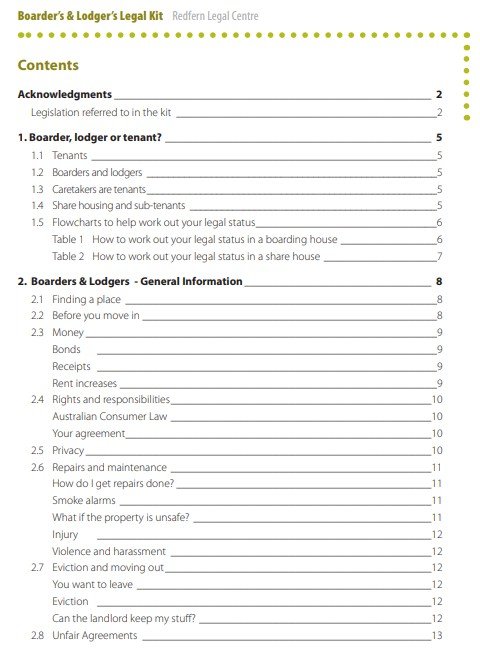
boarder’s & lodger’s legal kit template
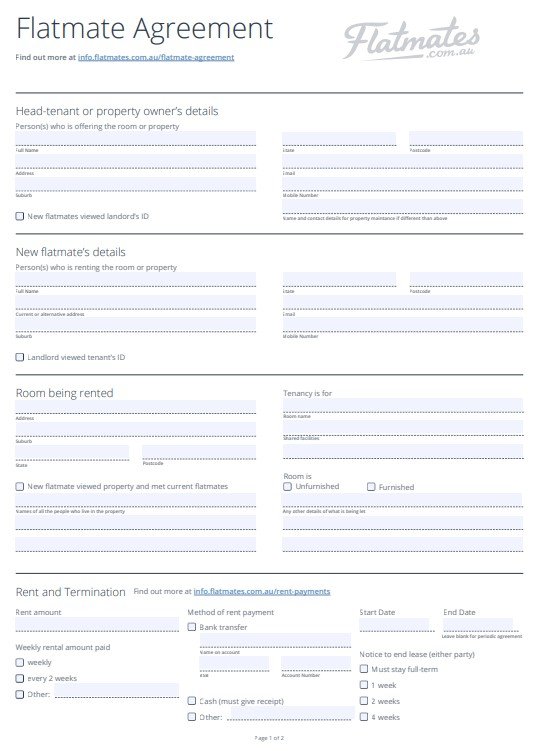
flatmate agreement template
free lodger agreement template
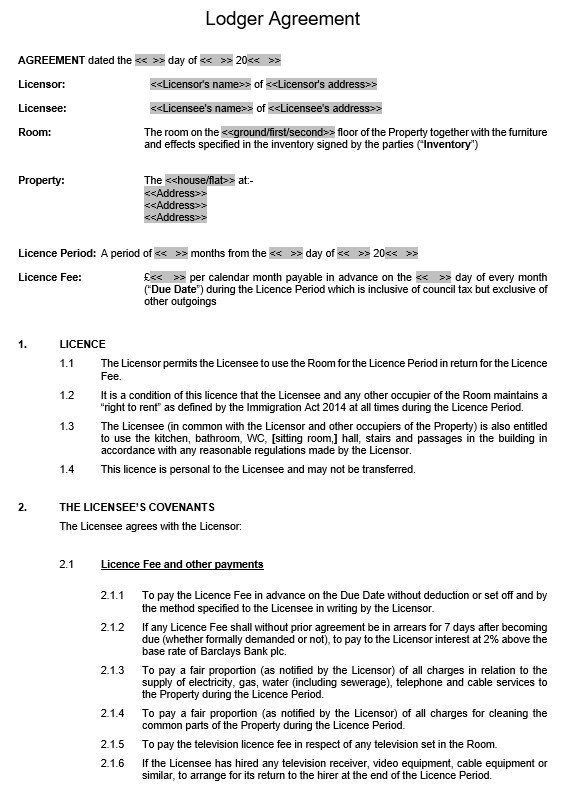
license agreement template property
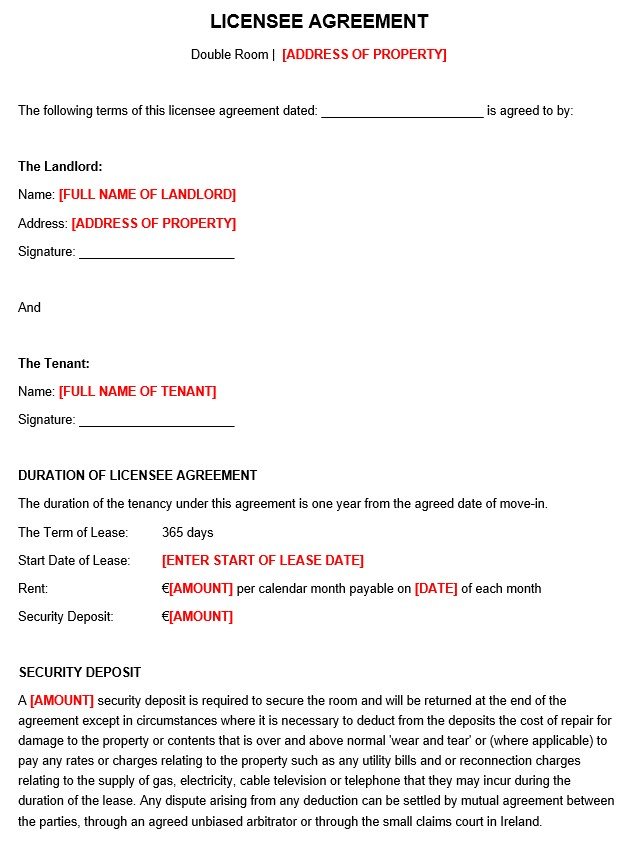
lodger agreement for a room in furnished residential property

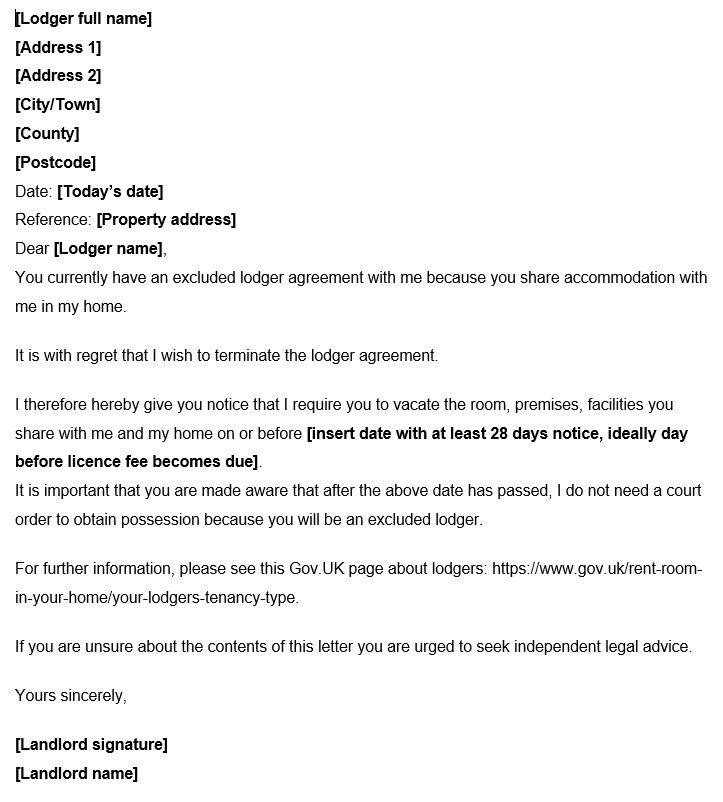
lodger agreement notice period template
lodger agreement template

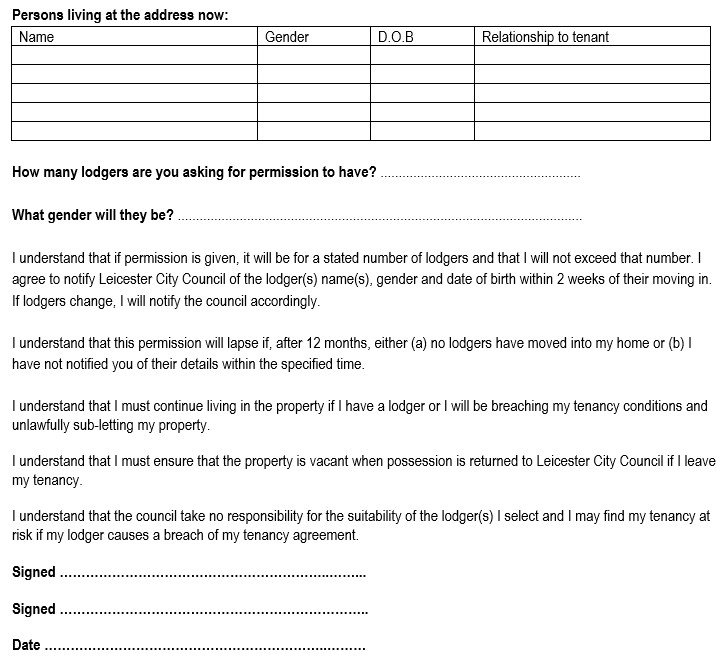
lodger permission form
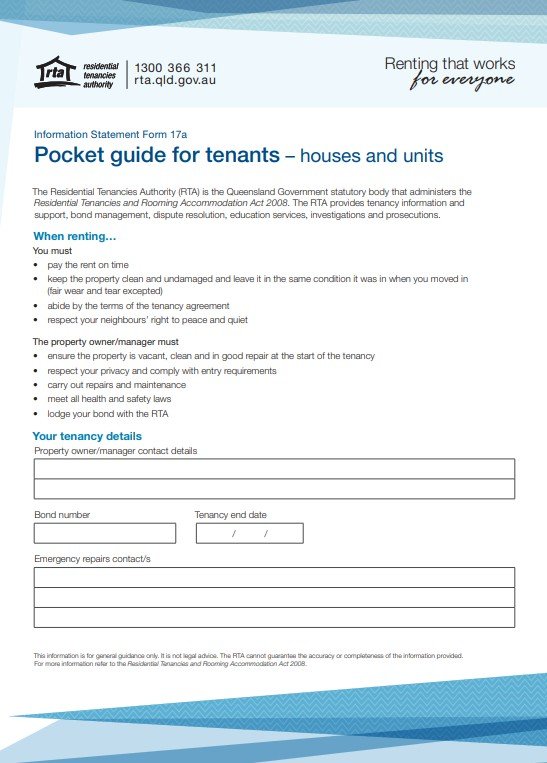
pocket guide for tenants house
FAQ’s:
Why should you create a lodger agreement?
Here are some benefits of creating a lodger agreement;
- Makes sure clarity between parties regarding their rights and obligations
- Provides legal protection for both parties
- Prevents disputes over rent and usage of shared spaces
What is the difference between a lodger and a landlord?
A lodger is a person who rents a room in your home or property in which you also live. On the other hand, a tenant is a person who often rents an entire property from you.
A tenant has more rights as compared to a lodger. The agreement between a lodger and the landlord is known as a licence while, the agreement between a landlord and tenant is known as assured shorthold Tenancies.
How many lodgers can live with the landlord?
If you are relying on a lodger agreement then no more than two lodgers should live with you at the property. The property may be considered an HMO if there are more than two lodgers.