
A recommendation letter for student from teacher is a voucher for the students. This letter acts as a proof of reliability, efficiency, or good character of a student. Teachers write recommendation letters for their students if they know them well.
What is a letter of recommendation?
A letter of recommendation is a formal document that specifies the traits and work ethic of a person. This letter helps the students in their application process and entering in an academic program or a career. The letter is often written by someone who has spent time with them in an academic or professional setting.
What Is a Recommendation Letter for Student From Teacher?
A recommendation letter for student from teacher is a formal letter written by a teacher to describe a student’s academic performance, personal qualities, skills, behavior, achievements, and potential.
The teacher usually writes the letter because they have directly observed the student in the classroom and can provide an informed opinion about the student’s abilities.
The letter may be required for:
- College or university admission
- Scholarship applications
- Internship opportunities
- Exchange programs
- Academic competitions
- Leadership programs
- Special educational programs
- Volunteer opportunities
- Employment applications
- Graduate or professional programs
The purpose of the recommendation letter is not simply to repeat information from the student’s application. Instead, it should give the reader a deeper understanding of who the student is.
For example, an application may show that a student earned an A in mathematics. A teacher’s recommendation can explain that the student consistently helped classmates understand difficult concepts, participated actively in problem-solving sessions, and showed persistence when facing challenging assignments.
The significance of recommendation letters for students from teachers:
The private owned, admissions officers of colleges and universities explain their selections based on holistic. This indicates that they try to understand the student as a whole instead of paying attention to a single aspect.
Commonly, these officers will not meet applicants in person. The basis of their selections will based upon the student recommendation letter and personal essay. These will play a significant role in highlighting the applicant’s personal and intellectual qualities. Hence, this is the main significance of a recommendation letter for student from teacher. In composing the letter, the teacher should take great care as it weighs a great deal in applications.
Types of recommendation letter for student from teacher:
Here are the different types of recommendation letters that teachers can make;
A letter of recommendation for a scholarship
A student will feel certainly unburden from financial obligations by acquiring a scholarship. These days, education is expensive and a scholarship will come in handy. A well-written recommendation letter for a scholarship will enhance the student’s chances of getting a much-required financial aid. This will eventually get him his desired education. While composing this type of letter, consider the following;
- You have to fulfill all of the requirements or qualities of the scholarship program.
- Always remain honest. State that the student deserve the scholarship on the basis of his qualifications. Moreover, mention that he/she needs it as he/she lacks the financial capability to pursue his/her education.
- In customizing the letter, spend a little effort and pay attention to the student’s capacity to explain or fulfill the requirements of the organization giving the scholarship.
A letter of recommendation for college
Writing such type of recommendation letter requires a lot of effort and responsibility particularly if you aren’t using a template. You should consider the template as your diagram that highlights the contents of the letter and ensure that you cover all of the specific points. An effective letter will enhance the student’s opportunity of getting into the college of their dreams. Here are some pointers that you should consider while making this type of recommendation letter for student from teacher;
- Mention the student’s academic and personal qualities. You should him as effective and real personable individual.
- Don’t use negative tone. You must use positive and enthusiastic tone throughout the letter.
- Demonstrate the student’s most effective points for the department or University that the student applies for.
A letter of recommendation for a graduate school scholarship
Applying for a graduate school scholarship requires a more serious approach as compared to the ones for undergraduate applications. A college instructor composes this type of letter by demonstrating in a more detailed manner, the student’s academic achievements and capabilities. Keep the following points in mind while writing this letter;
- For the undergraduate program the student is target, explain his relevant academic achievements.
- If possible, give examples that will portray the student’s abilities that you have described.
Writing a recommendation letter for a student:
Let us discuss step-by-step how to write a recommendation letter;
Ask the student to provide his/her academic details
Ask the student to provide their list of academic achievements, extracurricular activities, GPA, and details about their desired program, university, or job. Review their resume if it is a job recommendation letter. This provides you with a better understanding of their background.
In addition, if the student is applying for a university or other program then review their personal essay that they will include in their application. You can also ask about their reasons for applying in order to learn more about the student.
Address your letter accordingly
You should address the letter properly so that it reaches the correct person. Ask the student to whom to address the letter either to a hiring manager, department head, admissions counselor, or program director. Also, you can address your recommendation to the HR department of a company or a college’s admissions office in case a student doesn’t provide a specific person to address the letter.
Introduce yourself
State at the start of the letter who you are and how you are able to speak on behalf of the student. An admissions board or employer gets a valued opinion about the candidate by knowing your credibility. Provide details about you such as your name, job title, and place of employment.
Specify your professional relationship with the student
Next, discuss how long you have known the student. Explain your role in the academic career of the student. You can also explain your first impressions of the student and then how they have developed into an effective student.
Mention the student’s qualifications with examples
Those candidates are usually preferred by many universities and companies who make sure they can contribute to and improve the organization. Hiring managers want to know how the student can help improve their business. They also want to know how the candidate positively contributes to and improves the organization. Include examples while illustrating their potential success. Review their resume or academic information to give examples. You may include the following items;
- Sports
- Clubs
- Volunteering
- Competitions
- Awards and recognitions
- Individual or group projects
- Leadership roles
- Public speaking opportunities
Conclude your letter
Conclude your letter stating again the student’s qualifications that are relevant for the program or the position. Specify that you believe in the student’s abilities and he/she is the best for the program or role. Don’t forget to provide your contact details at the end of the letter so that the reader contact you in case of any queries.
Who should write a letter of recommendation for a student from teacher?
Identifying who should do the letter writing is one of the most important steps in this process. Teachers or instructors that know the student fairly well can write the most effective letter. Also, they are able to give more personal insight into the student’s personality and their accomplishments. Create this letter as a three-dimensional impression of a student on paper or digitally.
Some pointers that help your teacher in writing the recommendation letter:
Before making the request, you should ensure that your teacher has adequate time so that he can write you an effective one. You can also recommend that your teacher use a letter of recommendation template for student to simplify the writing process. To help your teacher, provide the following information;
- The submission date of the letter
- The email or address where your teacher have to send the letter
- The name of institution where you are applying for
- The name of the individual who will review your application
- A list that contains your qualifications, skills, and academic achievements
- Your resume
Additionally, some institution may require to attach a resume along with his other requirements. It isn’t a fact that you require work experience to make a resume. You can emphasize your school obligations, accomplishments, or the social club and organizations you’ve joined rather than enumerating your work experiences.
If you provide more details regarding your persona and achievements, your teacher will include more details in your letter.
How to make an impressive recommendation letter for student from teacher?
The teacher who is writing the recommendation letter should have ability to communicate that the students are very impressive. Also, the teacher should more willing to get them a scholarship or into a university.
To back up the teacher’s assessments of their students, providing specific examples is a great way to incorporate in the recommendation letter. Thus, including these could make the letter more interesting.
Surely, you don’t have to forget the student’s personal and academic strengths. All these aspects can display a holistic view of the student which admissions officers are generally looking for.
Sample Recommendation Letter for Student From Teacher
Dear Admissions Committee,
I am delighted to recommend Emma Wilson for admission to your undergraduate program. I have had the privilege of teaching Emma in English Literature for the past two academic years at Westwood High School. During that time, she has consistently impressed me with her intellectual curiosity, determination, maturity, and genuine enthusiasm for learning.
Emma is one of those students who makes classroom discussions better simply by participating in them. She does not speak merely to demonstrate that she knows the answer. Instead, she listens carefully to others, considers different viewpoints, and contributes thoughtful observations that often encourage the rest of the class to examine a subject more deeply.
Her analytical writing is particularly strong. During our study of modern literature, students were asked to write an independent research essay examining how social expectations influence character development. Emma chose a difficult topic and initially struggled to narrow the scope of her argument. Rather than selecting an easier subject, she spent additional time reviewing academic sources, discussing possible approaches with me, and refining her thesis.
The final essay was one of the strongest submissions I received that year. What impressed me most, however, was not the grade she earned. It was her willingness to revise her thinking and improve through feedback.
Emma also demonstrates excellent character outside purely academic work. She treats classmates respectfully, works effectively with students of different personalities, and frequently helps others without seeking recognition. During group activities, she naturally encourages participation rather than dominating discussions.
I believe Emma would make an excellent addition to any university community. She combines academic ability with curiosity, responsibility, kindness, and a genuine desire to grow. I recommend her enthusiastically and without reservation.
Please feel free to contact me if I can provide any additional information regarding Emma’s qualifications.
Sincerely,
[Teacher’s Name]
[Position]
[School Name]
[Contact Information]
Sample Recommendation Letter for Student From Teacher for College
College recommendation letters should focus heavily on academic potential, intellectual curiosity, maturity, and readiness for university-level study.
Dear Admissions Committee,
It is my pleasure to recommend Michael Thompson for admission to your university. I have taught Michael in Advanced Mathematics for the past eighteen months, and he has consistently demonstrated strong analytical ability, academic discipline, and an impressive willingness to challenge himself.
Michael approaches mathematics differently from many students his age. He is not satisfied with memorizing formulas. He wants to understand why a method works and whether a problem can be solved using another approach.
I remember one lesson in which students were working on a difficult probability problem. Michael completed the assigned solution but continued exploring the question independently. By the following class, he had developed an alternative method and asked if he could explain it to the class. His explanation was clear, logical, and accessible to his classmates.
This combination of curiosity and communication ability is one of Michael’s greatest strengths.
He is also highly dependable. He completes assignments carefully, arrives prepared, and responds positively to constructive criticism. When he makes mistakes, he sees them as opportunities to improve rather than reasons to become discouraged.
I am confident that Michael has the academic preparation, intellectual curiosity, and personal maturity needed to succeed in a demanding university environment. I strongly recommend him for admission and believe he will contribute positively to your academic community.
Sincerely,
[Teacher’s Name]
Recommendation Letter for Student From Teacher for Scholarship
Scholarship committees often look beyond grades. They may consider leadership, financial circumstances, community involvement, perseverance, goals, and character.
A scholarship recommendation should therefore explain why the student deserves investment.
Dear Scholarship Committee,
I am pleased to recommend Sophia Martinez for consideration for your scholarship program. I have taught Sophia in Chemistry for two years and have also supervised her participation in our school’s science club.
Sophia is an exceptional student whose academic achievements are matched by her determination and strong sense of responsibility. She consistently performs at a high level in challenging coursework while remaining actively involved in school and community activities.
What distinguishes Sophia most is her persistence. During the first semester of advanced Chemistry, she found several concepts difficult. Rather than allowing these challenges to discourage her, she attended additional review sessions, created her own study schedule, and regularly worked through extra practice problems.
Within several months, she had become one of the strongest students in the class.
Sophia also demonstrates leadership in a thoughtful and inclusive way. In the science club, she frequently assists younger students with experiments and encourages them to ask questions. She never makes others feel uncomfortable for not understanding something immediately.
I believe Sophia possesses the academic ability, character, and determination that your scholarship program seeks to support. Providing her with this opportunity would allow an extremely motivated student to continue developing her considerable potential.
I recommend Sophia with complete confidence.
Sincerely,
[Teacher’s Name]
Recommendation Letter for an Average Student
Not every student requesting a recommendation will be the highest-performing student in the class.
That does not mean you cannot write a strong recommendation.
In fact, qualities such as growth, persistence, responsibility, reliability, and maturity can sometimes create an even more compelling story.
For example:
“Although James did not begin the semester as one of the highest-performing students in my class, his progress was remarkable. He regularly attended additional help sessions, carefully reviewed feedback, and steadily improved his performance. His final project demonstrated not only stronger academic skills but also the persistence and self-discipline he had developed throughout the year.”
This is much more useful than exaggerating the student’s academic ability.
A recommendation should always be honest.
Recommendation Letter for High School Student From Teacher
When recommending a high school student, teachers should consider the student’s level of maturity and growth.
High school students are still developing academically and personally, so colleges usually do not expect them to have extensive professional achievements.
Instead, teachers can focus on:
- Academic improvement
- Classroom participation
- Curiosity
- Responsibility
- Extracurricular involvement
- Leadership
- Time management
- Communication skills
- Personal growth
A recommendation can show how the student has developed during their time at school.
Recommendation Letter for Student From Teacher for Internship
An internship recommendation should emphasize practical skills and professional behavior.
Relevant qualities may include:
- Communication
- Reliability
- Problem-solving
- Time management
- Teamwork
- Initiative
- Technical skills
- Professional attitude
For example:
“During our computer science project, Noah demonstrated excellent problem-solving skills and an ability to work independently. When his team’s application encountered a technical issue shortly before the presentation, he remained calm, identified the cause, and worked collaboratively with his teammates to develop a solution.”
That example helps an employer imagine how the student might behave in the workplace.
Recommendation Letter Template for Student From Teacher
Dear [Admissions Committee/Scholarship Committee/Recipient Name],
I am pleased to recommend [Student Name] for [program, university, scholarship, internship, or opportunity]. I have known [Student Name] for [length of time] as their [subject] teacher at [school name].
During this time, [Student Name] has consistently demonstrated [academic qualities]. I have been particularly impressed by [specific strength].
One example that illustrates [Student Name]’s abilities occurred when [describe specific project, assignment, challenge, or classroom situation]. During this experience, [explain what the student did and what qualities they demonstrated].
In addition to academic ability, [Student Name] is [personal qualities]. They regularly [provide supporting example or observation].
I am confident that [Student Name] will bring the same [qualities] to [university/program/organization]. I recommend [him/her/them] [strongly/enthusiastically/without reservation] for this opportunity.
Sincerely,
[Teacher Name]
[Title/Position]
[School Name]
[Email/Phone]
Short Recommendation Letter for Student From Teacher
Dear Admissions Committee,
I am pleased to recommend Daniel Green for admission to your program. I taught Daniel in History for two academic years and have consistently been impressed by his curiosity, responsibility, and strong analytical skills.
Daniel approaches assignments with genuine interest and regularly contributes thoughtful ideas during classroom discussions. His research projects demonstrate careful preparation, strong writing ability, and an impressive willingness to explore different perspectives.
He is also a respectful and dependable student who works well with classmates and responds positively to feedback.
I am confident that Daniel has the academic ability and maturity necessary to succeed in higher education. I strongly recommend him and believe he would contribute positively to your university community.
Sincerely,
[Teacher Name]
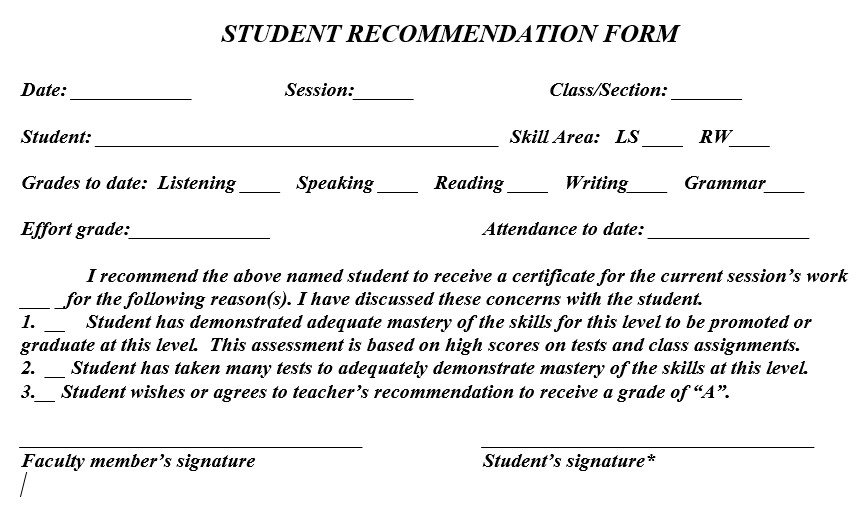
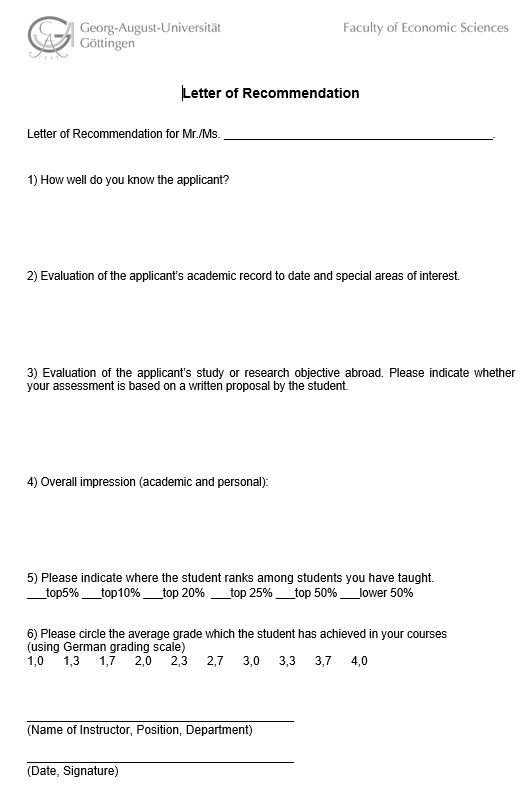
student recommendation form template
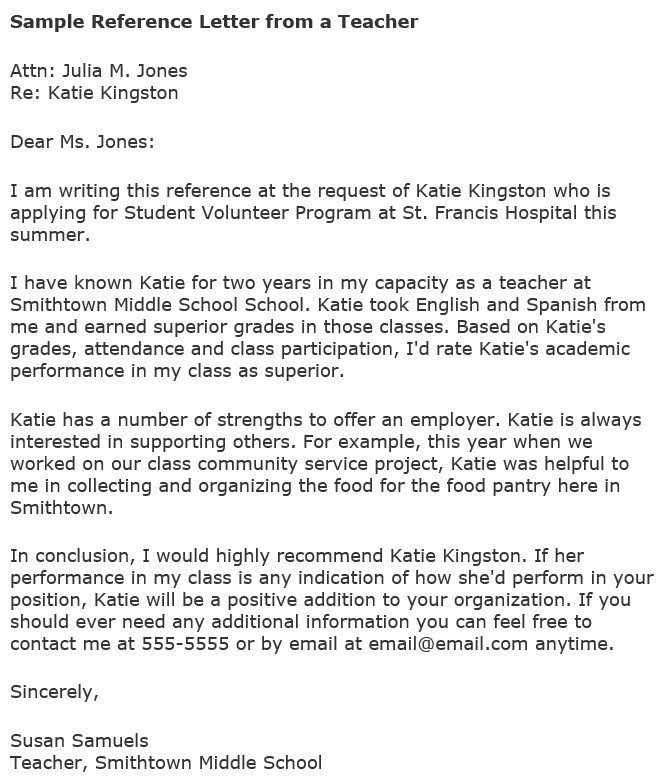
sample recommendation letter from a teacher for student
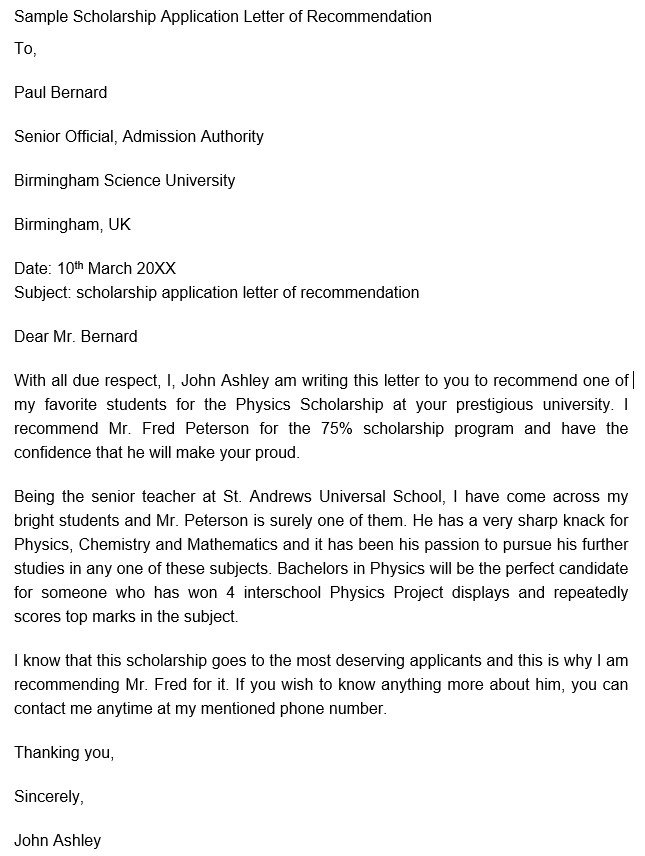
sample letter of recommendation for scholarship application
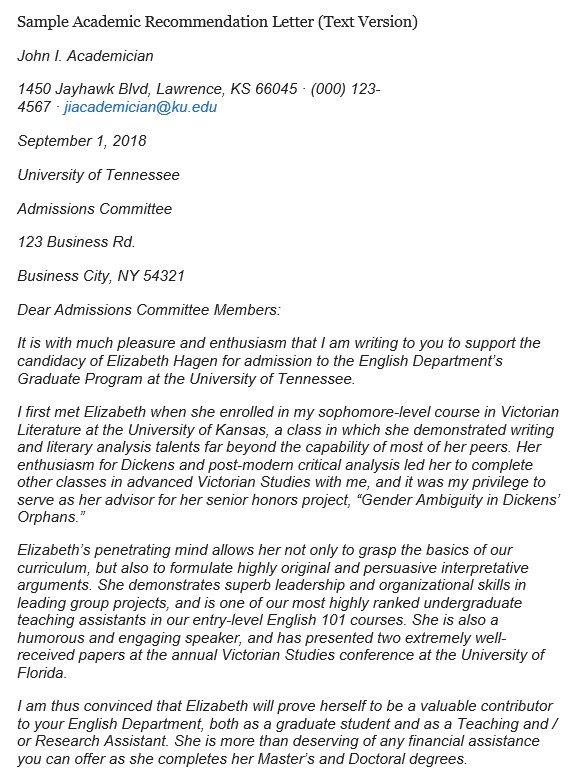
sample academic recommendation letter
recommendation letter for student from teacher
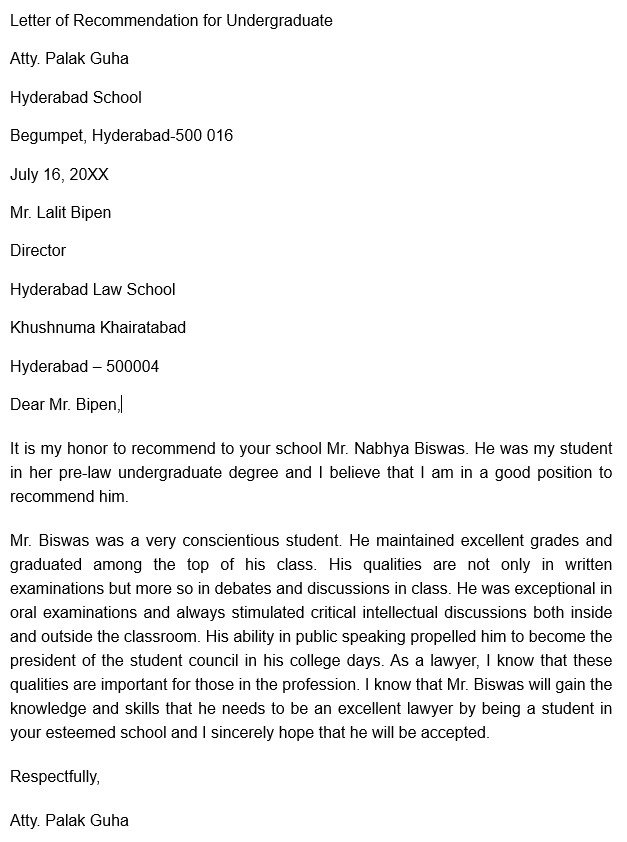
letter of recommendation for undergraduate
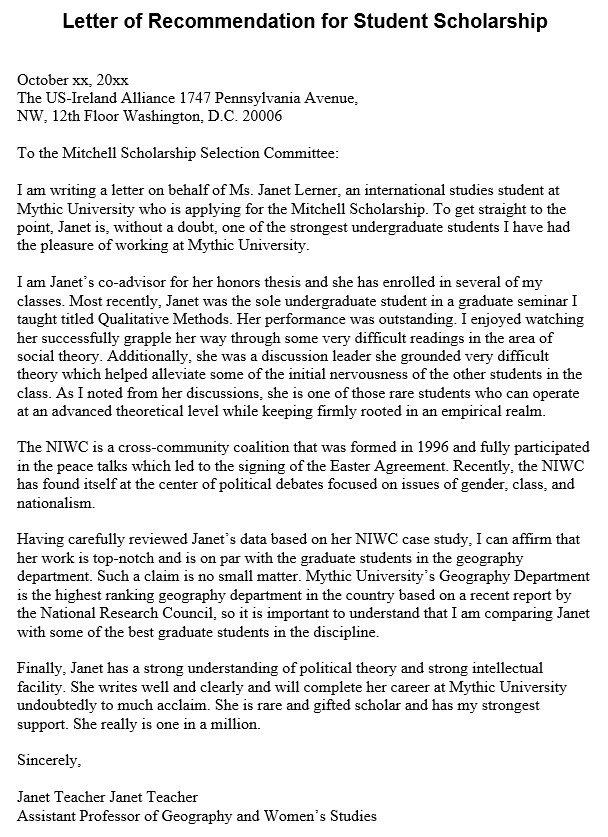
letter of recommendation for student scholarship
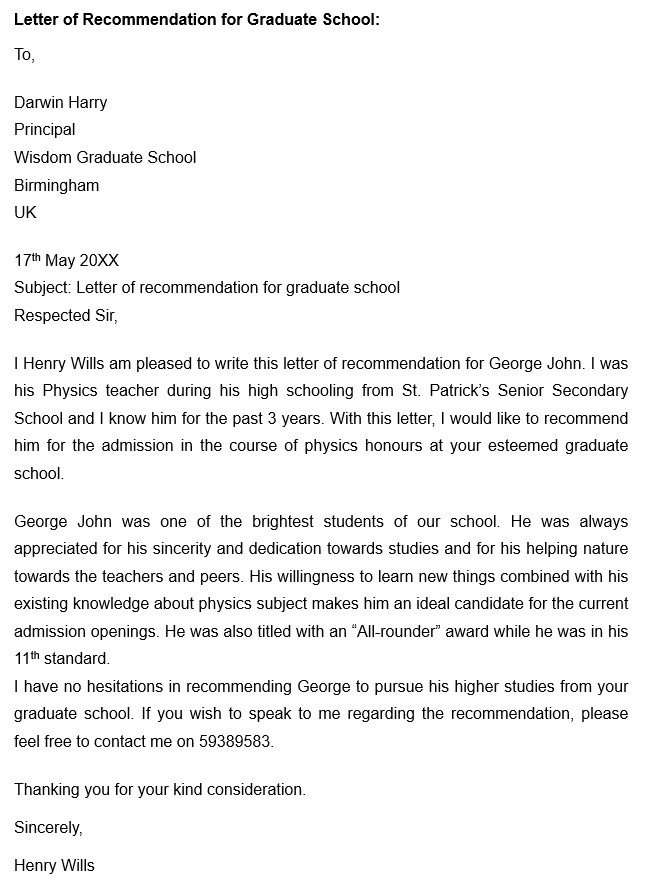
letter of recommendation for graduate school from teacher
graduate school recommendation letter for PHD
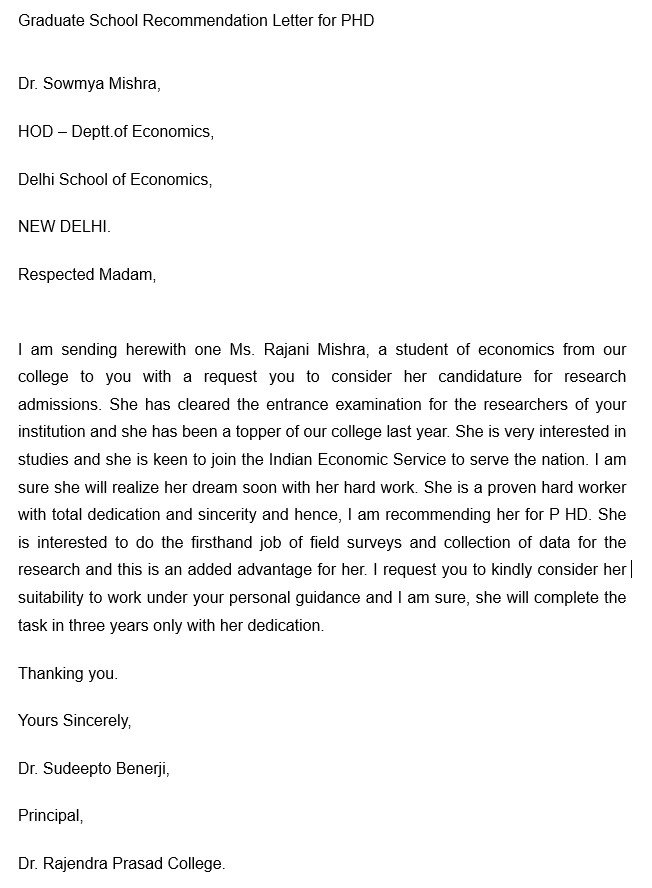
free recommendation letter for student from teacher
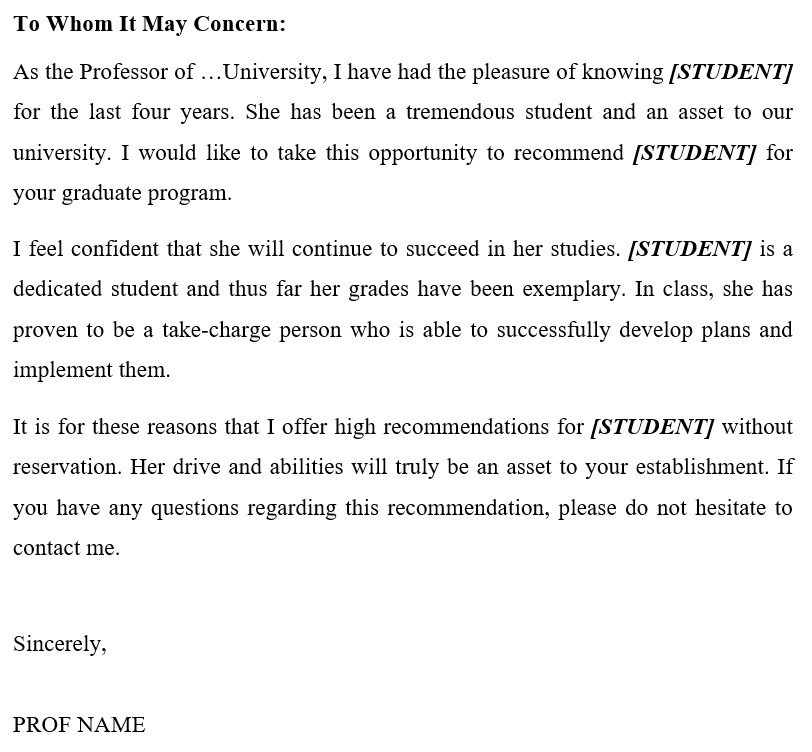
Final Thoughts
Writing a strong recommendation letter for student from teacher is not about filling a page with impressive adjectives. It is about giving the reader an honest and meaningful picture of the student.
The most powerful letters usually contain a balance of academic observations, personal qualities, and specific examples.
Remember that admissions officers and scholarship committees often review hundreds or even thousands of applications. A sincere story about a student’s curiosity, persistence, leadership, or growth can stay in the reader’s mind long after numerical scores have been forgotten.
Keep the writing professional but personal. Provide evidence rather than empty praise. Focus on the qualities you have genuinely observed. Most importantly, make it clear why you believe the student deserves the opportunity.
A thoughtful recommendation letter may take only a small amount of a teacher’s time compared with the years of education they provide, but for the student receiving it, that letter may help open the door to the next important stage of their education and future.
Frequently Asked Questions About Recommendation Letters for Students
Should the Recommendation Letter Include Grades?
You can mention grades if they support your recommendation, but you do not need to repeat the student’s entire academic record.
Focus instead on what the grades reveal about their abilities and development.
Can a Teacher Refuse to Write a Recommendation?
Yes.
If a teacher does not know the student well enough or cannot honestly provide a positive recommendation, it may be better to decline politely.
A weak recommendation can hurt the student’s application.
Should a Recommendation Letter Be Signed?
If the letter is submitted as a formal document, adding the teacher’s name, position, school, and contact information is professional.
Some institutions may also request a handwritten or electronic signature.
